Buying a Franchise: Check Equipment Ownership and Warranties
Check equipment ownership, warranties and handover arrangements to avoid hidden costs in your franchise package.
Published
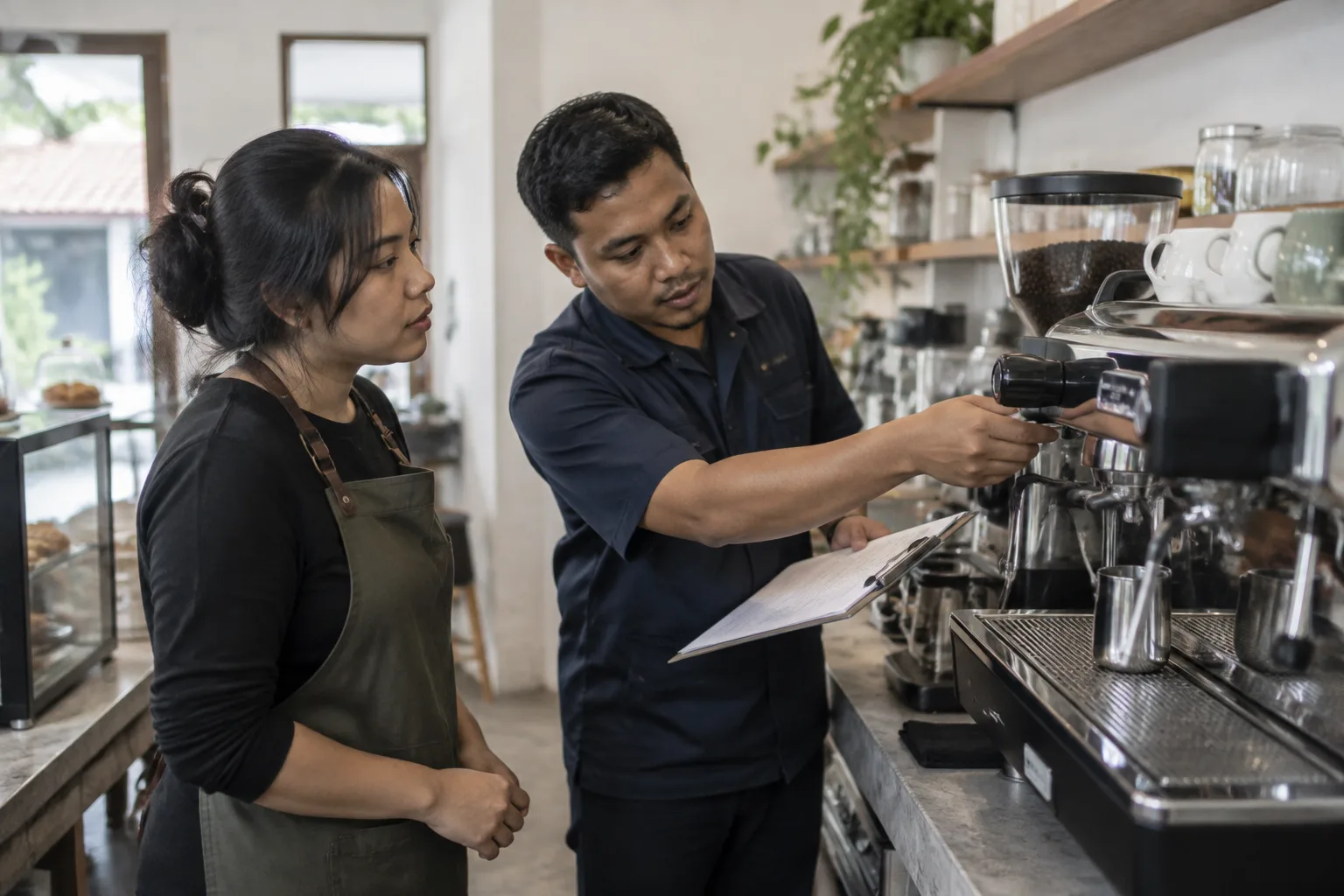
Franchise packages often list machinery, refrigerators, till systems or production equipment as part of the initial investment. Yet the word “included” does not explain who owns the equipment, what condition it is in or who pays if it breaks down. In Indonesia’s franchise sector, clarity over assets helps maintain a healthy relationship between franchisors and franchisees. Before buying, make sure promises about equipment can be verified through documents and testing, rather than relying solely on photographs in the sales proposal.
1. Distinguish between owned, rented and loaned assets
Ask for a detailed equipment list to be attached to the contract. Do not accept vague descriptions such as “a complete set of equipment meeting the required standards”. The list should specify each item’s name, brand, model, quantity, capacity, whether it is new or used, and any accessories included. Serial numbers can be added at handover.
For each item, ask about its legal status:
- Purchased and owned by the franchisee: when does ownership transfer, and what documents prove this?
- Rented: who owns it, how much is the rent, and who is responsible for maintenance?
- Loaned: can it be recalled at any time, and under what circumstances?
- Paid for in instalments: does ownership transfer only once payment is complete, and are there restrictions on moving the equipment elsewhere?
Check that the buyer named on the invoice is the party intended to own the asset. If the purchase is made through the franchisor, request documents clearly recording the transfer of ownership to you. Also make sure the supplier is entitled to sell the goods and that there are no undisclosed obligations to third parties.
For till systems, distinguish ownership of the hardware from the licence to use the software. Buying a till does not necessarily include an indefinite software subscription. This distinction matters when calculating the true cost of using the equipment.
2. Make equipment details part of the contract
Indonesia specifically regulates franchising through Government Regulation No. 35 of 2024 on Franchising, which replaced Government Regulation No. 42 of 2007. This regulation requires franchises to operate under an agreement and sets out what that agreement must contain, including the parties’ rights and obligations. However, do not assume it automatically provides a warranty or free replacement for every item in the package.
Equipment protections need to be expressly set out in the contract and its attachments. As a general principle, Article 1338 of the Indonesian Civil Code states that lawfully concluded agreements bind the parties and must be performed in good faith. Promises made by sales staff should therefore be confirmed in writing by an authorised representative.
Make sure the attached equipment list is expressly identified as an integral part of the agreement. Check that it matches the quotation and invoice. If the contract allows model substitutions, propose that any replacement must meet the agreed capacity and quality, must not increase the price without your consent, and must be notified to you before dispatch.
Also establish who is responsible for delivery, installation and any damage before handover. These are proposed allocations of responsibility to negotiate, not automatic rights that always apply. Ask a legal adviser to review any clause that releases the supplier or franchisor from all liability.
3. Calculate the cost of getting equipment fully operational
The package price may not cover everything needed for installation. Request a written quotation that separately identifies the cost of the goods, applicable taxes, delivery, loading and unloading, installation, testing and user training. Also check the requirements for electrical power, water supply, ventilation and safety equipment for each type of equipment.
Next, examine how the warranty works in practice:
- Who provides the warranty, and who handles claims?
- When does the warranty period begin: on purchase, delivery or installation?
- Does it cover spare parts, technicians’ labour and travel costs?
- Which components or types of damage are excluded?
- Is commercial use consistent with the outlet’s operations covered?
- Are technicians available to service your business location?
Do not confuse a warranty with a guarantee that your business can keep operating. A machine may be repaired free of charge, but the outlet may still be unable to serve customers while waiting for spare parts. Where possible, negotiate response times, escalation procedures and the availability of temporary replacement equipment.
Include regular maintenance and consumables in your operating budget. For used equipment, request its usage and maintenance history, along with an inspection by an independent technician if its value is significant.
4. Base handover and acceptance on test results
Before signing the acceptance report, check the physical equipment against the agreed list. Record serial numbers, condition, accessories, instruction manuals and warranty documents. Photograph the items on arrival, particularly if the packaging is damaged or parts are missing.
Test equipment under working conditions that reflect the outlet’s needs, rather than simply checking that an indicator light comes on. Involve a technician where testing requires specialist expertise or raises safety issues. Record any defects or omissions, who must remedy them, the deadline for doing so and the retesting schedule in the acceptance report.
If payments are staged, negotiate from the outset to link the final payment to the agreed test results. Do not withhold payment unilaterally if the contract provides no basis for doing so.
Practical step: before agreeing to a package, prepare a single table listing each item of equipment, its owner, additional costs, warranty coverage and acceptance criteria. If any field remains blank, ask for a written answer before signing the contract.
Sources
- Panduan Beli Waralaba, Tata Cara Hingga Akad Fikih Biar Gak ...
- Definisi Waralaba | JDIH Kementerian Keuangan
- Dasar Hukum Waralaba yang Wajib Pengusaha Ketahui
- Perjanjian Franchise (Waralaba) dan Distribusi Barang Legal
- Peran Notaris Dalam Perjanjian Waralaba...
- [PDF] pelaksanaan perjanjian serta perlindungan hukum praktek - Neliti
- Pengaturan Hukum Waralaba di Indonesia: Hak dan ...
- Peran Notaris Dalam Perjanjian Waralaba... (Rifki Ardhianto)