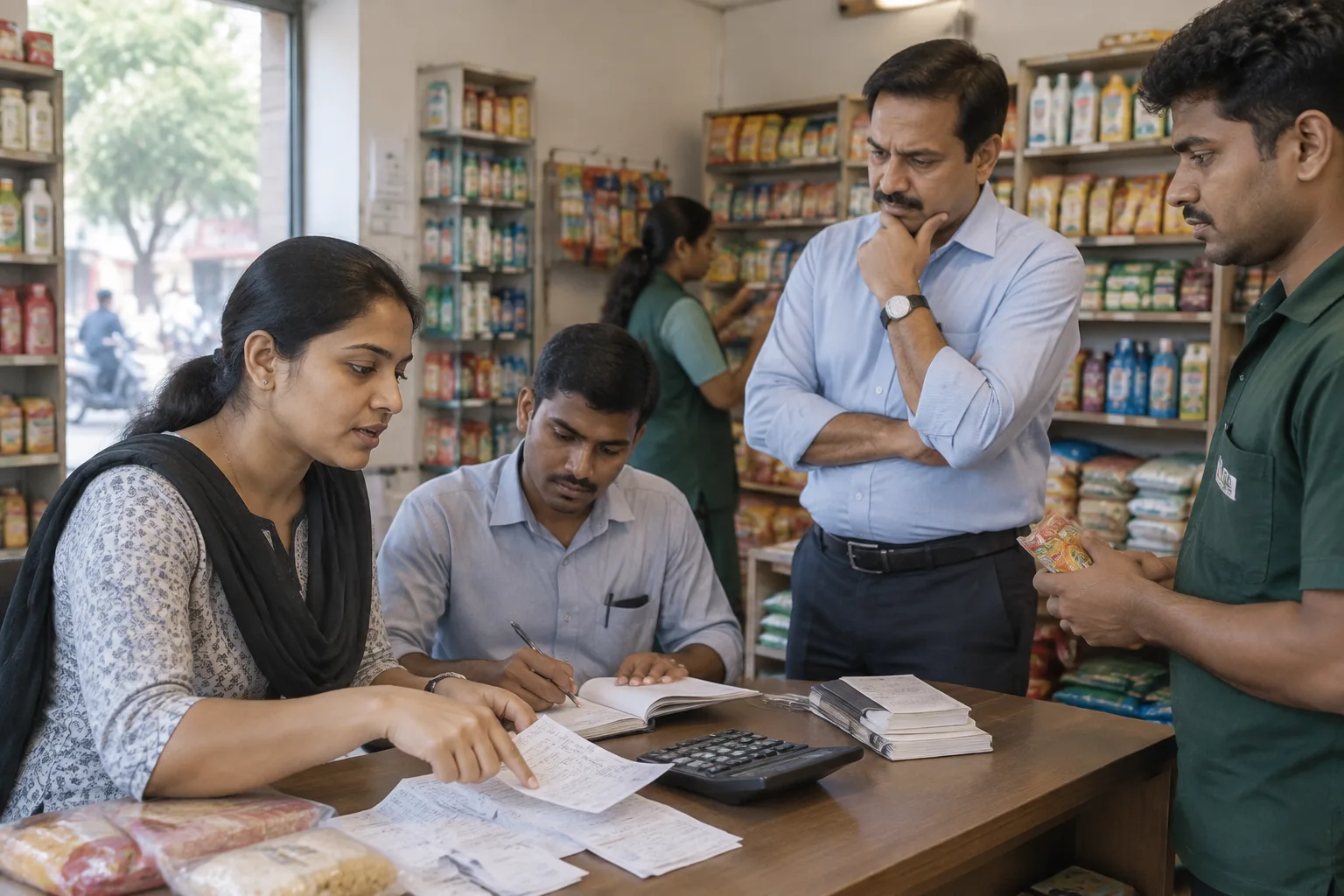
How to Vet Prospective Franchisees in India
Look beyond investment capacity when choosing a franchise partner. Establish a clear process for checking experience, operational readiness and references.
Published

Not everyone who runs a successful shop makes a good franchise partner, and not every candidate with sufficient funds is ready for day-to-day operations. When expanding your existing business into a franchise network, treat partner selection as a long-term responsibility, not a sales target. A process built around applications, supporting evidence, discussions and documented decisions reduces the risk of choosing the wrong partner.
1. Set out your selection criteria before accepting applications
First, clarify what kind of operator your business needs. Will the owner need to be regularly present at the premises, or can an experienced manager run the business? Which skills in customer service, staff management and following established procedures are essential, and which can be taught?
Create a selection checklist with three categories:
- Essential requirements: Time available to run the business, a clearly identified person responsible for operations, and the necessary experience.
- Skills that training can develop: Knowledge of your products, sales system or stock management procedures.
- Serious warning signs: Providing false information, inconsistencies in supporting evidence, or refusing to take responsibility for operations.
Apply the same criteria to every candidate. Do not mistake an easy rapport or a recommendation from someone you know for suitability. Familiarity with the local market is useful, but it is no substitute for the ability to manage a team. Ask applicants why they have chosen your business and what their actual day-to-day contribution would be.
2. Verify identity, experience and financial claims
The person you are speaking to may not be the person who ultimately enters into the agreement. Establish whether the applicant will run the business themselves, partner with family members or participate through a company. Clearly identify the proposed contracting party, principal owners and decision-makers. Check claims about a company or limited liability partnership against the relevant public records.
Do not assess experience simply by reading a CV. Ask about businesses the candidate has previously run, their actual role and why they left. With the candidate’s permission, seek references from former suppliers, landlords or business associates. Ask factual questions about payment discipline, handling disputes and honouring commitments. Do not treat a single negative comment as conclusive.
The purpose of financial checks here is to verify the candidate’s claims, not to draw up a budget. Ask them to list their own capital, proposed borrowing and funds from other investors separately. Do not confuse a loan application with approved funding. Request relevant evidence, but not banking passwords or details of unrelated personal transactions. Where necessary, obtain confirmation from a financial adviser with the candidate’s consent.
3. Use scenarios to assess operational judgement
It is not enough simply to ask candidates whether they are hardworking. Present situations that commonly arise in your business: a member of staff is absent during a busy period, a customer requests a refund, or sales and stock records do not tally. Ask what the candidate would do first, whom they would inform and how they would record the incident.
Assess their answers against criteria established in advance:
- Do they prioritise customer and staff safety?
- Do they blame someone before checking the facts?
- Can they ask for help while following established procedures?
- Are they willing to document mistakes and corrective action?
A supervised opportunity to observe one of your outlets can also be useful. Do not use this as a source of unpaid labour or a way to hand over responsibility for live operations. Limit access to customer information and confidential materials. Afterwards, ask the candidate which responsibilities they found challenging. Look beyond confidence to their ability to learn and their honesty in acknowledging limitations.
4. Keep your checks compliant with Indian law
India has no separate, comprehensive franchise law or mandatory national franchise code of conduct. Nor is there a separate franchise registration requirement for franchisors or franchisees, or a mandatory pre-contract disclosure document regime. This does not mean that candidate screening or business operations are exempt from the law.
The Indian Contract Act, 1872 applies to matters such as the validity of agreements, free consent, fraud and misrepresentation. Material claims made by both parties must be accurate. Obtaining a declaration from a candidate is useful, but it neither removes your responsibility to carry out your own checks nor protects you from liability for your own false claims.
The Trade Marks Act, 1999 may apply to brand rights, and the Competition Act, 2002 to competition-related terms. Tax obligations, local permits and sector-specific rules also apply separately. When collecting candidate documents, check the applicable data protection requirements; explain the purpose, restrict access and establish a policy for retaining and deleting copies.
5. Keep decisions documented and evidence-based
Record an outcome for every application: approved, pending further information or rejected. Document the reasons alongside the relevant evidence. If you find discrepancies in documents, give the candidate an opportunity to explain them; do not record an unverified allegation as an established fact. Where possible, have a senior person other than the person handling recruitment conduct the final review.
For conditional approval, state clearly which checks remain outstanding and which rights have not yet been granted. Ensure that the selection letter cannot be taken as proof that final franchise rights have been awarded.
Practical takeaway: Set your criteria first, verify claims next, and then make a decision with documented reasons. The right partner is someone whose capabilities, conduct and availability fit your operating model.
Sources
- [PDF] India-Franchise.pdf - Legal 500 Country Comparative Guides 2025
- Franchise Laws and Regulations India 2025
- Need for Franchising Laws in India
- LEGAL ISSUES IN FRANCHISING IN INDIA
- [ARCHIVE] India — Franchise Laws and Regulations 2025 - ICLG
- The Art And Craft Of Franchising In India | Legal 500
- India: Franchise & Licensing – Country Comparative Guides
- atblegal.com › india › commercial-ipFranchising in India: Law, Agreements, Competition & Cross-Border