Franchising a Hong Kong Business: Defining Territorial Protection and Allocating Online Orders
An ‘exclusive territory’ does not mean every order belongs to the franchisee. Before recruiting, franchisors should set clear rules on territorial boundaries, online sales, delivery and new outlets to reduce conflicts within the franchise network.
Published
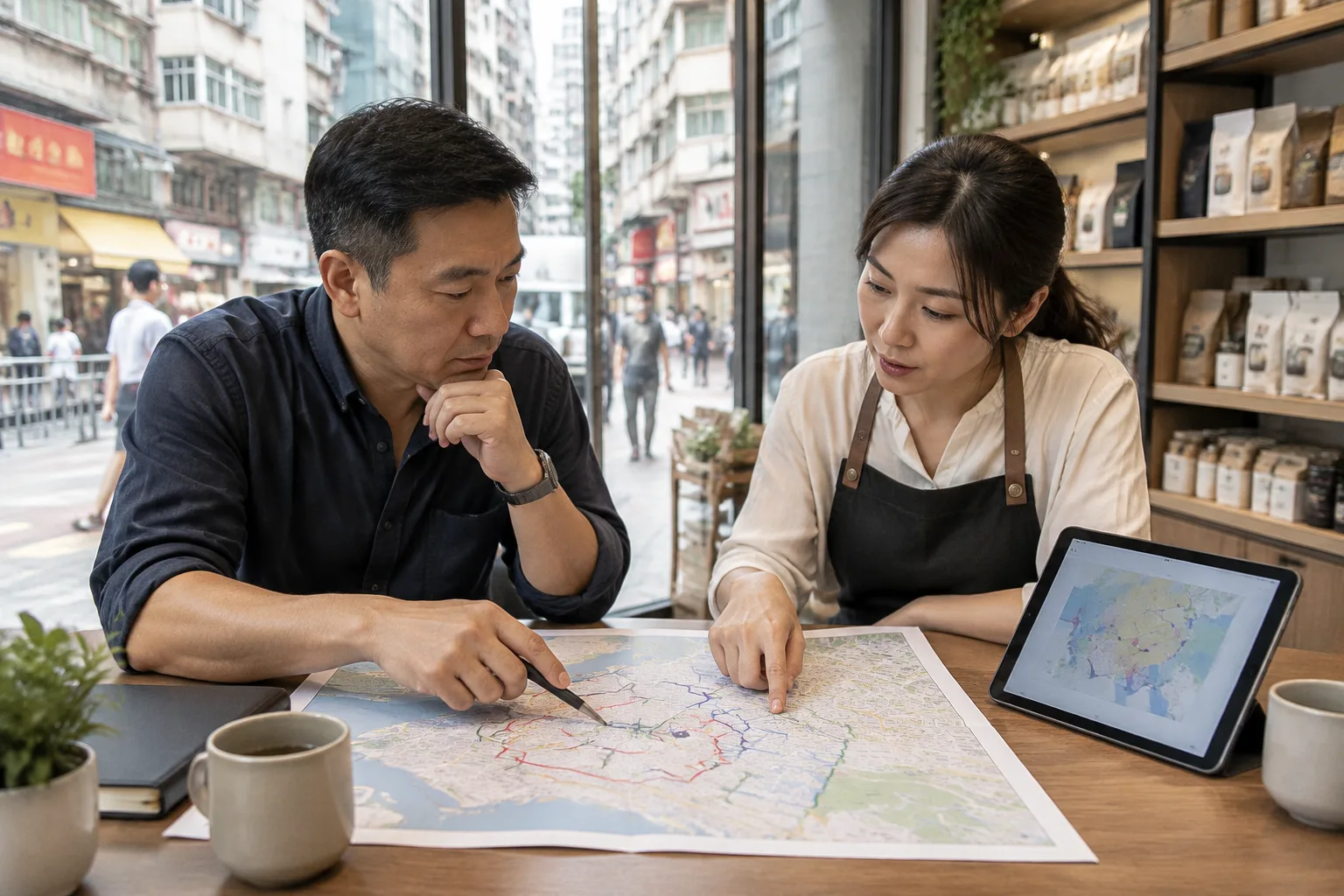
When turning an existing Hong Kong business into a franchise network, it is tempting to attract franchisees with a promise of ‘only one outlet in the area’. Yet outlets on different floors of the same shopping centre, a new shop across the road and online orders delivered into the territory can all lead to different interpretations of that promise. Territorial protection is not a recruitment slogan: it is a set of working rules that must translate into specific addresses, sales channels and order records.
1. Define what is protected before drawing the map
The Trade and Industry Department’s guidance on starting a business notes that franchisees are independent businesses, with each party’s responsibilities and protections determined by their agreement. Franchisors should therefore not assume that franchisees understand what an ‘exclusive territory’ means, nor present ‘no other franchised outlet’ as ‘no competition from the same brand’.
Before drafting the terms, decide what kind of commitment you are offering:
- Outlet protection: The franchisor will not approve another franchised outlet of the same type within a specified area.
- Protection covering physical outlets under the same brand: Restrictions apply to company-owned outlets as well as franchised outlets. Whether pop-up shops, concessions and other locations are included must be specified individually.
- Priority in negotiations: If new premises become available within the territory, the existing franchisee gets the first opportunity to negotiate. This does not guarantee the right to operate the new outlet.
These three arrangements offer different benefits and have different limitations. If you offer only priority in negotiations, recruitment materials should not describe this as ‘territorial exclusivity’. Commercial protection for an outlet’s territory should also not be confused with an ‘exclusive licence’ under trade mark law.
Hong Kong has a high concentration of shops, so references to a particular ‘district’ or the ‘surrounding area’ are often insufficient. Define the territory using an attached map alongside street names, building numbers and shopping centre names, and identify the map version. For large residential estates, interconnected shopping centres or multi-storey commercial buildings, specify whether protection covers the whole building, designated floors or individual shop units. Also state which takes precedence if the written description and map conflict.
2. Set separate rules for online and delivery orders
A physical outlet’s protected territory does not automatically determine how online orders should be allocated. Start by listing the channels actually used, including the brand website, telephone, messaging apps, delivery platforms and corporate or group orders. For each, specify who accepts the order, who fulfils it and how payments are settled.
For example, a customer ordering from the franchisor’s online shop for collection at a franchised outlet is different from a customer requesting delivery from the franchisor’s warehouse to an address within that outlet’s protected territory. The former may require the franchisee to hold stock and hand over the goods; the latter may not use the franchisee’s resources at all. Whether revenue is shared, a handling fee is paid or no share is due should be defined according to the work involved, rather than the delivery address alone.
Create a channel responsibilities table that answers at least the following questions for each type of order:
- Who confirms the order, takes payment and provides transaction records?
- Is allocation based on the delivery address, collection outlet or other criteria?
- How are orders reassigned if a franchisee is out of stock, has temporarily stopped accepting orders or lacks delivery capacity?
- How are payments adjusted following cancellations, returns or deductions by the platform?
A platform’s delivery coverage may not match the contractual territory. Platform settings outside the franchisor’s control should not be presented as permanently guaranteed rights. If the franchisor reserves online shop sales or large corporate orders for itself, this should be made clear before signing—not explained only after a franchisee objects.
3. Test the allocation rules in practice
Test the proposed territorial arrangements using existing outlets, rather than relying solely on distances on a map. Review delivery times at different times of day, collection demand, orders reassigned because of stock shortages and orders fulfilled across outlets to see whether the rules are workable. Wherever possible, use aggregated or de-identified data during testing to avoid unnecessary sharing of customer information.
A trial should not promise a fixed number of customers within the territory, and territorial protection must not be treated as a guarantee of profit. The aim is to identify gaps in the rules: what happens if two outlets both claim the same order? Can an order go to another outlet if the nearest one cannot fulfil it? If the system fails, who makes and records an interim decision?
If territorial protection depends on performance, specify verifiable measures, assessment periods, notification procedures and opportunities to improve. Avoid simply stating that ‘poor performance may result in a smaller territory’. The franchisor should also explain whether reduced protection affects orders already accepted and how the franchisee can request a review.
4. Put the commitments in the agreement and obtain local legal advice
Hong Kong currently has no legislation specifically governing franchising, nor a general franchise disclosure, registration or statutory cooling-off regime. Mainland China’s Regulations on the Administration of Commercial Franchising and related filing requirements are not the local rules for purely Hong Kong franchise arrangements. However, the absence of a dedicated franchise law does not mean territorial commitments can be made or changed at will.
Franchise agreements are primarily governed by common law contract principles. Misrepresentations about the scope of exclusivity during recruitment may also engage the Misrepresentation Ordinance (Cap. 284). Territorial and customer allocation arrangements, restrictions on sales outside a territory and similar provisions must be assessed under the Competition Ordinance (Cap. 619); inclusion in a contract does not automatically make them valid. Trade mark licensing must also comply with the Trade Marks Ordinance (Cap. 559). Territorial protection clauses are no substitute for trade mark licensing documentation.
Before finalising the documents, have a Hong Kong lawyer review the specific arrangements and ensure that recruitment materials, the main agreement, map attachments and the order responsibilities table are consistent. New outlets, relocations and changes to sales channels should follow agreed procedures for notification, consultation and written confirmation. Existing protections should not be reduced merely by updating the operations manual.
Practical takeaway: before recruiting franchisees, complete a territory map, a channel responsibilities table and a test of the order reassignment process. Only when you can clearly answer ‘Where can outlets open?’, ‘Who handles each order?’ and ‘How are changes confirmed?’ have you turned a territorial promise into rules the whole franchise network can follow.