Franchisee innovation in Guatemala: what to agree
Set out how to receive, test and share improvements proposed by franchisees, with clear rules on rights, costs and approval.
Published
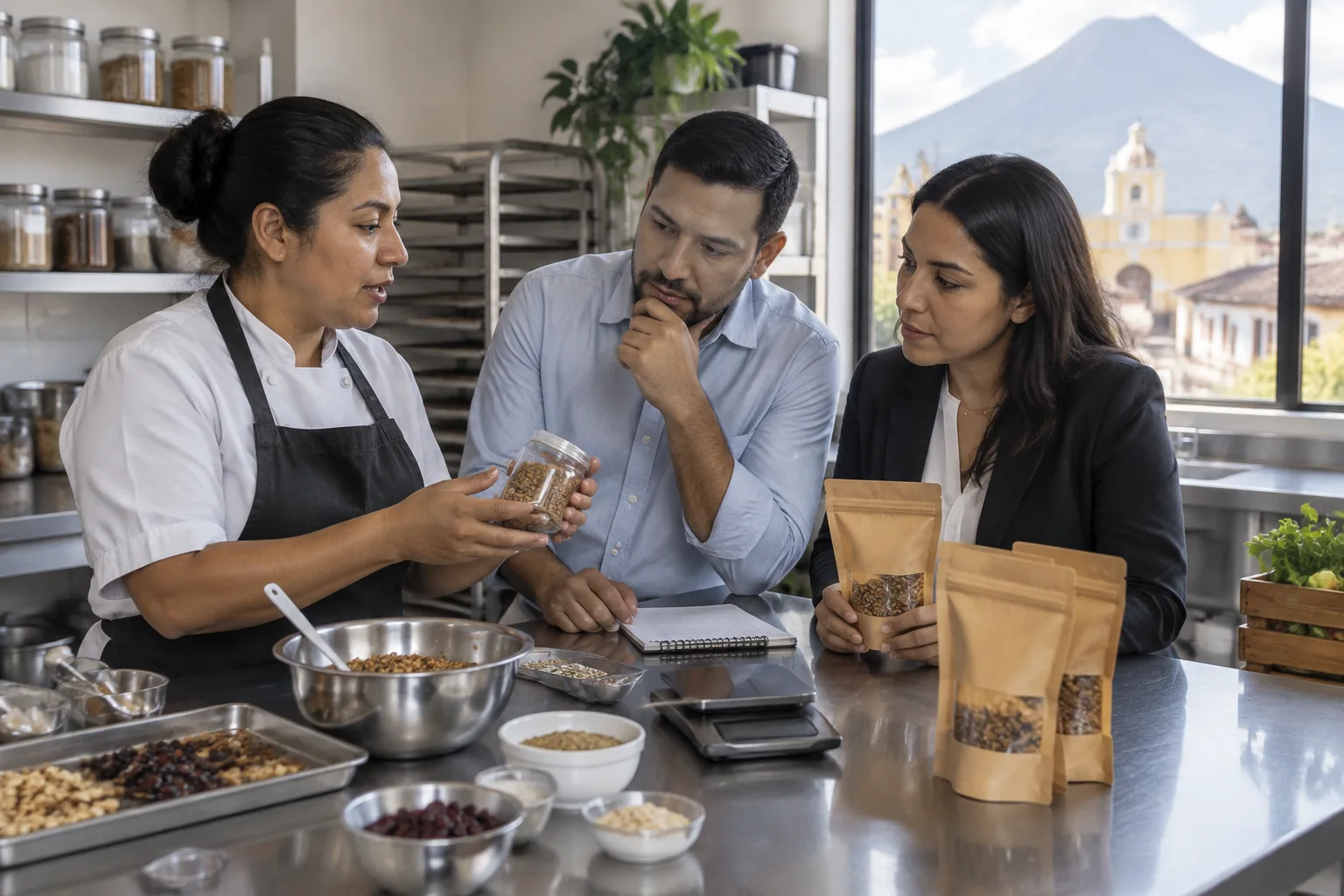
When you franchise an existing business, good ideas no longer come solely from its founder. A franchisee may discover a way to reduce waste, simplify a task or improve customer service. Before adopting these improvements, it is worth establishing who can test them, what rights they hold and how other members of the franchise network can benefit from them.
1. Distinguish a suggestion from a creation that may qualify for protection
Not every contribution needs the same treatment. Recommending a change to the cleaning sequence raises different questions from developing software or producing photographs for a campaign. The first step is therefore to classify the proposal, without assuming that every idea gives rise to an exclusive right.
Use a short proposal form to identify:
- The operational problem to be solved.
- The proposed improvement and its creator or creators.
- The materials, tools or knowledge used.
- The resources needed to test its usefulness.
- Any involvement of employees, suppliers or third parties.
This last point is crucial. If an agency created a graphic or a supplier developed a tool, the franchisee may not have the authority to permit its use across the network. Receiving a file does not mean acquiring all the rights to it.
Keep the commercial assessment separate from the rights review. An improvement may be useful but still require permission before it can be shared.
2. Agree on rights before inviting contributions
Guatemala has no specific franchise law or special general regime governing pre-contractual disclosure for franchises. The relationship is governed by the applicable general rules, particularly the Commercial Code, Decree 2-70, with the Civil Code applying on a supplementary basis. Article 669 of the Commercial Code establishes the principles of truthfulness and good faith for interpreting and fulfilling commercial obligations.
The Industrial Property Law, Decree 57-2000, is also relevant: its chapter on trade mark licensing applies to franchise agreements. Where a contribution includes works such as photographs, text or software, the Copyright and Related Rights Law, Decree 33-98, must also be considered. A franchise agreement does not automatically make the franchisor the owner of everything a franchisee creates.
With local legal advice, establish a process for documenting permission to use a contribution, a licence or an assignment of rights, as appropriate. This should specify:
- Which contribution is covered and for what uses.
- Whether other franchisees may use it and on what terms.
- Whether modifications are permitted and who may make them.
- The duration, geographical scope and any payment or other consideration.
- What happens to authorised uses when the relationship ends.
Avoid a blanket clause intended to cover all current and future ideas. It is better to identify the materials and rights needed for each significant contribution you adopt.
3. Create a testing process without allowing unrestricted changes
Submitting an improvement should not amount to permission to implement it. Appoint someone to receive proposals and establish a review process that clearly distinguishes between a suggestion awaiting review, an authorised trial and an approved practice.
For example, a franchisee proposes reorganising order preparation to reduce errors. Before rolling out the change, document how the current process works, what will change and what evidence will be used to assess the outcome. It is not enough to say that the new method seems faster: you must also check that it maintains quality and introduces no new risks.
Trial authorisation should specify the premises, the tasks covered, the person responsible, the costs and the conditions for stopping the trial. If it affects safety, food, personal data or third-party rights, include the relevant specialist review before starting.
During the assessment, avoid circulating materials as though they were already mandatory. Clearly mark them as provisional and retain the previous version so that the change can be reversed.
4. Decide how to recognise and share the improvement
Before asking the franchisee to do additional work, clarify whether they will receive recognition, reimbursement of authorised expenses or an agreed payment. Not every suggestion needs to be paid for, but it is equally important not to create expectations that cannot later be met.
When approving a contribution, prepare a written decision bringing together the trial evidence, the necessary permissions and the terms of use. Decide who will update the procedure and how it will be explained to other franchisees. If the proposal is rejected, give a specific reason: cost, lack of results, risk or incompatibility with the business model.
Practical takeaway: before inviting innovation, prepare a proposal form, a trial authorisation and a document setting out usage rights. This will help you make the most of good ideas without confusing participation with permission, or collaboration with an automatic assignment of rights.
Sources
- Cómo franquiciar tu negocio en Guatemala | QFA
- Modelo Word y lo que Dice la Ley (Licencia de Marca, RPI, ISR)
- ¿Cómo franquiciar su negocio? - Asociación Guatemalteca ...
- Elementos del Contrato de Franquicia | PDF
- Guatemala - Franchising | export.gov
- UNIVERSIDAD DE SAN CARLOS DE GUATEMALA
- Guatemala Franchise Market
- UNIVERSIDAD DE SAN CARLOS DE GUATEMALA FACULTAS DE CIENCI…