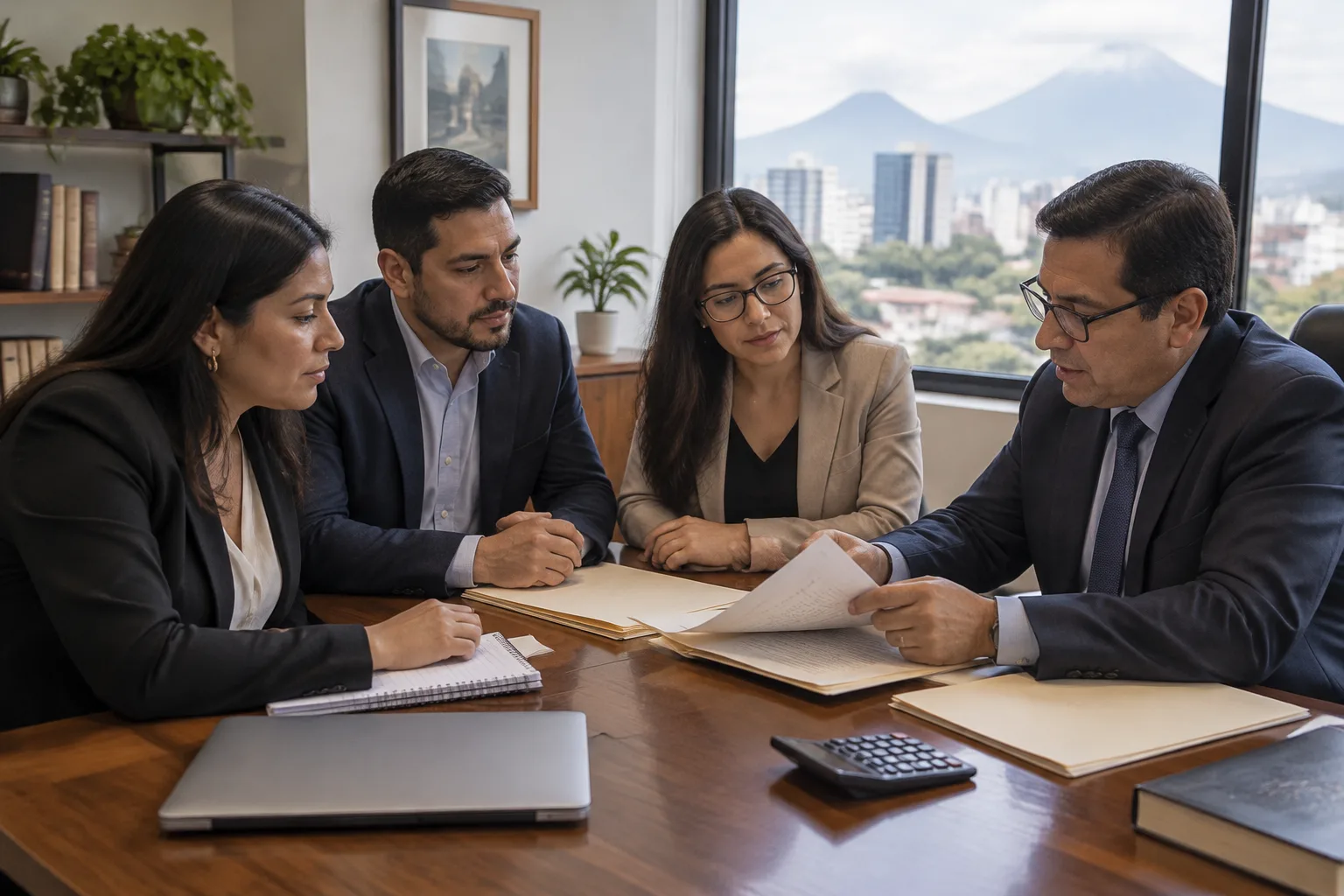
Franchises in Guatemala: check imported supplies
Before buying a franchise, check whether essential imported supplies can enter Guatemala, what it costs to get them to your premises and who handles the paperwork.
Published
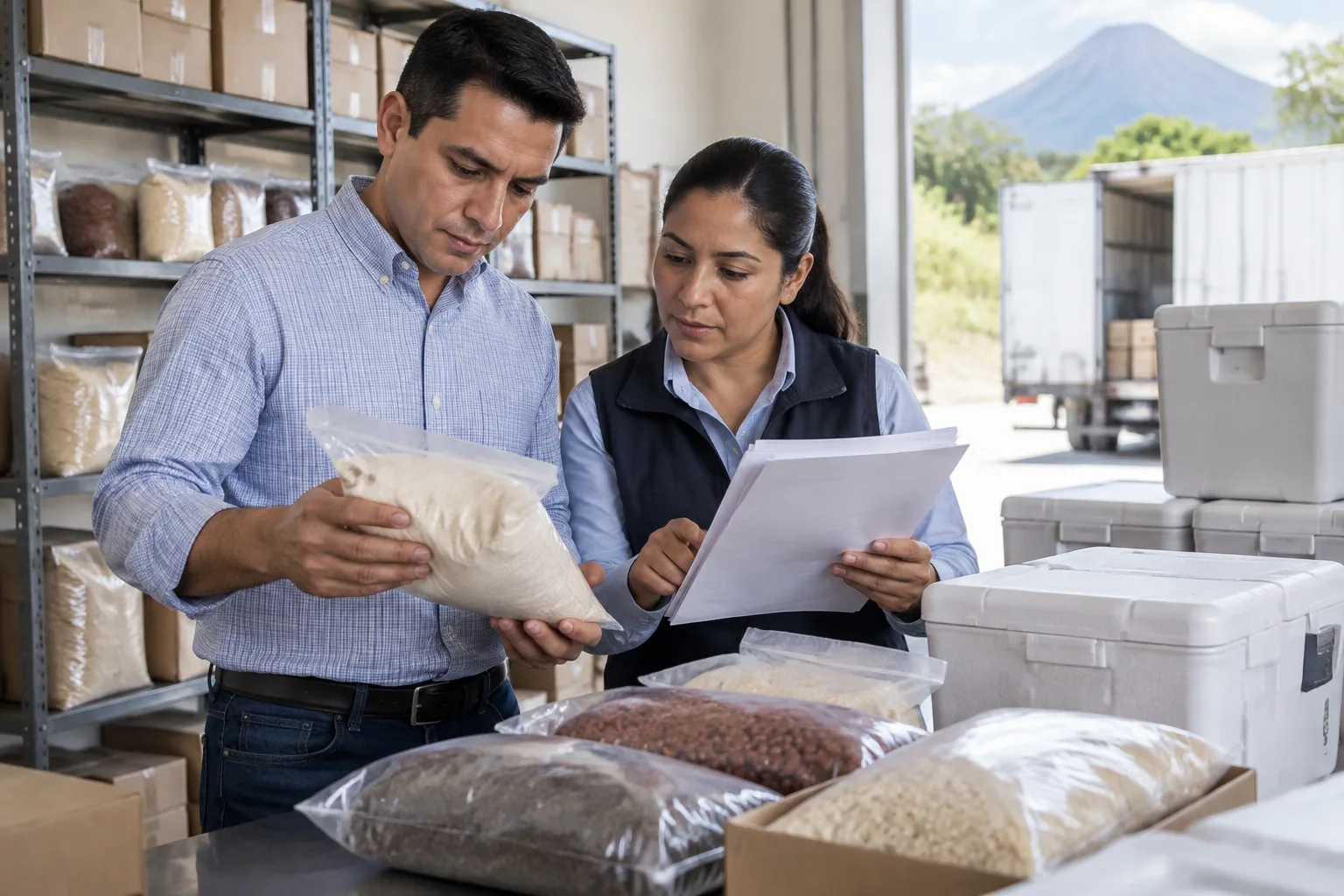
A brand may perform well in another country yet rely on ingredients or consumables that require additional preparation to import into Guatemala. Before joining a franchise network, check that its essential supplies can arrive legally, in usable condition and at a documented cost. This review is not about negotiating with suppliers: it is about verifying that the business model can be supplied in Guatemala.
1. Identify which supplies cannot be substituted
Ask the franchisor for a list of the imported products essential to running the business. A sales catalogue is not enough: you need to identify which products are critical to the recipe, presentation or customer experience required by the brand, and which can be replaced with alternatives available in Guatemala.
For each item, request a specification sheet covering:
- Technical description, composition and intended use.
- Manufacturer, country of manufacture and dispatch location.
- Pack format, minimum order quantity and estimated delivery time.
- Shelf life and transport and storage conditions.
- Available documentation for its sale and importation.
The country of dispatch and the country of origin are not necessarily the same. This distinction may matter when assessing tariff treatment and the documents required.
Classify products by their operational importance. If the absence of an ingredient prevents you from selling your main product, you must establish whether it can be imported before committing to the purchase. A local alternative only counts as a solution once it has been technically validated and approved by the brand.
2. Check the requirements that apply in Guatemala
Guatemala has no specific law comprehensively regulating the offer and sale of franchises, nor a special mandatory pre-contractual disclosure regime equivalent to those in some other countries. The relationship is governed by the general provisions of the Commercial Code, supplemented where necessary by the Civil Code. The Industrial Property Law, Decree 57-2000, governs aspects of trade marks and their licensing.
This framework does not remove the obligation to comply with the customs, tax and health rules applicable to the goods. The brand’s approval to use a product is not permission to import it.
Give the specification sheets to a customs broker and, where appropriate, a specialist in health regulations. Ask them to identify the tariff classification, required documents and authorisations that need to be checked with Guatemala’s tax and customs authority, SAT, and the relevant authorities. For food or products of animal or plant origin, confirm the role of the Ministry of Public Health and Social Assistance or the Ministry of Agriculture, Livestock and Food, depending on the product.
Do not assume that a foreign registration or certificate is sufficient in Guatemala. Also check whose name the authorisations must be issued in and who will have access to the associated files.
SAT procedures referred to as ‘franquicias electrónicas’ concern customs concessions or exemptions under specific legal provisions: they are not a registration process for buying a commercial franchise, nor do they grant benefits simply for using that business model.
3. Calculate the cost of receiving usable goods
Request a quotation covering delivery to your premises, not just the goods leaving the supplier. Itemise the product price, transport, insurance, applicable duties and taxes, customs clearance, storage and inland transport. Add any relevant documentation or health compliance costs.
Trade agreements may allow preferential tariffs, but these should not be taken for granted. Neither the shipment’s dispatch location nor the brand’s nationality proves that the goods meet the rules of origin.
For perishable products, also assess:
- Remaining shelf life when the order arrives.
- Time needed to use the minimum order quantity.
- Available storage and refrigeration capacity.
- Financial consequences of a delay or a failure to maintain the required temperature.
An apparently cheap purchase can prove expensive if part of the batch expires before it can be used. Before placing a commercial order, ask the specialist whether a trial shipment would be advisable and what requirements would apply; samples should not be treated as automatically exempt from checks either.
4. Put responsibilities in writing
Define who will act as the importer, who will arrange transport and who will pay for each procedure. Also specify who must provide specification sheets, certificates and other documents, how far in advance they must do so, and how changes to composition or manufacturer will be communicated.
Negotiate what will happen if an essential item does not receive the necessary authorisation: an approved substitute, a menu adjustment or a review of the purchase commitment. These are contractual solutions that must be agreed, not automatic rights of the franchisee. A Guatemalan lawyer should review their scope and compatibility with the remaining obligations.
Practical step: before signing, compile a record for each critical item showing confirmed requirements, the cost of delivery to your premises, the responsible party and an approved alternative. Do not consider the import arrangements settled while any of these points still rests on a verbal promise.
Sources
- Franquicias en Guatemala: coordina el crédito antes de firmar
- ¿Cómo franquiciar su negocio? - Asociación Guatemalteca ...
- SUPSRIHTEWOCHCIA &E AlOMlWSTRACIOH TRIBUTARIA
- Cómo franquiciar tu negocio en Guatemala | QFA
- Guatemala - Franchising | Privacy Shield
- Franchise
- Doing business in Guatemala
- Universidad de San Carlos de Guatemala