AB Vassilopoulos: Franchise partners with up to five outlets
AB wants franchise partners to develop multiple stores, creating small local chains under a single brand.
Published

AB Vassilopoulos is putting the scope for individual franchise partners to develop multiple stores at the heart of its plans. According to a report in the Greek publication Imerisia on 29 September 2026, the aim is for franchisees to be able to develop two, three, four or even five outlets. For those considering the Greek franchise market, the significance lies in the creation of small local chains under a single brand.
From a single store to a local network
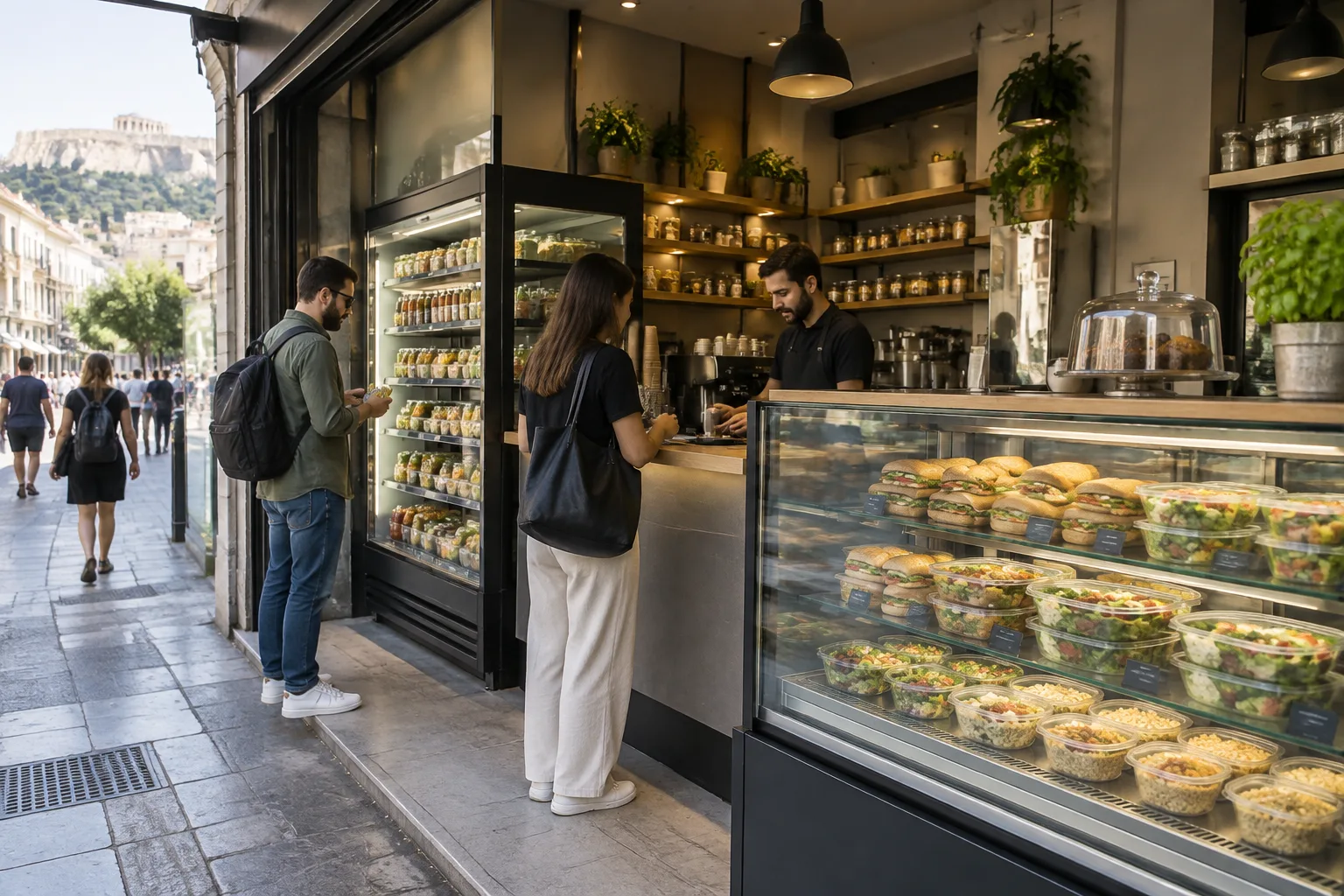
This approach goes beyond simply adding new locations to the map. As Imerisia explains, franchising is not just about expanding AB’s presence. It also offers the prospect of an individual partner taking on several stores, building a stronger local presence within the chain’s network.
This is a company ambition, rather than a published account of franchisees already operating five outlets. The available information does not specify how many partners currently have more than one store, nor does it set out a development timetable for each operator. The distinction matters: the plan indicates the intended direction of the partnership, but does not guarantee expansion for every prospective franchisee.
The central message is that the relationship with a franchise partner can extend beyond the initial operation of a single store. The opportunity to build a small local chain forms part of AB’s wider transformation, which, according to the reports, is expected to be completed in 2028.
Two distinct routes to growth
The network’s development to date reflects two distinct routes: converting company-owned stores into franchises and adding new outlets that do not result from such conversions. Imerisia reports that around 70 company-owned stores were converted into franchises over 2024–2025, including around 35 in 2025.
For 2026, the same report notes that the pace of conversions has roughly halved. Meanwhile, 46 new franchise stores were added in 2025 that were not conversions of company-owned outlets. A report published by Sofokleous In on the same date also records the addition of 46 new franchise stores.
This distinction helps put the growth figures into perspective: changing the operating model of an existing store is not the same as opening a new location. Similarly, for a prospective franchisee, assessing an existing operation and preparing to open a new store require different due diligence. The reports do not provide detailed financial terms for either route.
The focus on small stores
The prospect of multiple outlets per franchisee is linked to AB’s emphasis on small neighbourhood stores. According to Sofokleous In, the company’s presentation puts growth in this market at 8%. That figure applies to the market segment as a whole and should not be read as the performance of every store or as a forecast return for a new franchise partnership.
The same presentation states that AB’s turnover exceeded €2 billion in 2025, an increase of 3.5%. Sales growth of around 6–7% is reported for the first eight months of 2026. These are company-level figures: they provide a broad commercial context, not a picture of an individual franchisee’s finances.
Imerisia also reports plans for around 200 new service points through franchising and rapid-delivery partnerships, with the aim of reaching more areas without a company-owned store. As the plans cover different service formats, this figure does not automatically mean 200 new physical franchise stores.
What prospective franchisees need to assess
For the franchise community, the key development is the opportunity for an individual operator to grow within the network, rather than simply an increase in the total store count. However, the available reports do not specify the capital required, the approval criteria for a second outlet, any territorial exclusivity or staffing obligations.
Prospective franchisees therefore need to clarify these issues directly with the company before assessing a partnership. It would be useful to request a separate financial plan for each store and a clear explanation of the support available when the business expands across multiple outlets.
The practical conclusion: the prospect of operating two to five stores is worth considering as a phased growth plan, supported by a thorough assessment of each location, rather than as an inevitable progression from the first franchise agreement.