McDonald’s Beckum: multimillion-euro refurbishment adds more seating
Franchisee Sven Kauke is modernising McDonald’s in Beckum, Germany. The restaurant is gaining 40 additional seats, while the menu remains unchanged.
Published
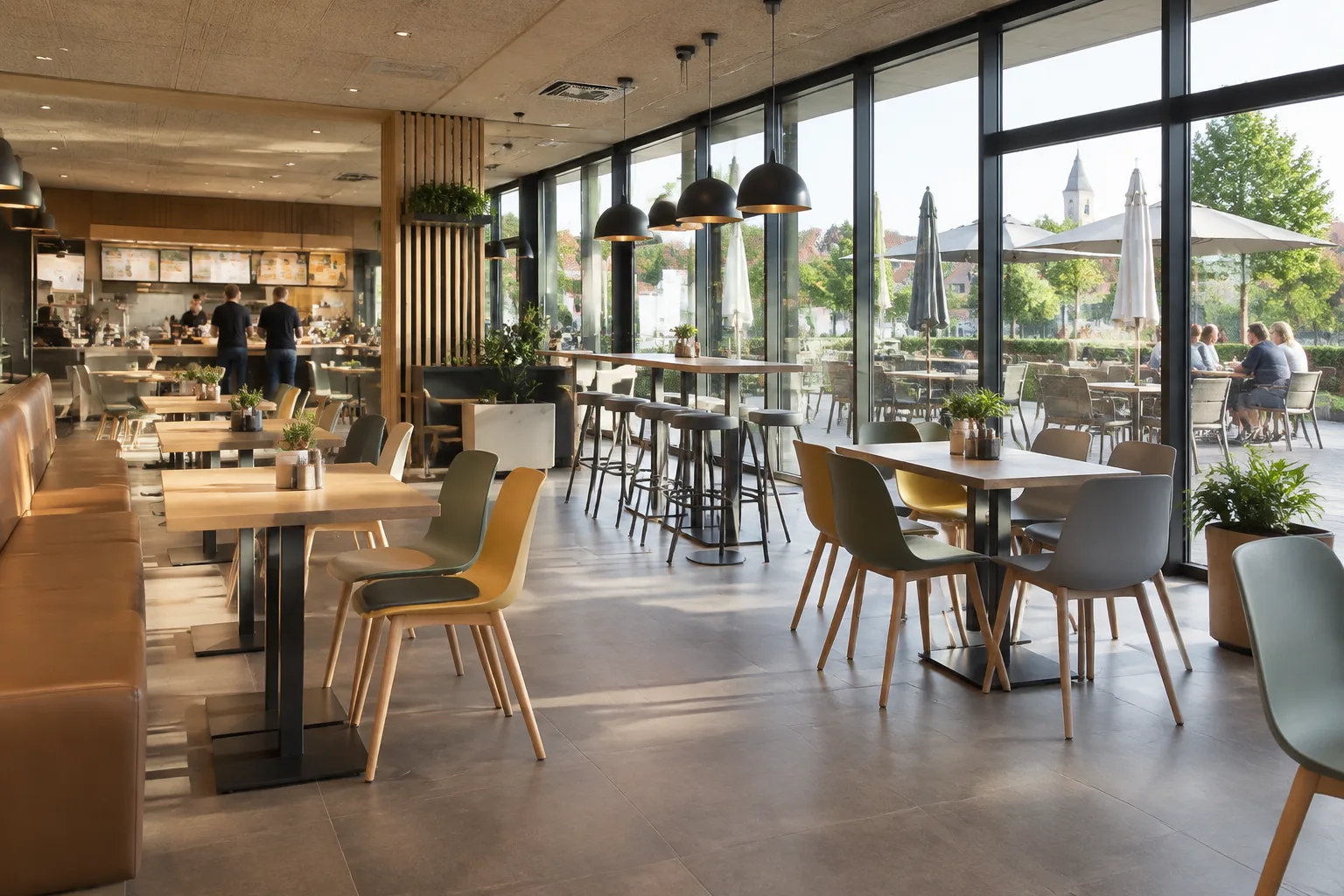
More space, updated fittings, the same menu: franchisee Sven Kauke has commissioned a multimillion-euro refurbishment of the McDonald’s restaurant on Neubeckumer Straße in Beckum, Germany. The reopening was scheduled for 8 October 2026. For those considering the German franchise market, the project offers a concrete example of how growth can come not only from opening more restaurants, but also from investing in existing businesses.
40 additional seats in the existing restaurant
The restaurant, in the district of Warendorf, had been closed for the work since 14 September. The operator put the construction period at three weeks and three days. As L’Express Franchise reported on 7 October, the restaurant was due to reopen the following Thursday with substantially updated fittings. Kauke is not opening a new location: the project involves modernising the existing restaurant.
The most tangible change is the seating capacity. Indoor seating is increasing from 80 to 100, while terrace seating is rising from 40 to 60. That brings the total to 160 seats, up from 120 — a capacity increase of one third. The additional seats are split equally between the restaurant interior and the outdoor area.
The menu, however, remains unchanged. The investment therefore focuses on the premises and fittings rather than a new food offering. The report does not give an exact investment figure for Beckum, describing it only as a multimillion-euro sum. It is also important to distinguish the announced reopening date from confirmation that trading has actually resumed.
Kauke has already invested in Soest
For Sven Kauke, a second-generation franchisee, Beckum is not his first major modernisation project. In 2025, he invested around €1.4 million in a McDonald’s restaurant in Soest. The work there included digital ordering kiosks, an expanded McDrive drive-through with service windows extending to the kerb, and a larger terrace.
The number of terrace seats in Soest rose from 28 to 60. That restaurant also closed during the work, its first closure in ten years. After reopening in September 2025, it operated under the IRLX concept, short for “In Real Life Experience”, which places greater emphasis on digital ordering.
The two projects have distinct, documented priorities: changes to ordering and drive-through collection in Soest, and additional seating in particular in Beckum. The features installed in Soest should therefore not automatically be assumed to form part of the Beckum refurbishment. What both projects share is investment in an existing location, accompanied by a temporary closure.
Modernising existing premises affects many franchise businesses
The local refurbishment takes place against the backdrop of a restaurant network run overwhelmingly by franchise partners. According to figures from Germany’s Federal Association of System Catering cited in the report, 1,283 of the country’s 1,364 McDonald’s restaurants are operated by franchisees. That is around 94 per cent, with approximately 210 independent business owners behind them.
This scale illustrates why upgrading existing restaurants matters to the franchise sector. Changes to the German network mainly affect restaurants run by independent partners. Beckum provides a specific example: a franchisee invests in an existing location, suspends trading during the work and then increases its capacity.
In August 2024, McDonald’s Germany announced an investment programme worth around €3 billion over several years. This includes approximately 500 new restaurants as well as upgrades to existing premises. New openings and modernisation are therefore two parts of the same development strategy. However, the overall announcement does not reveal any specific cost allocation for the Beckum project.
More capacity is not yet proof of profitability
The refurbishment establishes one clear change: the Beckum restaurant will be able to seat more guests. Whether the updated fittings also shorten waiting times or attract additional customers will only become clear once the restaurant is operating. The increase in capacity alone does not answer those questions.
Nor does the multimillion-euro investment figure indicate when the project will pay for itself. That will depend on the restaurant’s financial performance after reopening. For prospective franchisees, the practical value of this example lies less in any promise of success than in the visible scope of an upgrade to an existing business: implementation involves not just capital expenditure, but also several weeks of closure.
Practical takeaway: Anyone taking over or developing a franchise business should budget for more than the initial investment. Future refurbishments, additional capacity and any necessary interruptions to trading also belong in the long-term plan.
Sources
- Die neuesten Nachrichten aus der Franchise-Branche in ...
- Hype-Kette expandiert in Franken: „Schnitzery“ sorgte ...
- McDonald's Beckum eröffnet nach Millionen-Umbau wieder
- Mülheimer Gastronom will expandieren – die Geldspritze kommt von Lotto-Chico
- Eins Presse – Pressemitteilung
- Wachstum: Cookie Couture vor dem nächsten Sprung
- EVA Franchise eröffnen: VR Gaming neu gedacht