Mangal x LP10: Duisburg closure and a focus on prime locations
Mangal x LP10 has closed its Duisburg-Mittelmeiderich restaurant. The franchise brand now plans to focus more on railway stations and other high-footfall locations.
Published
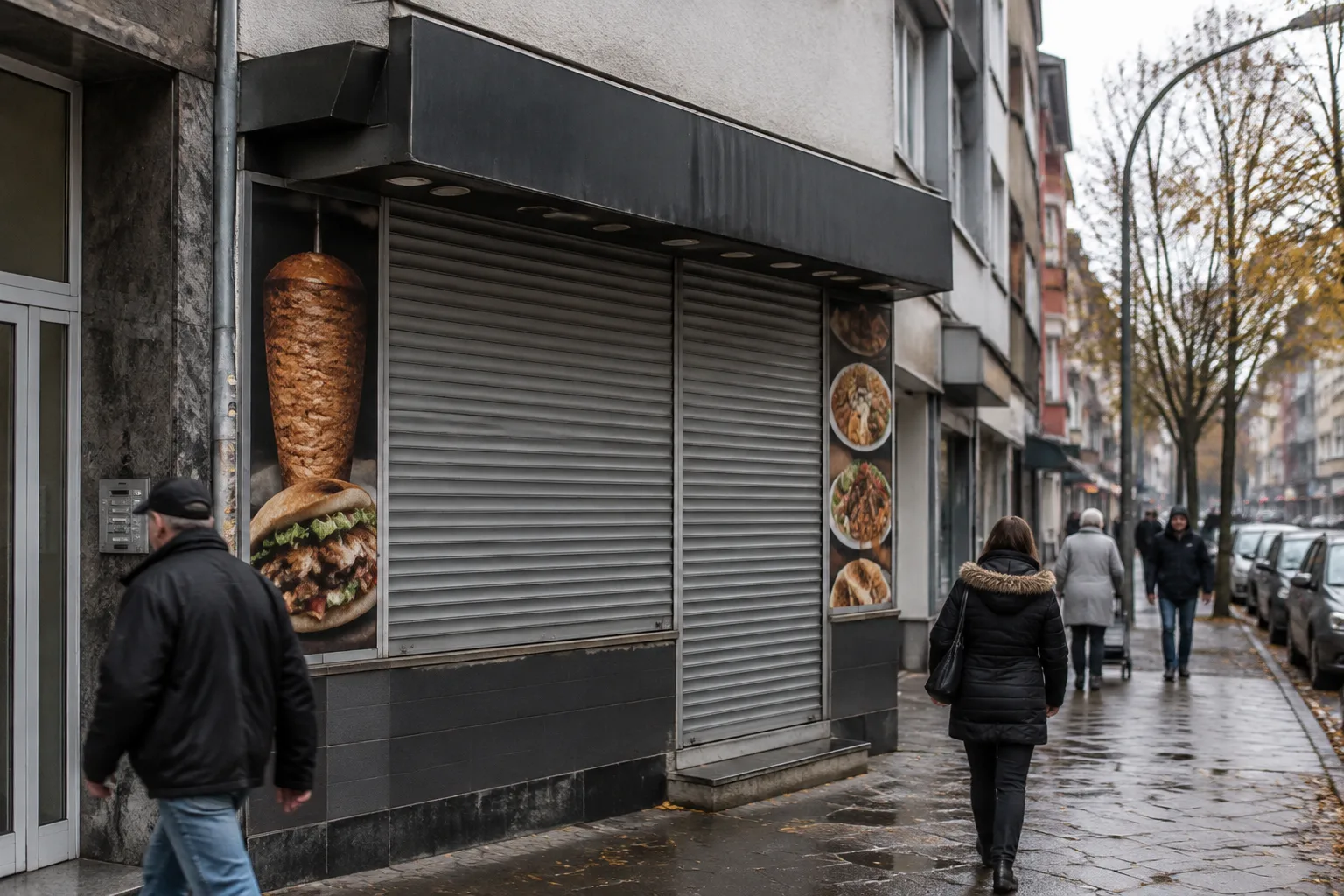
Mangal x LP10 has lost another location in Duisburg, Germany: its restaurant on Von-der-Mark-Straße in the Mittelmeiderich district has closed after less than a year. The closure is attributed to the franchisee’s personal circumstances. Meanwhile, the döner kebab brand plans to focus more heavily on high-footfall locations. For the franchise community, the case raises two distinct questions: continuity of ownership and operation, and site selection.
Second closure in Duisburg
The Westfälische Anzeiger reported the Mittelmeiderich closure on 26 October 2026, citing the WAZ newspaper. According to the report, the franchisee’s personal circumstances were the deciding factor in the restaurant closing after such a short time. This does not establish a financial reason for the closure.
The restaurant had also been advertised for takeover on the property portal ImmoScout24. The asking price, including fixtures, fittings and equipment, was €160,000. This figure should be understood as an asking price for taking over the business, not a confirmed sale price. Nor can it be equated with the original investment costs or a standard entry cost for the franchise network.
This is the brand’s second withdrawal within Duisburg. Another operator had previously pulled out of the Harnackstraße premises, which have since been taken over by Has Döner. According to the report, this leaves only the restaurant at Duisburg’s main railway station in Mangal x LP10’s local network. That location opened in October 2024 after several delays.
The two departures therefore involve different premises and operators. They show how the brand’s Duisburg network has changed, but do not in themselves establish a common cause. This distinction is particularly important when assessing franchise news: a withdrawal for personal reasons is not the same as proven shortcomings in the concept’s commercial viability.
Greater focus on railway stations and shopping streets
Alongside the closure, the report describes a shift in site selection. According to managing director Marco Schepers, Mangal x LP10 intends to concentrate on prominent, high-footfall locations. Shopping streets, railway stations and tourist hotspots are specifically mentioned.
The remaining Duisburg restaurant at the main railway station therefore fits one of the stated location categories. However, the announcement provides neither a specific timetable for further openings nor a list of target cities. For now, it sets out the direction of the brand’s property search.
This distinction matters for prospective franchisees. A preferred type of location is not an assessment of any individual premises. Anyone considering a site should therefore look beyond labels such as ‘railway station’ or ‘shopping street’ and examine the particular unit and its conditions. Relevant checks include actual pedestrian flows, entrance visibility, rental costs and operational requirements.
The announced focus on high-footfall locations should not be read retrospectively as an explanation for the Mittelmeiderich closure. The report attributes its early closure to the operator’s personal circumstances. Site strategy and the reason for closure therefore remain separate aspects of the same story.
A well-known brand, local responsibility
Mangal x LP10 is backed by entrepreneur Metin Dag and footballer Lukas Podolski, whose name also forms part of the brand. According to the report, the business has grown into a franchise network with just over 50 locations across Germany. That figure describes the network at the time of reporting, rather than an announced expansion target.
This nationwide presence now contrasts with a local Duisburg network reduced to a single restaurant. It illustrates that a brand’s national development can differ from its position in an individual city. Two local departures are therefore not enough to draw reliable conclusions about the financial performance of the entire network.
For the franchise community, the case is particularly relevant to continuity of operation. Alongside assessing the brand concept, anyone reviewing a site should consider how the business could continue trading or be handed over if the operator’s personal circumstances changed. A high-profile brand is no substitute for this kind of business contingency planning.
What prospective franchisees can take away
Anyone considering joining the network or taking over an existing restaurant should not treat the Duisburg news as a blanket verdict on Mangal x LP10. The firm points are the specific closure, the reported personal circumstances behind it, the earlier takeover listing and the announced focus on high-footfall locations.
Practical takeaway: Assess site quality, the operator’s personal ability to run the business and handover options separately. An asking price for an existing restaurant is neither proof of profitability nor a general benchmark for the cost of joining a franchise network.