EASYFITNESS plans advertising revenue for franchisees
EASYFITNESS and Fitvertise have agreed to centralise advertising sales. A pilot project will launch in company-owned clubs in the fourth quarter of 2026.
Published
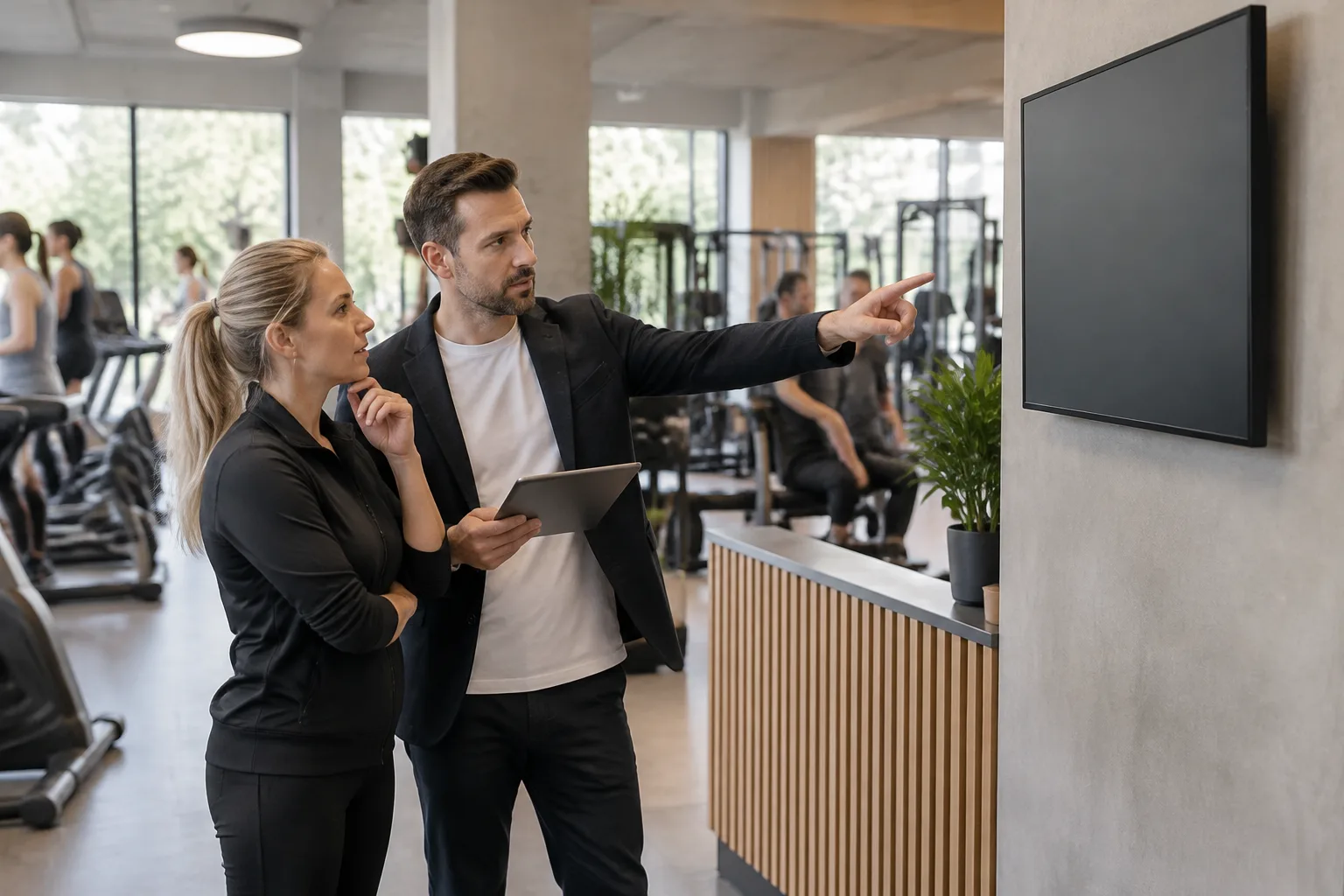
EASYFITNESS aims to give its gym operators another source of revenue alongside memberships. Working with advertising sales specialist Fitvertise, it plans to sell advertising space and special advertising formats in its fitness clubs. EASYFITNESS Franchise GmbH announced a framework agreement on 23 October 2026. The initiative will begin in company-owned clubs before being gradually opened up to franchisees.
Framework agreement establishes a shared basis
The agreement between EASYFITNESS and Fitvertise, which specialises in the gym sector, provides for the joint sale of advertising space and special advertising formats. According to EASYFITNESS, the partnership is intended to create additional commercial opportunities for operators within its network. It will also allow advertisers to reach their target audiences in a fitness setting.
The focus is on a centralised structure for advertising sales across the network. This is therefore not an announcement of new gyms, but a plan to generate revenue from existing resources. EASYFITNESS describes the partnership as part of the strategic development of its franchise system, supplementing its core membership business with additional revenue opportunities.
For those assessing the German franchise market, the combination of central coordination and local participation is particularly relevant. Advertising sales will be organised at network level, while individual gym operators are intended to receive a direct share of the advertising revenue generated at their sites. Revenue sharing with operators is therefore an explicit part of the proposed model, rather than simply a potential side benefit of additional advertising.
Pilot phase starts in company-owned clubs
Implementation is scheduled to begin in the fourth quarter of 2026, initially with a pilot phase in company-owned EASYFITNESS clubs. The framework agreement does not mean that the service is already available throughout the franchise network.
The company identifies three specific tasks for the trial: integrating advertising formats into day-to-day gym operations, testing organisational processes and selling the advertising in practice. The pilot will therefore assess more than how advertising can fit into a workout environment. It will also test the coordination and sales activity needed to support the service.
This sequence matters for franchisees. Initial experience will be gained in company-owned clubs before the model becomes available to operators within the network. A gradual rollout is planned based on the results. The agreement does not announce an immediate network-wide launch.
The pilot is therefore the next concrete step. Expansion across the franchise system remains a future prospect, with the practical arrangements to be shaped by experience from this first phase.
Nationwide network provides a basis for advertising sales
In its announcement, EASYFITNESS puts the size of its network at around 180 gyms and approximately 450,000 members. These figures describe the underlying network for the proposed advertising service. They should not be taken as an indication of advertising reach already available or the number of clubs taking part in the pilot.
According to the company, the network combines reach across regions with a local presence. The partnership with Fitvertise is intended to make systematic use of this combination. For advertisers, the proposed service would offer a shared fitness setting while also allowing a presence at individual locations.
Central coordination is a key element of the announcement. EASYFITNESS wants to organise advertising sales across the network and unlock commercial potential through standardised solutions that are straightforward to implement. Whether this can be achieved in day-to-day operations is one of the questions the planned trial is intended to explore.
It is therefore important to distinguish between network size and actual implementation. The nationwide system provides the potential scope, but the initiative will start with a limited first phase in company-owned clubs.
What the agreement means for franchisees
For existing franchisees, the partnership offers the prospect of an additional income stream alongside memberships. The plan is for operators to receive a direct share of the advertising revenue generated at their own location. The announcement therefore describes a proposed revenue model, not additional income already being earned.
When assessing such an offer, operators should distinguish between the promise of centrally managed advertising sales and the specific benefits for their own gym. Key practical considerations include the eventual participation terms, how revenue shares will be calculated and which tasks will need to be handled locally. Operators should also establish how the proposed formats will fit around normal gym use.
Practical takeaway: EASYFITNESS franchisees should monitor the pilot results and review revenue sharing, responsibilities and operational workload before taking part. The framework agreement lays the groundwork; the trial is intended to show how it can become a workable additional service for gyms.