Tampere’s ‘100% chain-free’ campaign brings together 81 businesses
A restaurant campaign launched in Tampere, Finland, is putting small business owners in the spotlight. For the franchising community, it raises questions about the visibility of local entrepreneurs.
Published
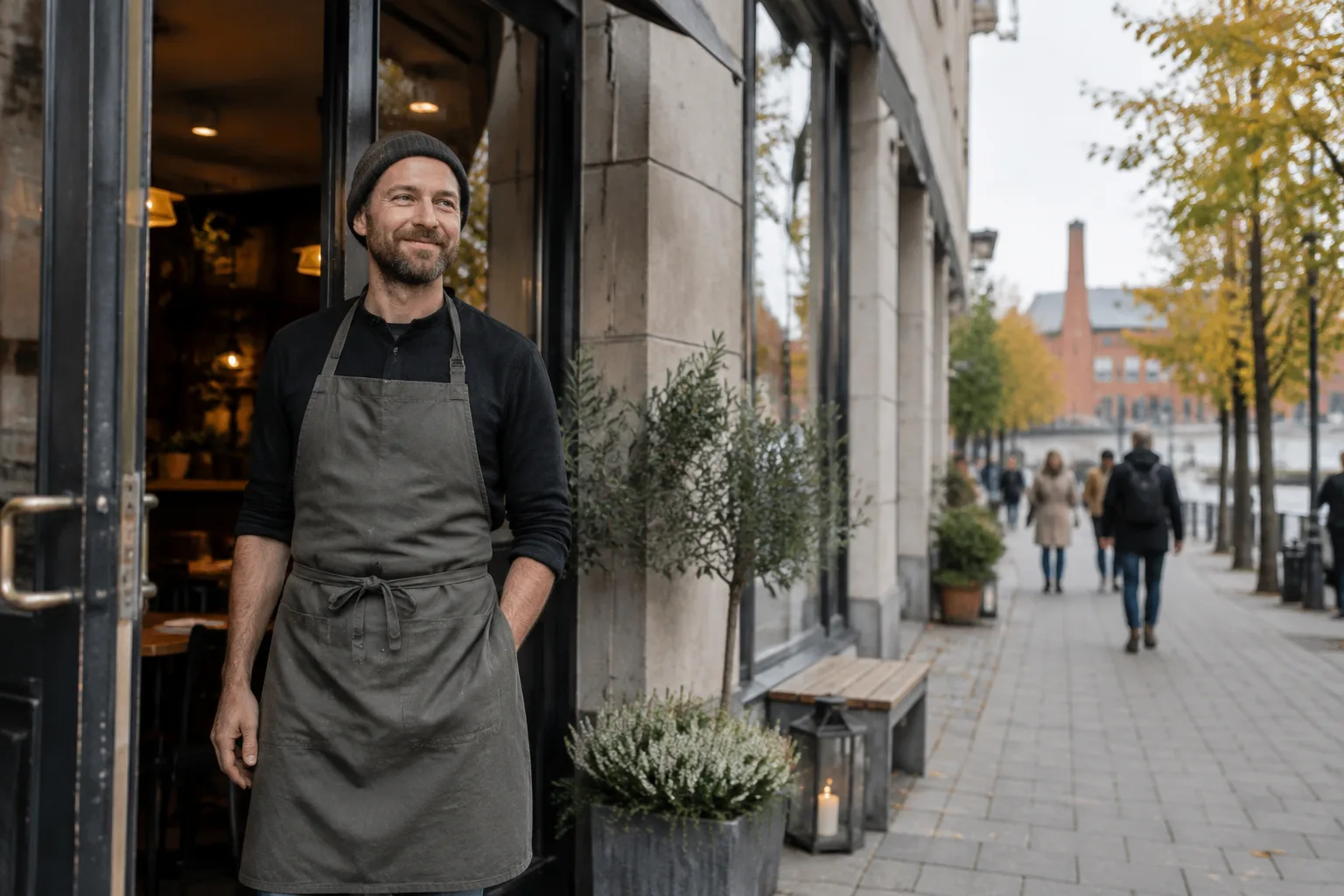
A marketing campaign launched in Tampere, Finland, under the slogan ‘100% chain-free’ has attracted 81 restaurant businesses, according to a report published by Finnish public broadcaster Yle on 25 September 2026. With blue signs appearing across the city, the campaign highlights restaurants run by small business owners and challenges the restaurant giants. For the franchising community, the story offers a timely reason to examine how businesses communicate entrepreneurship and local ties to customers.
A shared message about independence from chains
At the heart of the campaign is an easily recognisable phrase: ‘100% chain-free’. According to Yle, blue campaign signs have appeared on Tampere’s streets, and 81 businesses have already joined. The campaign gives restaurants run by small business owners visibility through a shared message, even though that message emphasises their independence from chains.
This is the interesting dynamic behind the story: individual restaurants are using collective marketing to highlight their independence. The campaign slogan does not primarily describe the menu, price range or style of service, but rather the restaurant’s relationship with chains. It gives customers another factor to consider when choosing where to eat.
Yle’s report presents the campaign as a challenger to restaurant giants. However, the available source material neither names the chains being targeted nor distinguishes between their operating models. There is therefore no basis for interpreting it as a campaign aimed exclusively at franchised restaurants. Emphasising independence from chains is not automatically the same as criticising franchising.
The significance of the participation figure also needs to be kept in perspective. The figure of 81 refers to the number of businesses that had joined the campaign when the report was published. It says nothing about how many customers the campaign has reached, participants’ sales or how many restaurants have changed their marketing because of it.
How visible is the local business owner?
For the franchising community, the most interesting question raised by the campaign concerns the visibility of the business owner. When independence from chains is linked with small business ownership, a restaurant belonging to a chain should consider what its own communications tell customers about the people behind it. Do customers see only the brand, or also the entrepreneur responsible for the restaurant?
This is an editorial observation about the campaign’s positioning, not a research finding about customer perceptions. The available material includes neither a consumer survey nor information on how Tampere residents view franchise ownership. It cannot support claims that customers regard all chain restaurants as alike or fail to recognise their individual business owners.
Even so, the campaign offers a practical perspective on customer communications. If a restaurant is run by a local franchisee, that can be stated clearly and accurately. Customers may, for example, value knowing who runs the business and how the owner’s own work shapes the restaurant’s day-to-day operations. Such details must always be verified for each restaurant.
Nor should local ties become an overly broad promise. The owner’s business location, company ownership, the origin of ingredients and purchasing decisions are separate matters. One local feature should not be used to imply that every aspect of the operation is local. A precise description serves customers better than a sweeping rebuttal to a campaign emphasising independence from chains.
Participation figures do not yet demonstrate a market shift
The campaign’s 81 participants are the central numerical fact in the report. The figure shows that a shared marketing message has brought together a group of businesses. However, the material does not indicate what proportion of Tampere’s restaurants they represent, or provide a breakdown of business sizes, numbers of outlets or differences between participants.
The figure therefore cannot be used to infer the market share of restaurants outside chains. Nor does it demonstrate that demand for chain restaurants has declined or that customers are moving from restaurants using one business model to those using another. Such conclusions would require separate evidence, such as customer traffic and sales trends.
The geographical scope matters too. According to Yle, the campaign began in Tampere. The available material provides no basis for describing it as a nationwide movement or reporting expansion into other cities. The news concerns a marketing campaign originating in Tampere and its reported number of participants.
For the franchising community, then, this is primarily a communications initiative worth monitoring, not evidence of a change in direction across the restaurant market. The distinction is important: a visible campaign can spark debate, but its commercial effects must be assessed separately. At this stage, the available material does not allow those effects to be measured.
Clear information rather than confrontation
A campaign built around independence from chains gives the franchising community an opportunity to review its own customer communications without launching a counter-campaign. The point is not to dispute independent restaurants’ right to explain how they operate, but to ensure that clear information about franchisees’ businesses is available too.
Restaurants should distinguish between the brand’s shared story and the story of the entrepreneur behind their particular outlet. There can be room for both, provided the claims are factual. At the same time, businesses should avoid assumptions about competitors’ ownership, responsible business practices or service quality: a campaign slogan alone tells us none of these things.
The established facts of the Tampere story are limited but clear. Restaurants run by small business owners are being promoted through a shared campaign involving 81 businesses, according to Yle. Broader conclusions about the market must await further information.
Practical takeaway: check whether your restaurant’s customer communications include a clear, accurate description of its owner and business model. Give concrete information about your own restaurant rather than defining it in relation to competitors.