Selecting a Franchisee in Egypt: Assessing Candidates Before Signing
How do you choose a partner capable of operating your brand? Practical steps for assessing a candidate’s financial and management readiness and making a documented decision before awarding a franchise.
Published
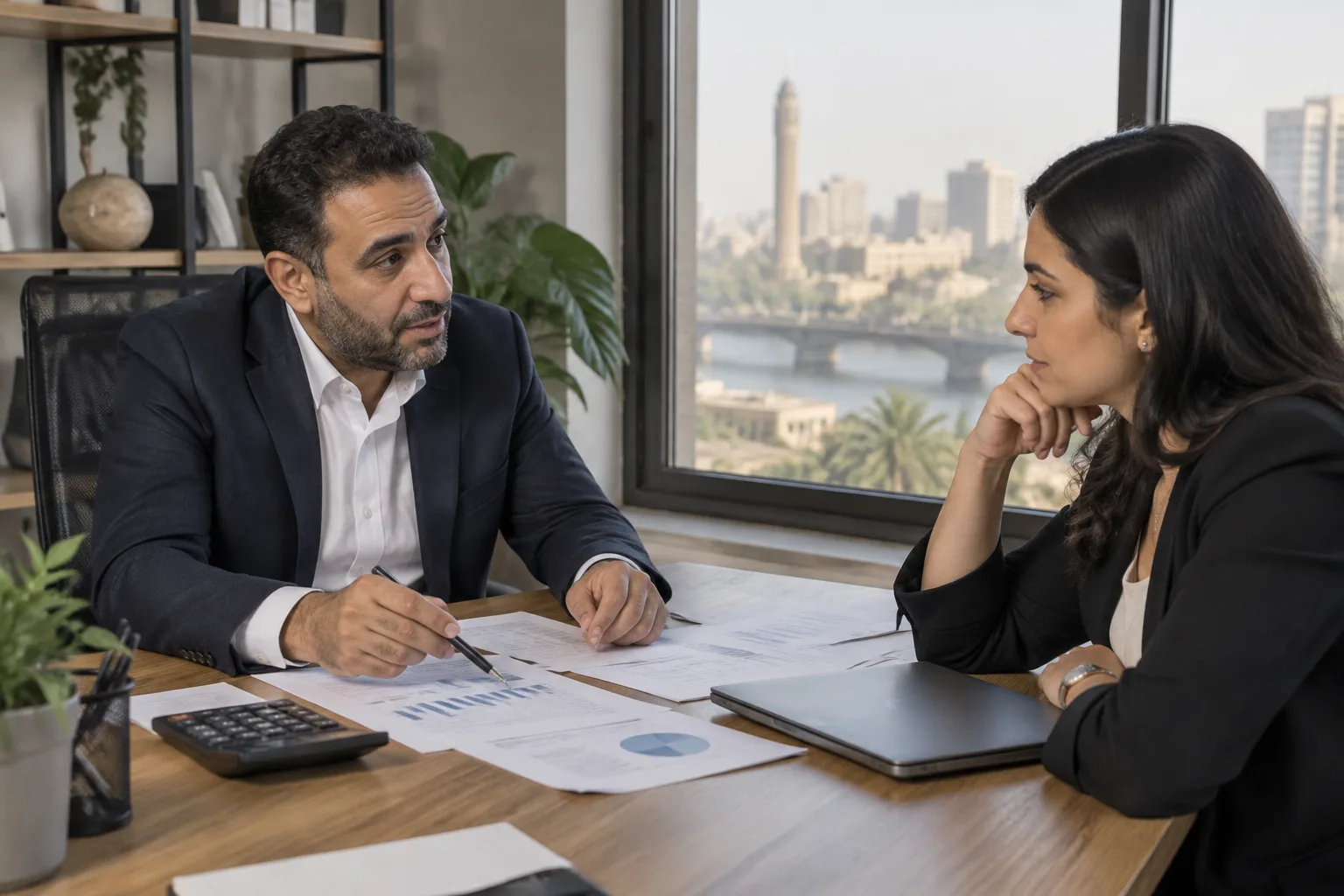
An investor may have the money to pay the initial franchise fee but lack the time or skills to manage an outlet. Turning your existing business into a successful franchise network therefore starts with choosing the right franchisee, not accepting the first serious offer. You need an assessment process that establishes the candidate’s ability to run the business, follow the system and bear the venture’s risks, without turning an introductory meeting into a promise of acceptance or collecting documents you do not need.
1. Define your franchisee criteria before accepting applications
Start with the actual needs of your business, rather than a picture of the ideal investor on paper. If an outlet’s success depends on daily oversight of stock and staff, ask yourself: do you need a full-time owner-operator, or would you accept an investor who appoints a qualified manager? If the business requires technical expertise, decide whether candidates must already have it or can acquire it through training.
Create a standard assessment scorecard covering:
- Financial capacity: Funding fit-out and operations, not just paying the initial fee.
- Management capability: Overseeing staff, expenditure and reporting, and resolving problems.
- Willingness to comply: Following the system rather than changing the product or service to suit personal preferences.
- Time commitment and responsibility: Establishing who will actually run the business and who has decision-making authority.
- Realistic expectations: Accepting that sales may take longer to develop and that the brand does not guarantee a profit.
Distinguish between non-negotiable requirements and areas that can be improved through training. A lack of experience that can be addressed through learning should not carry the same weight as a refusal to comply with quality standards. Apply the same criteria to all applicants so that negotiating strength does not become a substitute for readiness.
2. Assess funding as the ability to keep the business going
Egypt’s Micro, Small and Medium Enterprise Development Agency identifies sufficient capital and a willingness to take responsibility and bear risk among the considerations for obtaining a franchise. In practice, it is not enough for the sales team to ask, ‘Do you have the investment amount?’ A better approach is to review with the candidate how the funds will be used, where they will come from and whether they will be available when needed.
Request a simple statement distinguishing between personal funds, borrowing and partner contributions, alongside estimates for fit-out, stock, salaries, rent, pre-opening expenses and working capital. Ask for proportionate supporting evidence, and do not treat an asset that is difficult to sell as equivalent to available cash.
Discuss a scenario in which sales fall short of the candidate’s expectations or the opening is delayed. Who will fund the expenses? Is the investor relying on drawing a personal income from the outlet from the outset? Clear answers matter more than enthusiasm for optimistic figures.
If funding depends on bank approval or a partner joining the venture, record it as unresolved. Do not treat potential funding as available, or push the candidate into irreversible commitments before completing the assessment.
3. Test the candidate’s approach to operations
A good interview goes beyond career history. Use hypothetical situations from your business without revealing operational secrets: what would the candidate do if the outlet manager were absent on a busy day? How would they respond if an employee suggested using a cheaper material that the brand had not approved? What if sales increased while available cash declined?
Assess the reasoning behind the answers. Does the candidate investigate the cause, document the problem and consult the appropriate person, or jump to solutions that breach the system? You are not looking for rehearsed model answers, but for a willingness to learn and work in a disciplined way.
You could arrange an observation visit to an existing outlet, while protecting customer data and confidential information. Afterwards, ask the candidate to describe the operator’s daily responsibilities and the challenges they noticed. This is not another test of the outlet’s success; it tests whether the investor understands the role they are buying the right to perform.
If the candidate intends to appoint a manager, assess the proposed manager too. Make clear that having a strong manager does not remove the franchisee’s responsibility to provide resources, maintain oversight and meet their obligations.
4. Keep due diligence proportionate within Egypt’s legal framework
Egypt has no standalone franchise law, no general registration authority dedicated to franchise agreements and no mandatory franchise-specific disclosure document. However, the relationship is not unregulated. The general rules governing contracts under Civil Code No. 131 of 1948, Commercial Law No. 17 of 1999 and Intellectual Property Rights Protection Law No. 82 of 2002 apply, depending on the subject matter of the relationship.
The technology transfer provisions of the Commercial Law, including their disclosure obligations, may apply if the relationship meets the relevant conditions. Agency or distribution features may also require a review of Commercial Agency Law No. 120 of 1982. Do not assume that the absence of a dedicated franchise law removes pre-contractual obligations.
For the candidate’s file, collect only information needed for a defined purpose, taking account of Personal Data Protection Law No. 151 of 2020 when processing data electronically. Set rules for access, retention and deletion, and consult a legal adviser before requesting sensitive data or conducting extensive background checks. Commonly circulated document checklists are not uniform legal requirements for every franchise applicant.
5. Make a documented decision, not a sales-driven one
Bring the financial, operational and legal assessment findings together in a short memorandum. The decision should be to approve progression to contracting, require specific outstanding conditions to be met, or reject the application with reasons recorded internally. Avoid vague statements such as ‘excellent candidate’ without supporting evidence.
Ideally, the person selling the franchise opportunity should not make the decision alone. Involve operations and finance, and record any exceptions, who approved them and why. Clearly inform the candidate that passing the assessment does not entitle them to use the brand or begin operating before the necessary agreements and requirements have been completed.
Practical takeaway: Before meeting your next investor, prepare an assessment scorecard, a proportionate list of supporting evidence and a clear allocation of approval authority. Selecting franchisees for their ability to sustain the business protects the franchise network more effectively than collecting initial fees quickly.
Sources
- Franchising in Egypt 2026: No Franchise Law, Four Contract ...
- الأمتياز التجاري
- Franchise Agreements In Egypt: The Complete ...
- عقد الفرنشايز فى القانون المصرى
- A Brief Guide To Franchise In Egypt
- الإطار القانوني لعقود الفرنشايز في مصر وحقوق الأطراف
- عقد الفرنشايز فى القانون المصري تاريخه وأحكامه و 3نماذج منه
- The Legal Framework for Franchise Agreements