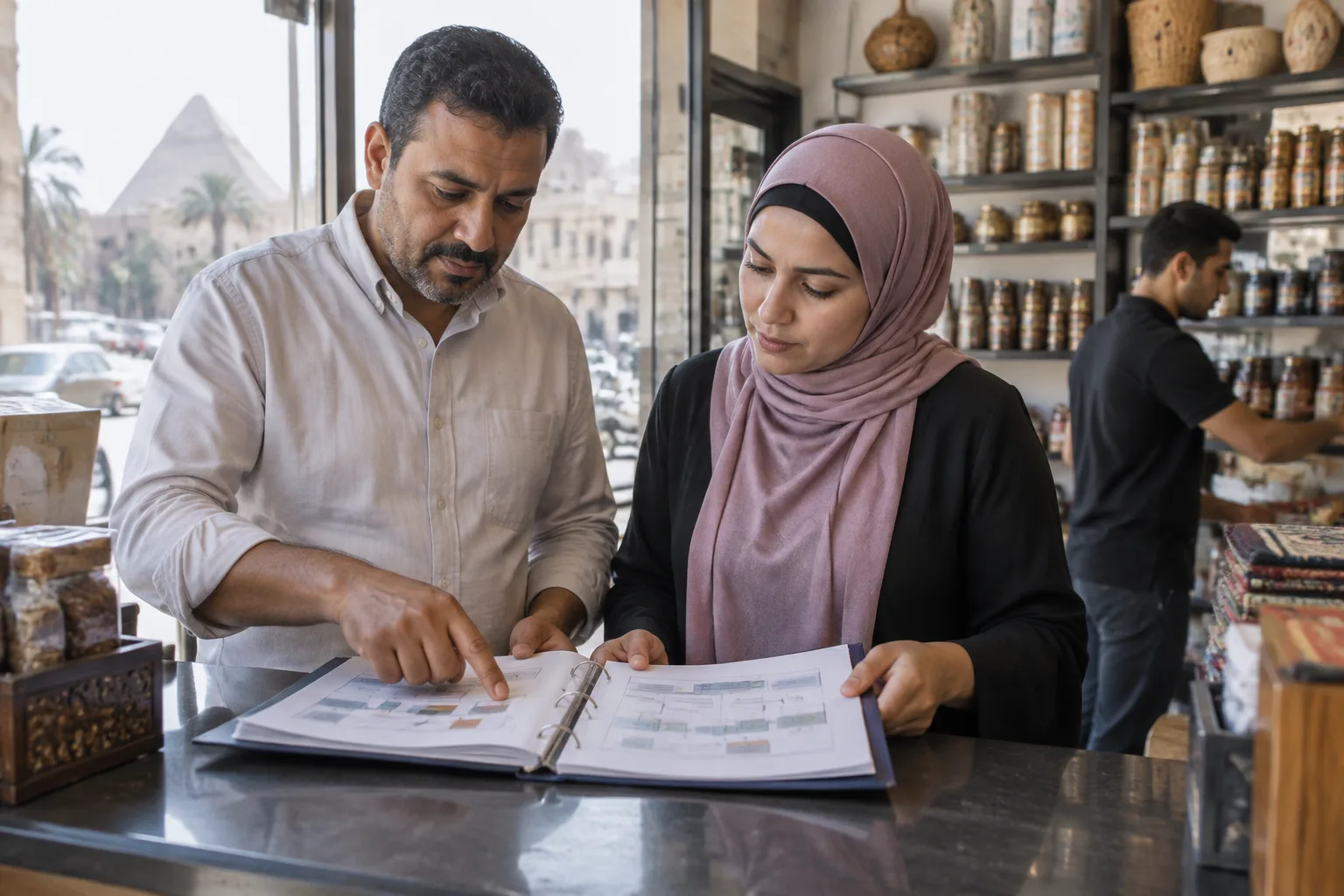
The Franchise Pilot Outlet in Egypt: Testing Success Without the Founder
Before awarding your first franchise, test whether your outlet can operate without your daily involvement, bear the costs a franchisee would face and reproduce results under realistic conditions.
Published

A business that succeeds under your direct management is not necessarily ready for franchising. Its profits may depend on your constant presence, personal relationships with suppliers or family labour whose cost does not appear in the accounts. Before welcoming your first franchise partner, use a pilot outlet to answer one specific question: can another team run the model with consistent quality and viable economics, without relying on you to solve every problem?
1. Define what you want to prove before starting the pilot
A pilot outlet is not simply another opening. It is a structured test of whether an existing business can be replicated. You can use a company-owned outlet rather than expose an independent investor to the risks of a model that is not yet mature. What matters is that its conditions closely resemble those of the franchise outlet you intend to offer: floor space, fit-out and equipment, staffing levels, customer profile and service delivery.
Draw up a short test plan setting out the questions that will determine success:
- Can a manager other than the founder make day-to-day decisions within clearly defined authority?
- Can the team maintain product or service quality under pressure and during shift changes?
- Does revenue cover realistic operating costs and the proposed fees payable by the franchisee?
- Can the franchisor's head office provide support without keeping an expert on site at all times?
Set your acceptance criteria and thresholds in advance, using your own business data rather than generic figures from unrelated ventures. Do not make strong sales the sole measure of success: they may conceal waste, overstaffing or your unpaid interventions. Also record any conditions that make the pilot unrepresentative, such as an exceptional rent exemption or supplier discounts that would not be available to a franchisee.
2. Run the outlet without hidden reliance on the founder
Appoint a manager with clear responsibility, then gradually delegate authority while maintaining safety controls and oversight. Start by handing over routine decisions, then test the team's ability to manage full working days without you on site. Do not test independence by leaving the team unprepared: the aim is to assess whether the system works, not whether staff can guess what to do.
Keep a log of every intervention by you or the central team. Record the problem, who identified it, why it was escalated, how long it took to resolve and whether the manager already had access to the solution. If you personally call the supplier to expedite every order, that is a real service whose cost must be accounted for, not evidence that the outlet operates independently.
Test everyday situations such as a staff absence, a surge in demand or the rejection of a delivery that does not meet specifications. Avoid creating situations that compromise customer safety or breach legal requirements. After each incident, ask whether the weakness lies in the employee's skills, the manager's authority or the design of the business model itself.
Repeat the test after making corrections. A successful next shift with the founder present does not prove that the problem has been solved. The same team must succeed using the resources that will be available to the franchisee.
3. Recalculate profits as the franchisee would experience them
Keep the pilot outlet's accounts separate from the business's consolidated accounts. Show its revenue, expenses, stock, waste, returns and labour costs independently. Then reassess the results from the perspective of an investor facing real commercial terms, rather than solely from that of the company that owns the outlet.
If you own the premises, include an evidence-based estimate of the rent for a comparable location in the viability analysis. If you manage the outlet yourself, allow for the cost of a replacement manager. For modelling purposes, also include the proposed recurring fees and marketing contributions, clearly distinguishing these from actual payments.
Separate set-up costs from operating expenses, and do not confuse accounting profit with available cash. An outlet may appear profitable while needing additional funding because of stock levels or payment schedules. Test the effect of falling sales or rising input costs using explicit assumptions, without presenting these scenarios as guaranteed outcomes.
Choose a testing period that covers a range of conditions relevant to your business, rather than an exceptional opening week. If sales are seasonal, do not extrapolate peak-season results across the whole year.
4. Distinguish readiness testing from legal requirements
Egypt has no comprehensive standalone franchise law, nor a general franchise-specific regime requiring agreements to be registered or a standard disclosure document to be provided. A pilot outlet is therefore a management tool for assessing readiness, not a government certification granting the right to expand or exemption from legal obligations.
The relationship is subject to Civil Code Law No. 131 of 1948, including its rules on contract formation and performance in good faith, and Commercial Law No. 17 of 1999. The technology transfer provisions in Articles 72–87 may apply, depending on the substance of the agreement. Where they do apply, there are requirements for agreements to be in writing and specific disclosure obligations. The absence of a franchise-specific disclosure regime therefore does not mean there is no duty to disclose.
Intellectual Property Rights Protection Law No. 82 of 2002 governs trade mark rights and licensing, while Commercial Agency Law No. 120 of 1982 may be relevant depending on the true nature of the relationship. Review the legal classification with an Egyptian lawyer before entering into an agreement, and comply with the relevant business licensing, tax and employment requirements during the pilot itself.
5. Make a documented decision before selling your first franchise
Conclude the pilot with a report bringing together actual results, adjusted costs, the intervention log and recurring problems. Decide whether to begin awarding a limited number of franchises, extend the pilot after making specific improvements, or postpone franchising because the model still depends on the founder.
Do not cherry-pick the best trading days to represent the pilot, or describe financial modelling as profits actually earned by a franchisee. Retain the assumptions and supporting documents that explain the results, and assign someone responsibility and a deadline for addressing each weakness before retesting.
The practical takeaway: Test an outlet managed by someone else, calculate its costs as a franchisee would bear them, and only then award franchises once the results demonstrate that the system works without constant exceptional intervention.
Sources
- الأمتياز التجاري
- Franchising in Egypt 2026: No Franchise Law, Four Contract ...
- A Brief Guide To Franchise In Egypt
- Franchise Agreements In Egypt: The Complete ...
- عقد الفرنشايز فى القانون المصرى
- الإطار القانوني لعقود الفرنشايز في مصر وحقوق الأطراف
- عقد الفرنشايز فى القانون المصري تاريخه وأحكامه و 3نماذج منه
- The Legal Framework for Franchise Agreements