Egypt explores industrial franchising to bring manufacturing expertise to Upper Egypt
Egypt’s Ministry of Industry is studying an ‘industrial agent’ model to connect investors in Upper Egypt with factories in Cairo and the Nile Delta, and attract investment from Egyptians abroad.
Published
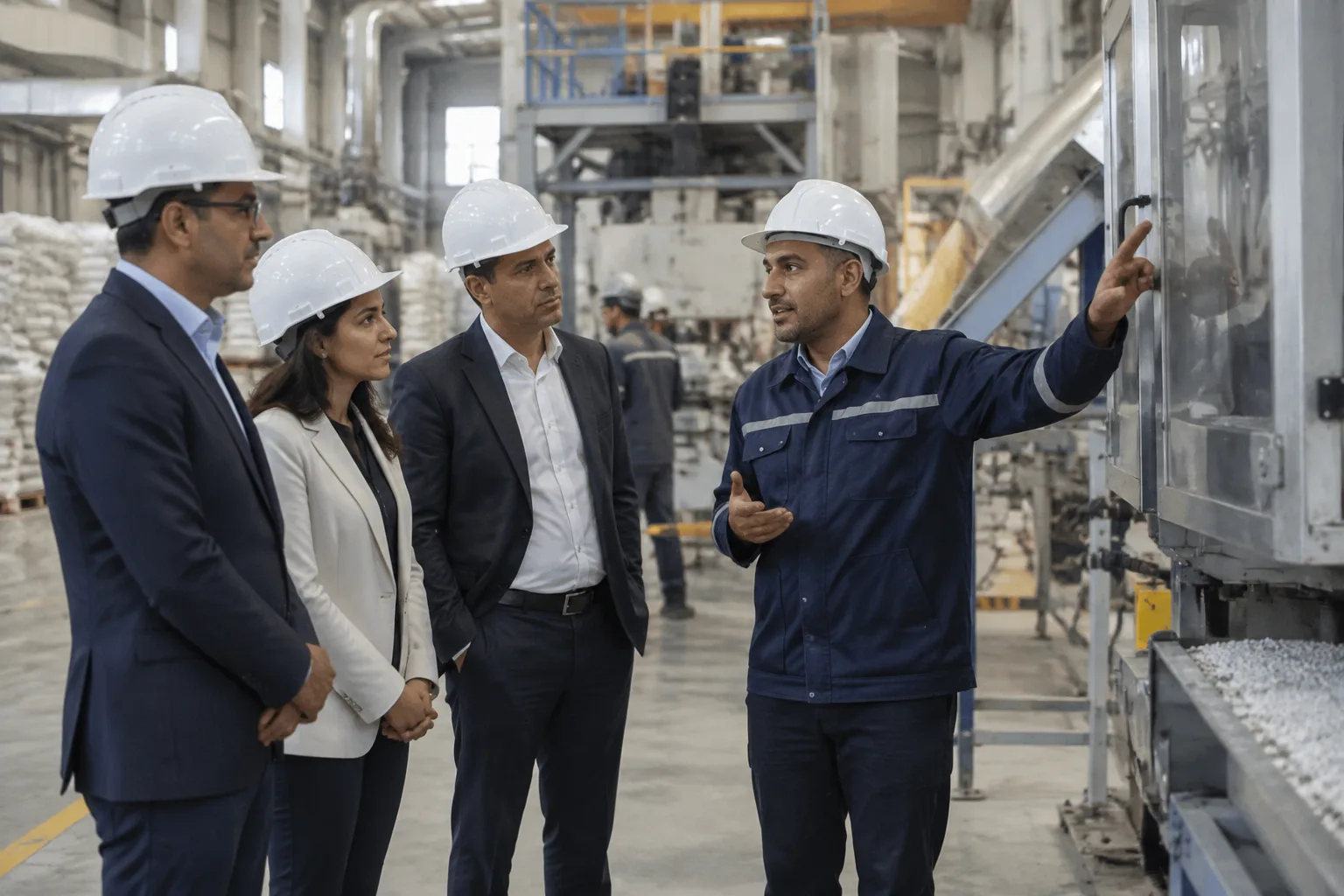
Egypt’s Ministry of Industry is considering an ‘industrial agent’, or ‘industrial franchising’, model to transfer manufacturing expertise from existing factories in Greater Cairo and the Nile Delta to Upper Egypt. The idea, outlined by Industry Minister Khaled Hashem, would connect investors in Upper Egypt with factories that have technical and technological expertise, allowing manufacturing activity to expand without requiring those factories to build new facilities themselves.
A proposed model connecting investors with expertise
Speaking at a Canadian Egyptian Business Council conference on ‘Egyptian Industry: Today’s Challenges and Tomorrow’s Opportunities’, Hashem said the ministry was studying this approach as a way to bring manufacturing expertise to Upper Egypt. According to the report published on 15 October 2026, the proposal focuses on connecting investors there with factories already operating in the Nile Delta and Greater Cairo.
The proposal centres on two parties: an investor in Upper Egypt and an established factory with transferable technical and technological expertise. Its stated aim is to expand industrial activity across Upper Egypt’s governorates by drawing on existing factories’ knowledge, rather than limiting expansion to each factory’s ability to establish new facilities itself.
The key distinction is that the model remains under consideration. The minister’s comments describe a proposed mechanism that the ministry is exploring, not the launch of a programme open for businesses to sign up to. For the franchise sector, this is therefore a development to monitor, rather than a ready-to-launch franchise opportunity.
Expansion without the original manufacturer building new factories itself
The industry minister explained that the ‘industrial franchising’ model would allow existing factories to expand into Upper Egypt without having to establish new factories themselves. This is the most notable feature of the proposal: separating the ownership of manufacturing expertise from direct responsibility for setting up the new production site.
According to Hashem, the industrial agent model aims to connect investors with the technical and technological expertise of existing factories. Transferring manufacturing know-how is therefore not a secondary feature of the proposal, but part of its stated purpose, alongside expanding industrial activity in Upper Egypt.
For the franchise sector, the idea offers a potential application of franchising in manufacturing worth following. The proposal centres on expertise, technology and the relationship between an investor and an established factory. However, calling it ‘industrial franchising’ does not, on its own, define the contractual relationship or either party’s obligations. Those details would still need to be checked when assessing any actual opportunity later on.
Egyptians abroad among the target investors
Hashem said the ministry aims to attract investment from Egyptians living abroad into industrial activity through the industrial agent model. This adds another target investor group to the proposal, alongside its geographical focus on expanding activity in Upper Egypt.
The minister also spoke about efforts to encourage successful manufacturers in the industrial cities of 10th of Ramadan, Badr and Obour to expand into Upper Egypt. The approach therefore combines drawing on the expertise of established factories in specific industrial cities with efforts to attract investment from Egyptians abroad into manufacturing.
Naming these cities does not amount to an announcement that particular factories are participating or that specific partnerships have been agreed. What has been announced is an intention to encourage manufacturers to expand, as part of the study of a model linking expertise with investors. This distinction matters for anyone tracking franchise opportunities: identifying target groups clarifies the scope of interest, but is not the same as announcing signed agreements or operational projects.
What does the proposal mean for the franchise sector?
For Egypt’s franchise sector, the significance of the news is that it brings the transfer of manufacturing expertise into the discussion about expansion models based on cooperation between independent parties. In this case, the idea has a clear geographical objective — reaching Upper Egypt — and a knowledge-transfer objective: sharing technical and technological expertise from existing factories.
Interested investors can use this development to frame due diligence questions, rather than make assumptions about the terms of an existing programme. What expertise would the factory provide? How would it be transferred in practice? What responsibility would each party bear for operations and quality? What rights and obligations would the agreement establish? These are suggested assessment questions, not details the ministry has announced about the model.
Practical takeaway: The industrial agent model is worth monitoring for investors and manufacturers interested in expanding into Upper Egypt. For now, however, the appropriate step is to distinguish a proposal under consideration from an opportunity available for contract, and to base any investment decision on clear details about knowledge transfer and each party’s responsibilities once these are announced.