Franchising in Belarus: how to secure a protected territory
How to define a franchisee’s protected territory, check exceptions and agree what happens if another outlet in the same network opens nearby.
Published
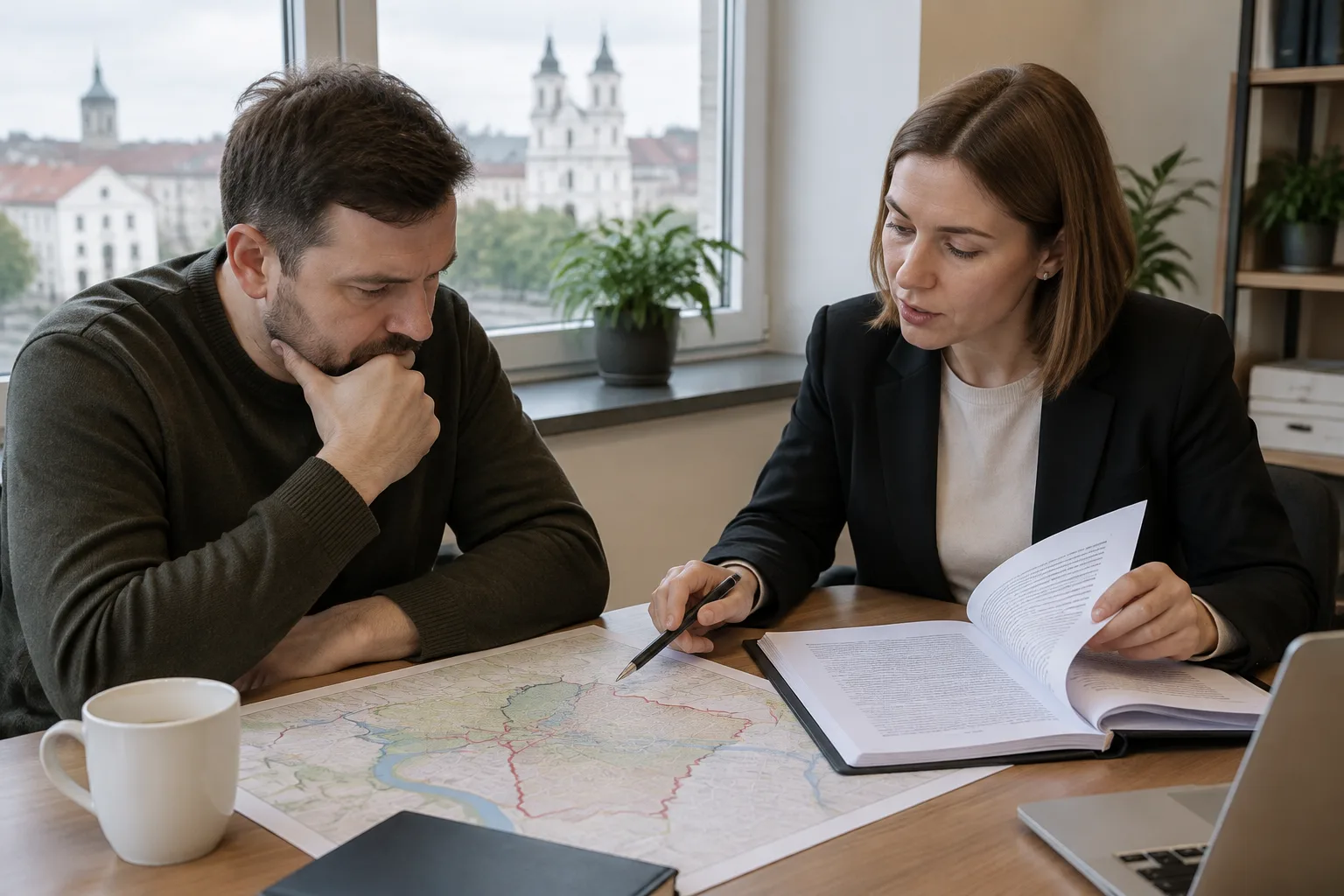
A promise that ‘you will be our only partner in the area’ does not, on its own, protect your investment in premises and launch costs. As a prospective franchisee, you need to understand exactly who will be prevented from opening another outlet nearby, where the boundaries lie and how long the protection lasts. Clear territorial rules help prevent disputes between franchise partners. Here is what to agree before buying a franchise in Belarus.
1. Distinguish between your operating territory and your protected territory
The territory in which you are allowed to use the brand is not necessarily the territory protected against new outlets in the network. Wording such as ‘the licensee operates in the city of Brest’ does not, by itself, mean that the franchisor has agreed not to open its own outlets there or enter into agreements with other partners.
In Belarus, franchising is specifically regulated by the Civil Code, although there is no separate franchising act. Article 910 describes the comprehensive business licence agreement, while Article 910-5 permits certain restrictions on the parties’ activities. In particular, the agreement may require the rights holder not to grant equivalent packages of licensed rights to others within the designated territory, or to refrain from carrying on similar business activities there itself.
Territorial exclusivity must be agreed: it does not arise automatically when you buy a franchise. The permissibility of specific restrictions must also be assessed under competition law. Protection against a neighbouring outlet in the network is not the same as a right to prevent customers from using other outlets.
Under Article 910-1, the agreement must be in writing and registered with the patent authority, the National Centre of Intellectual Property. Registration is no substitute for checking how precisely your protection is defined.
2. Set boundaries that can be checked
Terms such as ‘city centre’, ‘surrounding area’ or ‘catchment area’ are open to different interpretations. Ask for an annex containing a map and a written description of the boundaries. If the territory is defined by a radius around the outlet, specify the starting point and how distance is measured: in a straight line or along a travel route.
For a shopping centre, establish separately whether protection covers the entire building, a particular floor, a shopping arcade or the surrounding grounds as well. For an administrative district, agree what happens if its boundaries change. Otherwise, the scope of protection could change without negotiations between the parties.
Before signing, check:
- whether the territory is the same in the agreement, its annexes and the commercial proposal;
- whether the map makes it possible to determine unambiguously whether a disputed address falls within the territory;
- which document takes precedence if the descriptions differ;
- whether the franchisor can change the boundaries without your consent;
- whether protection continues if your outlet moves to an agreed new location.
For example, a promise not to open outlets ‘near the shop’ is difficult to verify. Boundaries defined by named streets, together with an agreed map, give both parties a clear reference point, although they do not, on their own, define what is prohibited.
3. Establish which outlets and exceptions the protection covers
Even a precise map is of little use if the restriction covers only one format. A full-sized shop, a shopping-centre kiosk, a collection point and a temporary stall may serve overlapping customer groups, yet the agreement may treat them as different types of outlet.
Ask the franchisor to list the formats it is entitled to open within the protected territory. Discuss separately the network’s company-owned outlets, other franchisees’ outlets and the activities of companies affiliated with the franchisor. Do not assume that an obligation undertaken by one company automatically binds all the others: a lawyer should review the legal mechanism providing the protection.
Request a list of existing outlets and openings already approved within your chosen boundaries. If another partner already has rights to that territory, the new arrangement could create a dispute rather than provide protection. Ask the franchisor to confirm in writing any overlapping rights it knows about and list the exceptions in an annex.
Assess each exception separately. Permission to trade temporarily during an event is very different from an open-ended right to establish a permanent outlet nearby. For a temporary outlet, it is useful to agree its location, operating period and permitted format rather than leave a blanket exception for any ‘special projects’.
4. Check when protection can be lost
Territorial rights are sometimes tied to an opening date, turnover or delivery of a development plan. This is a commercial condition to assess before making a payment, not after your first poor month.
If protection depends on performance targets, establish:
- how each metric is calculated and which document verifies it;
- the period over which performance is assessed;
- whether seasonality and agreed breaks in trading are taken into account;
- whether a warning is issued if a condition is not met;
- whether there is a period in which to put matters right.
A clause allowing the franchisor to change targets unilaterally and then withdraw protection for failing to meet them is particularly risky. Propose a review procedure agreed in advance, with changes subject to written agreement.
Also establish when protection begins. If it starts only once your outlet opens, clarify whether the network can approve a neighbouring outlet before that date. The period spent preparing your premises should not become an overlooked gap in the arrangements.
5. Agree the consequences of a breach
Discuss not just the restriction itself, but also the procedure if it is breached. How will you learn about a planned opening? To whom should you send notice? Which documents will establish the location and format of the disputed outlet?
Negotiations may cover a deadline for remedying the breach, a contractual penalty, an agreed reduction in fees or the right to terminate the agreement following a material breach. These are options to negotiate, not rights that franchisees acquire automatically. Their applicability and wording should be checked with a Belarusian lawyer. Simply stopping royalty payments because another outlet has opened nearby is risky.
Practical takeaway: before buying, bring together a complete set of documents covering the territory map, the outlet formats covered by protection, the exceptions, the conditions for retaining protection and the consequences of a breach. If any of these elements is missing, the promise of exclusivity still needs clarification.
Sources
- Франшиза или собственный бизнес: что выбрать ...
- Typical mistakes when concluding a franchise agreement - belarus.revera.legal
- Франчайзинг и коммерческая концессия в Беларуси: на что ...
- Page 1
- Франчайзинг - Рубрики бюллетеня "Меркурый" от БелТПП
- [PDF] Н.И. Зайцева, Я.Л. Шумер
- Юрист по франшизе: профессиональная помощь в ...
- Франшизы в Беларуси