Weiss Burger aims to reach 83 outlets by 2030
Founded in Bariloche, the brand has 28 outlets across Argentina and Uruguay, with construction under way at five sites in Argentina.
Published
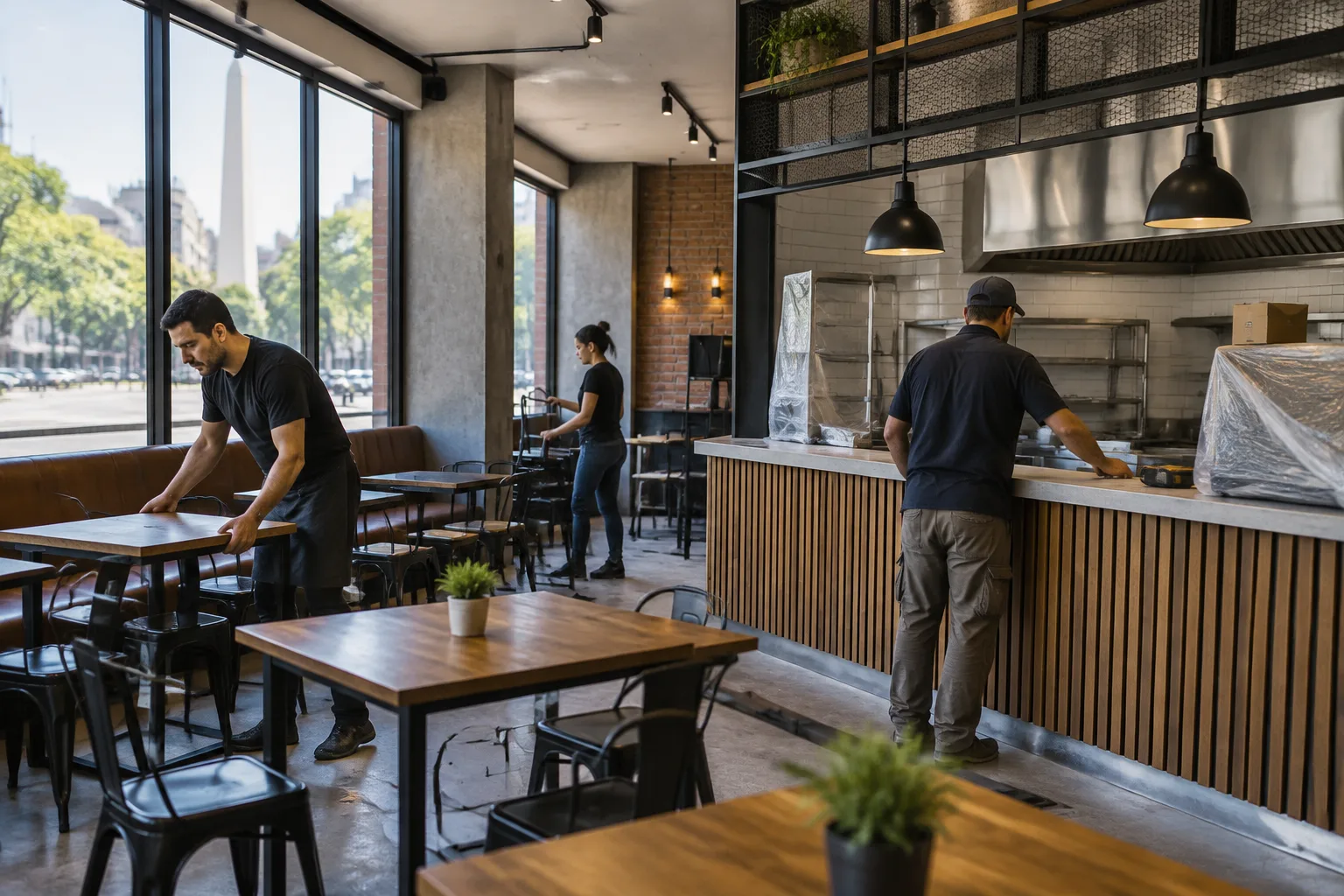
Weiss Burger has a clear expansion target: to reach 83 outlets by 2030. Founded in Bariloche, Argentina, the burger chain currently has 28 outlets across Argentina and Uruguay, with construction under way at five sites in Argentina. For the franchising community, the announcement offers insight into both the geographical scope of its growth and the financial terms for new operators joining the network.
A growth target rooted in Bariloche
According to information published by L’Express Franchise on 25 September 2026, eight years after its launch, Weiss Burger has 27 outlets in Argentina and one in Uruguay. From this base, the brand aims to reach 83 outlets by 2030 and compete with Argentina’s three largest chains.
The figure of 83 is a target, not a tally of completed openings. Compared with the reported total of 28 outlets, this would mean a net addition of 55 outlets to the network. The available information does not specify how that growth would be split between the two countries, or what proportion would be franchised rather than company-owned.
This distinction matters when assessing the announcement: the current footprint describes the brand’s size, while the 2030 target reflects its expansion ambitions. No annual schedule has been provided to show how many openings it plans at each stage.
Construction under way at five sites
The most tangible progress reported by the brand is in Argentina. Construction is under way in Palermo, San Luis, La Rioja, Quilmes and Lomas de Zamora. The list includes one location within the city of Buenos Aires, two in its surrounding urban area and two outside the metropolitan area.
These projects show that the planned growth is not confined to a single part of the country. However, the published information does not specify opening dates, addresses or the individual characteristics of each outlet. They should therefore be described as sites under construction, rather than five outlets already in operation.
For those following developments in franchising, these locations provide concrete reference points for tracking Weiss Burger’s next steps. They do not, in themselves, constitute an open invitation to operate in those areas: the information supplied does not identify available territories or exclusivity terms either.
The financial terms outlined for expansion
Joining the network involves an initial franchise fee of between US$25,000 and US$30,000. The brand estimates investment in the premises at US$1,250 per square metre, based on floor areas of between 120 and 150 square metres.
On that basis, the stated investment in the outlet ranges from US$150,000 to US$187,500, plus the franchise fee. Adding the two gives a calculated range of US$175,000 to US$217,500. This total should not be treated as a guaranteed all-inclusive budget: the available information does not itemise everything covered or clarify any potential additional costs.
Once the business is open, the franchisee pays royalties equivalent to 4% of gross sales, plus a further 1% towards the advertising fund. Each burger restaurant also operates with an average of around 15 employees. This staffing figure is an operational benchmark across the network, not a stated mandatory headcount for each future opening.
What to watch next
The next verifiable milestone will be the opening of the outlets currently under construction. Those openings will make it possible to distinguish the network’s actual progress from its 2030 target. The geographical distribution of future additions, and the timetable for growing from 28 to 83 outlets, also remain to be clarified.
The information supplied does not include investment payback periods or financial results for individual outlets. These cannot be inferred from the number of openings or the growth target.
Practical takeaway: anyone considering joining Weiss Burger should request details of territory availability, an itemised budget and an opening timetable, while keeping confirmed construction projects clearly separate from expansion targets.