McDonald’s US Remodel Costs Put Franchise Investment in Focus
Reported upgrade costs of at least $1.2 million per average US location sharpen the focus on franchise investment and restaurant productivity.
Published

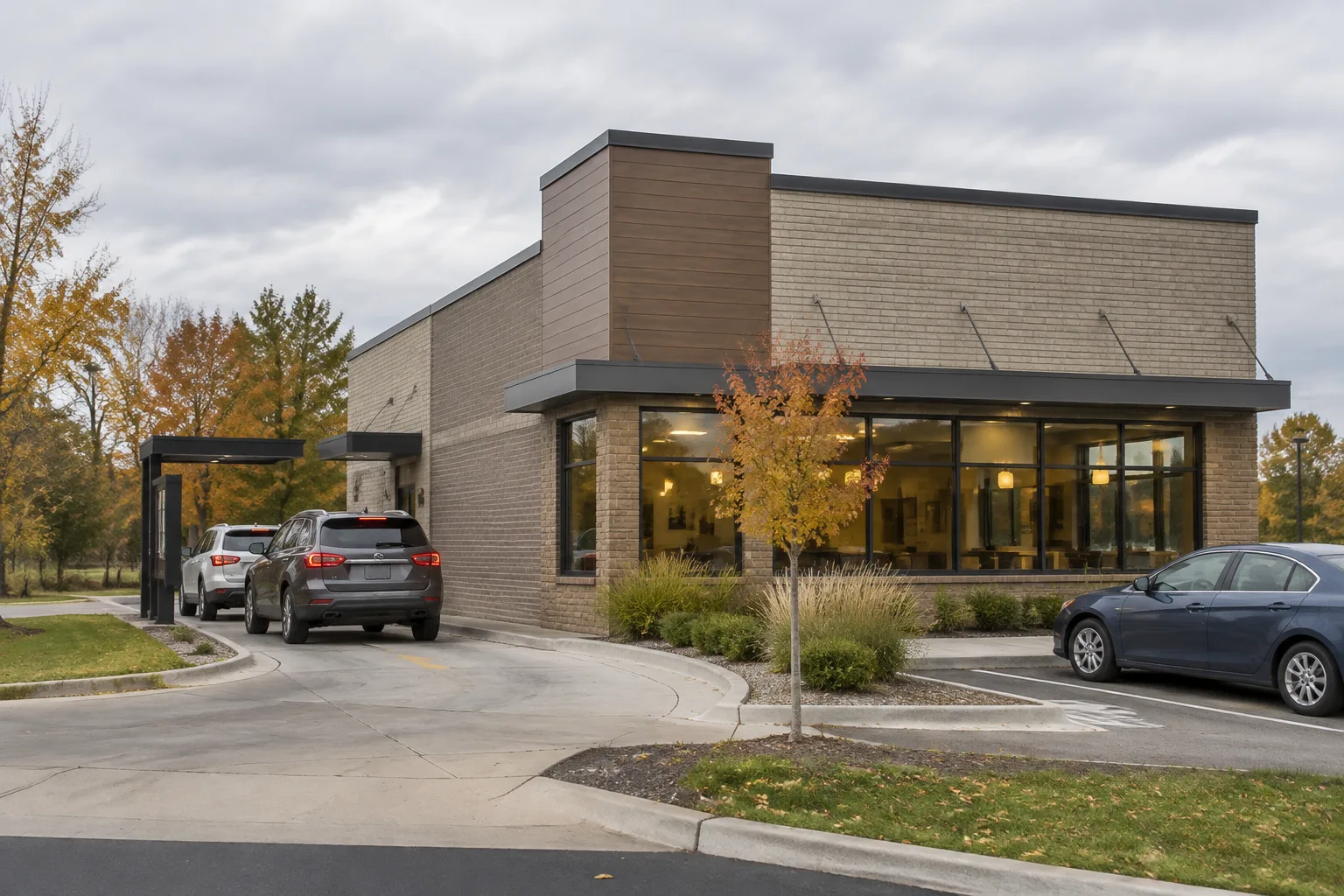
McDonald’s required US restaurant remodels and upgrades under its “NEXT” plan could cost at least $1.2 million for the average location, according to Reuters reporting on 23 September. That prospective investment comes as the company warns that customer traffic in key markets is likely to remain flat while inflation stays elevated, putting the relationship between capital spending and restaurant productivity firmly in focus for the US franchise community.
A substantial investment at restaurant level
The reported cost covers required US remodels and upgrades under NEXT. It is an important distinction: the figure describes a potential investment requirement at the average restaurant, rather than a uniform bill confirmed for every franchisee or location.
Reuters reported that these works could cost at least $1.2 million for the average location. The wording leaves room for variation, and the supplied reporting does not establish a restaurant-by-restaurant schedule, a detailed breakdown of the work or the ultimate cost for individual operators.
For franchisees assessing their exposure, that makes the scope of the requirement as important as the headline number. A network-level estimate provides a starting point for planning, but it cannot replace a location-specific assessment of what work is required and how it would be financed.
The central issue is therefore not simply the size of McDonald’s broader investment programme. It is how required spending translates into commitments at each restaurant.
Support does not mean remodel costs are covered
Alongside its growth initiatives, McDonald’s outlined an $8.5 billion, decade-long franchisee support package. Reuters reported that roughly $5 billion would be deployed by 2030 through rent relief and capital support for franchisees.
However, the report also made clear that the assistance does not extend to the cost of the remodels. That boundary matters when interpreting the announcement: a substantial support package and a substantial franchisee investment requirement can exist at the same time.
Rent relief may be relevant to an operator’s overall financial position, but it should not be described as reimbursement for building work. Equally, the total value of the programme does not establish how much help any particular franchisee will receive.
For readers across the US franchise community, the distinction is a useful reminder to separate three questions when reviewing a brand’s investment announcement: what expenditure is required, what assistance is available and which costs remain the operator’s responsibility. The published figures do not, on their own, resolve those questions for an individual McDonald’s restaurant.
Flat traffic complicates the investment picture
The capital requirements were announced against a cautious demand outlook. McDonald’s warned that customer traffic across restaurants in key markets would probably remain flat for as long as inflation remained elevated, Reuters reported.
That is a conditional warning, not a prediction that every market or restaurant will experience identical trading conditions. Nevertheless, it provides important context for the upgrade programme: the company is pursuing long-term changes without assuming an immediate recovery in customer visits.
McDonald’s also set new restaurant productivity targets and operating-margin targets in the low- to mid-50% range by 2030. Those are company targets, not evidence of returns already achieved, and should not be read as a statement of individual franchisees’ profit margins.
The combination puts productivity at the heart of the investment question. For an operator, assessing required upgrades means considering their potential contribution to performance alongside the cost of the work. The research does not establish a payback period or quantify the expected benefit of the remodels for a typical franchisee.
What franchisees should examine next
The immediate planning priority is clarity rather than assumptions. Franchisees reviewing the announcement should seek written confirmation of their required works, applicable deadlines and eligibility for support before treating the national figures as a guide to their own funding needs.
They should also distinguish the timing of expenditure from the timing of assistance. A decade-long programme, with roughly $5 billion planned by 2030, does not itself specify when support would reach a particular operator.
Practical takeaway: assess required remodel spending separately from franchisee assistance, and test any investment plan against cautious traffic assumptions rather than relying on an unconfirmed sales uplift.