Franchise Outage Readiness in South Africa
Test how your business handles power, water and connectivity failures before asking franchisees to replicate it.
Published
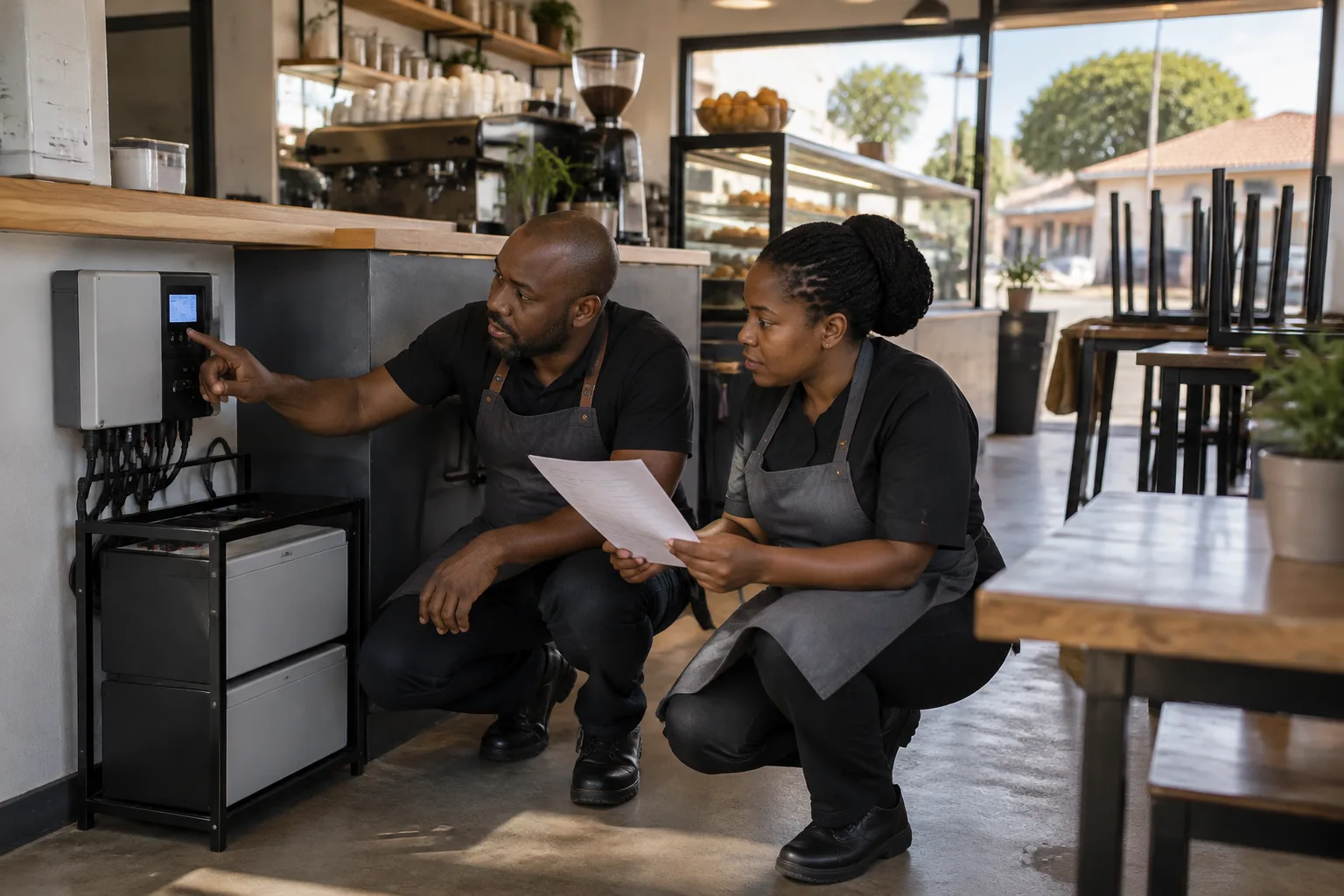
A successful outlet can still be difficult to franchise if ordinary service interruptions require extraordinary rescue efforts. Before franchising an existing South African business, test whether another operator could manage a power, water or connectivity failure safely and consistently. Outage readiness is not about promising uninterrupted trading: it is about defining what can continue, what must stop and who pays for the necessary safeguards.
1. Define your minimum safe operating conditions
Start with the activities your outlet must perform to serve customers safely and fulfil its commitments. A restaurant, tutoring centre and repair workshop will have different dependencies; a generic instruction to “keep trading where possible” is not enough.
Create a dependency register covering:
- Electricity: lighting, refrigeration, machinery, security and payment equipment.
- Water: drinking, handwashing, cleaning and any production processes.
- Connectivity: payments, bookings, customer communications and access to essential records.
- Access: whether staff, customers and deliveries can enter and leave safely.
For each dependency, identify the operating limit, permitted fallback and point at which trading must pause. Have appropriately qualified specialists confirm safety-critical limits rather than allowing managers to improvise them.
Distinguish between inconvenience and inability to operate safely. Losing an online booking screen may justify a controlled paper process. Losing essential hygiene facilities may require affected services to stop.
The result should be a short decision table that an outlet manager can use under pressure. Record who may authorise restricted trading, temporary closure and reopening.
2. Run controlled tests in the pilot outlet
A pilot outlet provides a practical setting for testing continuity arrangements before they become obligations across your franchise community. Ideally, test in an operation that does not rely on resources quietly borrowed from the original business.
Use planned simulations that do not endanger people, damage equipment or compromise customer information. Do not disconnect essential safety systems simply to make a test realistic.
Useful scenarios include:
- The payment connection fails during a busy period.
- An interruption lasts longer than the backup equipment can support.
- Water becomes unavailable during a service session.
- The outlet manager cannot access the cloud-based operating instructions.
Observe the response rather than coaching staff through every decision. Can they find the fallback procedure? Do they know which services to suspend? Can they explain the situation to customers without making promises they cannot keep?
Record the time taken to reach a safe operating state, transactions requiring reconciliation, consumables used and any outside assistance needed. Test the return to normal service too: duplicate bookings, missed payments and equipment restart problems may emerge only afterwards.
Repeat unsuccessful tests after correcting the procedure. A workaround is not ready for replication merely because the founder managed to make it work once.
3. Specify affordable safeguards and ownership
Translate the pilot findings into a minimum resilience specification. Describe the capacity or outcome required, not simply a preferred piece of equipment. Backup arrangements must support the actual operating requirement, and installation should meet applicable safety and technical requirements.
Separate essential safeguards from optional improvements. A prospective franchisee needs to understand the difference between equipment required to operate the format and additional capacity that may reduce disruption.
Build a responsibility schedule covering:
- Purchase, installation and commissioning.
- Routine inspections, maintenance and replacement.
- Fuel, connectivity subscriptions and other running costs.
- Staff instruction and access to emergency contacts.
- Fault reporting and authorisation of urgent expenditure.
Check what the landlord supplies and what remains the outlet operator’s responsibility. A building’s backup power does not automatically mean every outlet circuit or appliance is supported.
Cost the whole arrangement, including maintenance and replacement, rather than just the initial purchase. Where requirements vary by premises, explain the assessment process and identify costs that remain provisional. Do not present a lightly equipped flagship outlet as representative if future franchisees will need materially more protection.
4. Make the operating promise legally realistic
South Africa specifically regulates franchising through the Consumer Protection Act 68 of 2008 (CPA) and its regulations, even though there is no separate franchise statute. Regulation 3 requires a disclosure document to be supplied at least 14 days before the franchise agreement is signed. Section 7 requires franchise agreements to be in writing and in plain, understandable language.
Have a franchise attorney determine how required resilience expenditure, responsibilities and any related payments should be reflected in the agreement and disclosure. These are practical applications of the legal framework, not a claim that the CPA prescribes particular backup equipment.
Avoid promising uninterrupted operations or guaranteed remote support during widespread failures. Explain the support you can realistically provide, including alternative contact methods. Ask your attorney to review interruption and liability provisions: a blanket disclaimer is not a substitute for fair terms or compliance with applicable law.
Practical takeaway: Before offering your first franchise, complete one controlled outage exercise, price the minimum safeguards and assign every continuity task to a named role. If safe trading depends on improvisation, keep testing.
Sources
- How to start your franchise business - Absa
- How to succeed in a franchise business
- [PDF] Chapter 33 Franchising - Oxford University Press Southern Africa
- What is a franchise? How it works, costs, and risks | Xero ZA
- The legalities of franchising | Capitec Bank
- South Africa's Booming Franchise Industry
- South Africa - Distribution and Sales Channels
- FRANCHISE