Spaza registrations and Pick n Pay shift: retail update
South Africa records 82,924 spaza registration applications, while Pick n Pay’s Namibian franchise partner plans to rebrand 19 stores.
Published
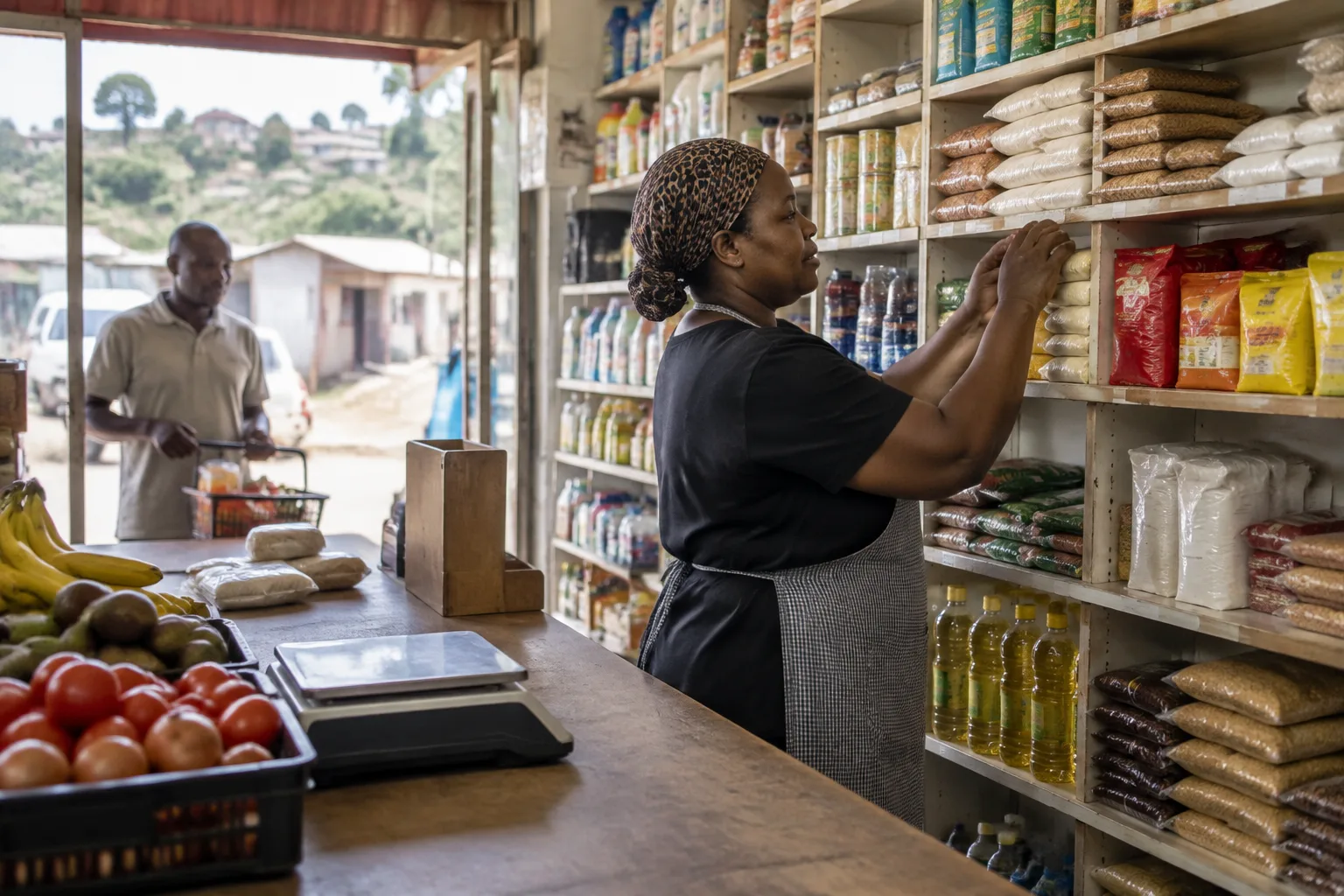
South African municipalities received 82,924 spaza shop registration applications during a seven-month window, while Namibia’s Ohlthaver & List Group has announced plans to end its long-standing franchise agreement with Pick n Pay. The developments offer two distinct points of interest for South Africa’s franchise community: the registration of informal retailers at home and a change of retail banner in a neighbouring market.
Spaza applications reach 82,924
Trade Intelligence reported on 22 September 2026 that the Department of Cooperative Governance and Traditional Affairs, known as Cogta, had disclosed figures from the recent registration drive for informal retailers. Municipalities across South Africa received 82,924 spaza shop registration applications over seven months.
Almost 20,000 of those applications came from KwaZulu-Natal. Cogta also revealed that more than a third of the applications received nationally were from foreigners, according to the report.
These are application figures, rather than a confirmed count of approved registrations. That distinction matters when assessing what the exercise says about the retail landscape. The reported total establishes the scale of submissions received by municipalities; it does not establish how many applications were successful or how many shops are currently trading.
Nor should the figures be treated as a count of franchised businesses. The report concerns informal retailers and spaza shop registration, not participation in franchise networks. For franchise readers, their value lies in the insight they provide into the scale and geographical concentration of the registration exercise.
What the figures do — and do not — show
KwaZulu-Natal’s almost 20,000 applications make it a notable part of the national picture. However, the supplied report does not provide a full provincial breakdown, municipal comparisons or the outcomes of individual applications.
The nationality information also needs to be read narrowly. It describes the composition of applications received during the window. It does not, by itself, establish the ownership profile of every spaza shop in South Africa, or indicate whether particular applicants met registration requirements.
For businesses considering neighbourhood retail opportunities, these limits are important. An application total is not a measure of consumer spending, store profitability or demand for a particular franchise concept. It can provide context for further investigation, but should not replace local market research.
The report also does not set out a new registration deadline or a change in the law. Business owners seeking to understand their obligations should therefore distinguish this statistical update from an instruction on what they must submit, where they must submit it or when compliance is due.
O&L plans to replace Pick n Pay banner
In a separate regional retail development, Trade Intelligence reported that Namibia’s Ohlthaver & List Group, or O&L, would terminate its 27-year franchise agreement with Pick n Pay.
The 19 stores covered by that agreement are to be converted to O&L’s Model banner. This is a change involving an existing group of stores, rather than an announcement of 19 additional retail openings.
The reported scope is also specific: the stores fall under O&L’s agreement in Namibia. The announcement should not be read as a statement about Pick n Pay’s entire franchise network or as a programme to rebrand its South African stores.
For South Africa’s franchise community, the development is relevant as a neighbouring-market example of an established franchise relationship coming to an end. The supplied report does not detail the conversion timetable, financial terms or operational arrangements, so conclusions about those aspects would be premature.
Keep market signals separate from business decisions
Together, these updates concern two different parts of retail business organisation: applications to register informal shops and the planned transition of an established franchise store portfolio to another banner. Neither provides a complete picture of trading conditions.
Their practical value depends on keeping the underlying facts separate from assumptions. Registration applications should not be counted as approvals, and planned store conversions should not be counted as new openings.
Practical takeaway: Use the spaza figures as background for local research, confirm registration requirements with the relevant municipality, and seek further details before drawing commercial conclusions from the Namibian store transition.