Buying a Franchise in South Africa: Equipment Ownership Checks
Check who owns essential franchise equipment, what finance remains outstanding and who must repair it before you commit.
Published
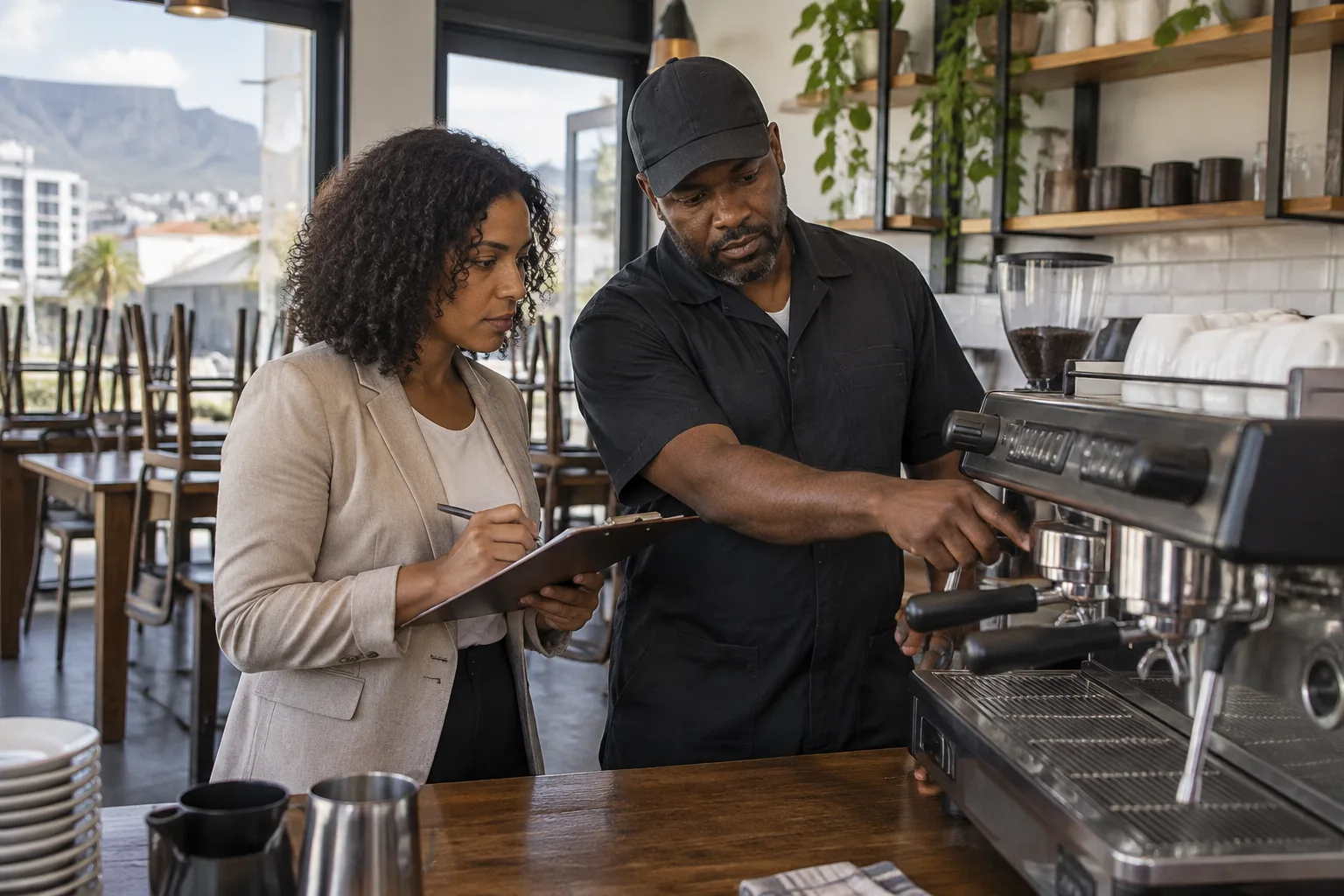
A franchise may come with everything needed to trade, but that does not mean you will own its equipment. Coffee machines, refrigeration, workshop tools and delivery vehicles can belong to different parties, each with different conditions. Before buying a franchise in South Africa, establish exactly what you are acquiring and whether you can keep using it throughout the agreement.
1. Separate equipment access from equipment ownership
Ask for an itemised equipment schedule rather than accepting a single description such as “fully equipped outlet”. For each major asset, record its description, serial number where available, condition, owner and the document governing its use.
Distinguish between equipment that is:
- Included in the purchase price and transferred to you.
- Bought separately from the franchisor or an approved supplier.
- Leased or financed under a separate agreement.
- Lent by the franchisor or a supplier, subject to continuing conditions.
- Owned by the landlord and provided with the premises.
These arrangements are not interchangeable. A supplier-owned machine might be available only while you purchase particular consumables. A leased vehicle might require the finance provider’s consent before another operator can take over its contract.
Ask the franchisor to confirm which assets are essential for brand approval. You need to know whether losing access to one item would stop trading or make the outlet non-compliant with the franchise agreement.
2. Connect the equipment schedule to the legal documents
South Africa has specific franchise protections under the Consumer Protection Act 68 of 2008 (CPA) and its regulations. Although there is no official franchise agreement registry, the absence of registration does not mean franchise arrangements are unregulated.
Regulation 3 requires the franchisor to provide a signed and dated disclosure document at least 14 days before the franchise agreement is signed. Regulation 2 requires the agreement to address prescribed information, including the parties’ obligations and the franchisee’s financial commitments. Establishment costs must cover relevant items such as equipment and furniture.
Use these requirements to ask for a clear reconciliation between the disclosed investment, the equipment quotation and the final contract. An equipment allowance in a budget does not, by itself, establish ownership.
For each item, check:
- Whether the price buys ownership or merely a right to use it.
- When ownership and responsibility for loss pass to you.
- Whether delivery, installation, testing and commissioning are included.
- Whether a separate rental, maintenance or finance contract is compulsory.
- Whether quoted amounts include or exclude VAT.
Have a franchise lawyer review the documents together. If the equipment schedule is meant to form part of the bargain, ask for it to be incorporated into the appropriate signed agreement rather than left in an informal email.
3. Verify title and condition when buying an existing outlet
An existing outlet presents a particular risk: equipment can be on the premises without belonging to the seller. Neither possession nor a seller’s asset list proves that ownership can be transferred free of third-party claims.
Request purchase invoices, relevant finance or rental agreements and evidence supporting the seller’s right to transfer the assets. Where finance remains outstanding, ask your lawyer to arrange appropriate settlement and release documentation. Do not assume that paying the seller automatically settles the finance provider.
Keep the checks practical:
- Match the equipment schedule to the assets physically present.
- Identify anything excluded from the sale or awaiting replacement.
- Obtain service records and details of outstanding faults.
- Check whether warranties and maintenance arrangements can transfer.
- Commission an independent technical inspection of expensive or business-critical items.
The technical inspection and ownership check serve different purposes. A machine can work perfectly but belong to someone else; another can be legally yours but require immediate repairs. Both findings should inform the purchase terms before you commit.
4. Allocate breakdown and replacement responsibilities
Clear responsibilities help protect relationships within the franchise community. Ask who pays when essential equipment fails, who authorises repairs and whether you must use a nominated technician.
Check what happens while repairs are underway. Is replacement equipment available? Who pays transport and installation charges? Is there any contractual response time, or only an informal promise to help?
Confirm insurance responsibilities with your broker, particularly where you use assets owned by another party. Do not assume that cover for physical damage also covers every resulting interruption to trading.
Finally, establish what happens to each asset when the arrangement ends. Owned equipment, rented equipment and supplier-loaned equipment may each require different treatment, including collection, removal or debranding costs.
Practical takeaway: Before signing, obtain one equipment schedule that matches the contracts, prices and physical assets. Proceed only when ownership, outstanding finance, repair duties and continued access are clear.
Sources
- How to succeed in a franchise business
- [PDF] Chapter 33 Franchising - Oxford University Press Southern Africa
- What to consider before buying a franchise - Old Mutual
- South Africa: Franchise & Licensing
- What is a franchise? How it works, costs, and risks
- The ultimate guide to buying a business
- The International Comparative Legal Guide to:
- Factors to consider when buying a franchise in South Africa - and how to choose wisely | News24