Singapore Franchising: Control First-Outlet Fit-Out Costs
Turn your flagship’s fit-out into a repeatable, costed opening specification before asking a Singapore franchisee to invest.
Published
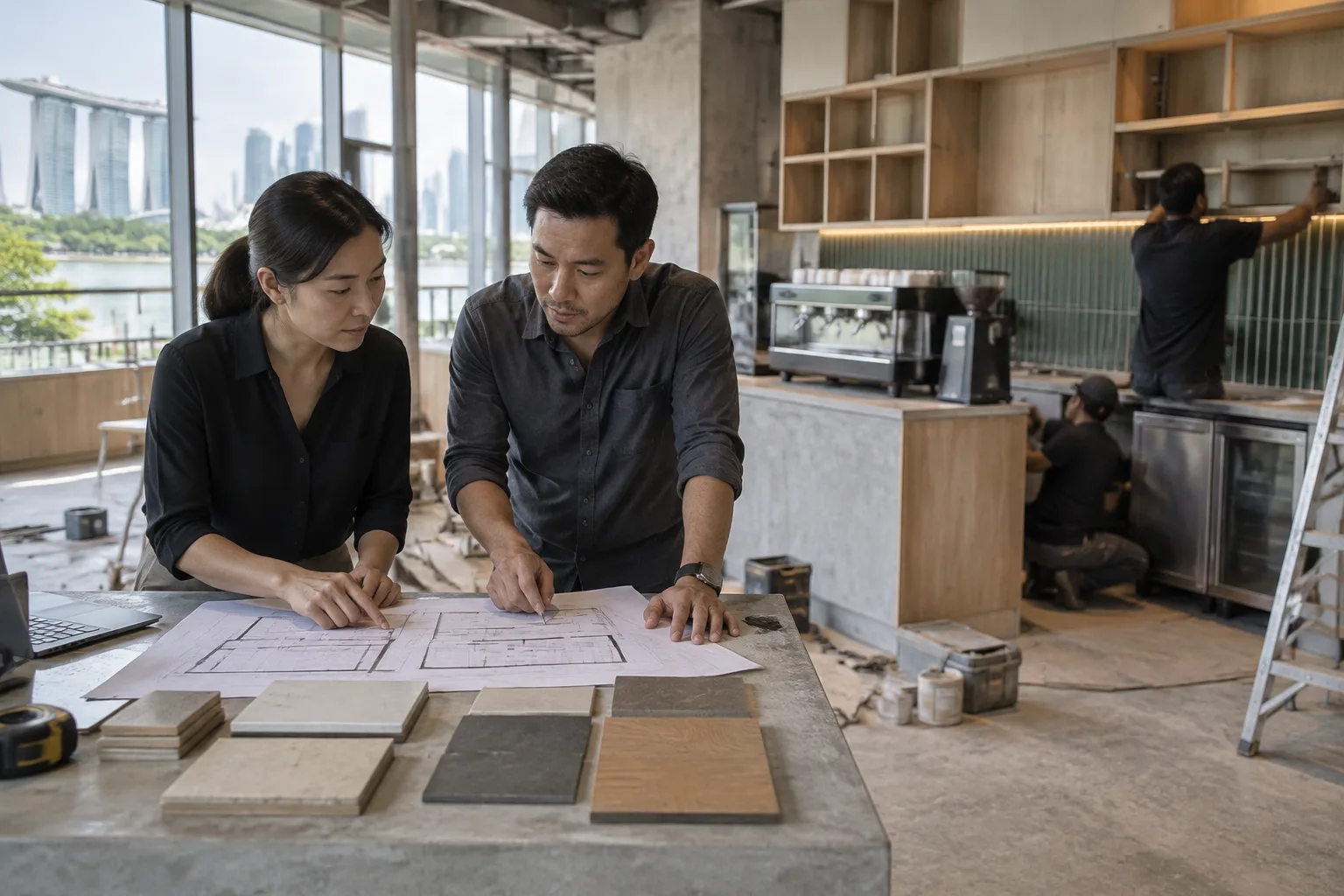
A successful flagship does not automatically provide a sensible fit-out budget for a franchise outlet. Bespoke joinery, founder-negotiated discounts and equipment bought years ago can disguise the true cost of reproducing your business. Before franchising in Singapore, turn the physical outlet into a specification that another operator can price, build and maintain without relying on your personal relationships.
1. Separate essential standards from flagship extras
Start with a room-by-room review of your existing premises. Record what each fixture, finish and piece of equipment contributes to service delivery, safety, capacity or brand recognition. The objective is not to copy every detail: it is to reproduce the operating model reliably.
Divide the specification into three categories:
- Essential: items needed for the operating process, applicable compliance requirements or a recognisable customer experience.
- Adaptable: items whose dimensions or materials can change within stated performance standards.
- Optional: enhancements that a franchisee may choose, subject to design approval, but that are not necessary to operate the format.
For example, a café may need a particular production capacity and a workable preparation layout, rather than exactly the same decorative counter as its flagship. Specify measurable requirements wherever possible, including equipment capacity, cleanability and maintenance access.
Ask your pilot team which design features genuinely help daily work. An attractive layout that causes staff congestion should not become a mandatory expense throughout your franchising community.
2. Build a complete, current cost schedule
Prepare an itemised schedule that contractors can price on a comparable basis. A single headline figure for “renovation” hides too many assumptions.
Include design work, building works, mechanical and electrical services, equipment, installation, professional fees, relevant approval costs and any landlord requirements. Identify separately items such as deposits and opening stock: they affect the franchisee’s cash requirement but should not be confused with construction costs.
For each line, record:
- The specification and quantity assumed.
- Whether the price is a quotation, estimate or historical invoice.
- The quotation date, validity period and GST treatment.
- Exclusions, delivery charges and installation responsibilities.
- Who pays, who orders and who owns the item.
Obtain current quotations for a representative outlet rather than simply updating the flagship’s old total. Where appropriate, compare quotations against the same scope so that a cheaper price does not merely reflect omitted work.
Explain site-dependent costs explicitly. Electrical capacity, ventilation, drainage and the condition in which premises are handed over can materially change the works required. Treat contingency as a clearly labelled planning allowance, not a promise that overruns cannot occur. Have a suitably qualified adviser assess technical assumptions before presenting a budget to a prospective franchisee.
3. Put approval and variation rules in writing
Singapore has no franchise-specific legislation, franchise registration system or mandatory franchise disclosure document. General contract law governs the franchise agreement. Depending on the arrangement, the Unfair Contract Terms Act 1977 and the Trade Marks Act 1998 may also be relevant. Ordinary business registration and applicable premises, building, fire safety and operating requirements remain separate obligations.
This makes clear contractual allocation particularly important. A franchisor’s design approval is not regulatory approval, and registering a business with ACRA does not authorise construction or a particular use of premises.
Have a Singapore-qualified lawyer document who appoints designers and contractors, obtains necessary permissions, approves drawings and bears each category of cost. Align those provisions with the fit-out specification given to the franchisee.
Set a written variation procedure before work starts. Each proposed change should show the reason, revised price, programme impact and required approvals. Distinguish changes requested by the franchisee from corrections to the franchisor’s specification and works required by the landlord or authorities. Do not leave responsibility for those differences to an informal conversation after an invoice arrives.
4. Test the specification against a completed build
Use a pilot opening or refurbishment to compare the cost schedule with actual invoices and the finished premises. Record omissions, substitutions, delays and variations, then amend the specification before offering it as a repeatable format.
Check operational results as well as appearance. Can equipment be serviced without dismantling fixtures? Are storage and delivery routes workable? Does the layout support the intended service capacity?
Retain approved drawings, warranties, equipment details and maintenance instructions in a handover file. Keep a dated specification version so future franchisees know which requirements their quotations cover.
Practical takeaway: Before recruiting a franchisee, produce one tested fit-out specification, one transparent cost schedule and one written change-approval process. These turn a flagship’s appearance into an opening investment that both parties can assess realistically.
Sources
- What is a franchise? How it works, costs, and risks
- Franchising and Franchise Agreements in Singapore
- How to Franchise Your Business in Singapore
- Insights on Franchising: a Singapore Perspective
- Franchise Business: 10 Factors Before Taking the Plunge
- Operating a franchise in Singapore
- A Guide To Expanding Your Business Through Franchising
- Franchising & Licensing Association of Singapore (FLA)