Jollibee Sets Out Singapore Store Expansion Ambitions
Jollibee sees room for four to five new Singapore stores annually, with local operations helping shape its international growth.
Published
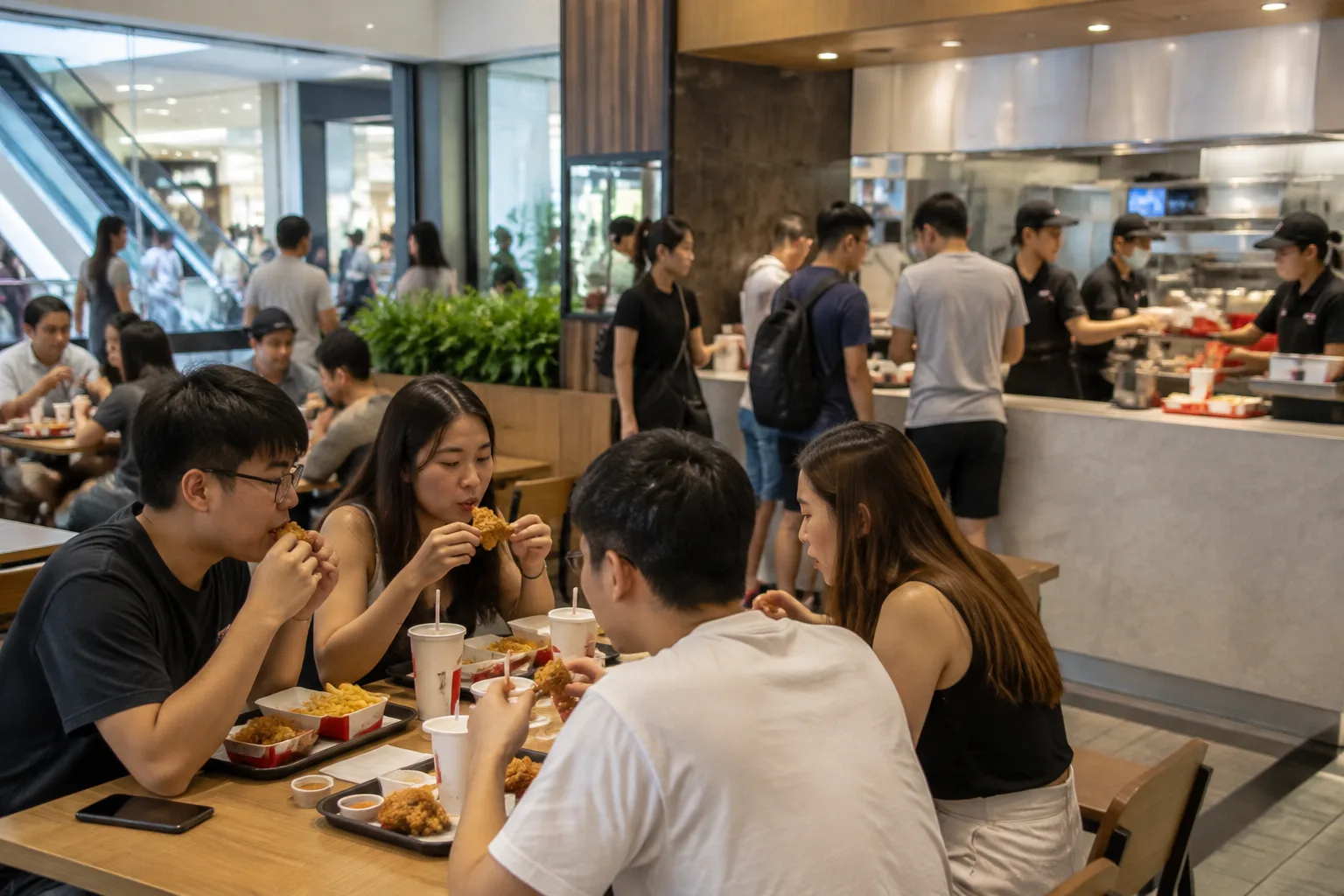
Jollibee sees demand to support four to five new Singapore stores a year over three to five years, according to a report published on the Singapore Economic Development Board website on 24 November 2025. The Philippine fast-food brand’s expansion ambitions come as Singapore takes on a wider role in testing operations, menus and service for its international business.
Expansion beyond the original customer base
The report put Jollibee’s Singapore network at 26 outlets, with four new stores opened in 2025. Those additions included locations at the National University of Singapore and Punggol Digital District. A Hougang Mall outlet was scheduled to open in December 2025.
That footprint represents a substantial change from the brand’s 2013 opening on level six of Lucky Plaza. At that time, its customers were mostly Filipinos, with queues stretching for hours. The subsequent expansion has taken the chain into more locations, including university and business district settings.
Jollibee’s president and head of international business, Dennis Flores, said the company believed there was sufficient demand to sustain four to five additional Singapore stores annually over the following three to five years.
That statement is an assessment of growth potential rather than confirmation of a complete pipeline of signed locations. Nevertheless, it sets out a clear ambition for continued expansion in a market where the company has already opened stores during the pandemic as well as in 2025.
Singapore leads international performance
According to Flores, Singapore led Jollibee’s international performance in the first half of 2025. The local business surpassed the chain’s double-digit global sales growth, supported by menu innovation, strong delivery demand and wider store coverage.
The combination is significant for Singapore’s franchise community. Jollibee’s account does not attribute its performance to store openings alone: it also identifies changes to the offer and demand through delivery as contributors. That distinction matters when assessing whether a growing network is being supported by a broader operating strategy.
The report did not give a specific Singapore sales growth percentage. Its comparison therefore establishes the market’s relative strength within Jollibee’s international business, rather than providing a detailed measure of local outlet performance.
For operators considering expansion, the useful lesson is to examine the relationship between coverage, product development and ordering channels. A larger footprint is only one part of the growth story described by the company.
A testing ground for overseas operations
Singapore’s role extends beyond sales. The report describes the market as a testbed where intense competition, high costs and demanding customers and employees push Jollibee to improve operations, develop its menu and raise service standards.
Lessons learnt locally help shape the brand’s approach in other markets, including Britain and Spain. Singapore therefore serves both as a destination for expansion and as a place to refine how that expansion is managed elsewhere.
This gives the local growth plans a wider significance. New stores add coverage, but the operating experience gained in Singapore can also inform decisions beyond the country. The report presents that learning process as part of Jollibee’s international development, rather than treating each national network as an entirely separate business.
For the franchise community, this offers a useful way to assess an international brand: alongside its scale and recognition, consider how it learns from local operating conditions and applies those lessons across its network.
Growth ambitions within a larger business
The report also provided context on Jollibee’s scale. It recorded 1,759 stores worldwide as at 31 December 2024 and noted that Jollibee Foods Corporation is listed on the Philippine Stock Exchange.
For the first nine months of 2025, reported revenues reached 224.2 billion pesos, approximately S$5 billion, compared with 196.2 billion pesos in the corresponding period of 2024. Net profit rose to 8.6 billion pesos from 8.5 billion pesos. Those figures provide corporate context, not a measure of Singapore outlet profitability.
Practical takeaway: Singapore operators assessing expansion should look beyond headline store targets. Jollibee’s account highlights three areas worth examining together: location coverage, menu development and delivery demand, supported by an operating model that can adapt to local conditions.