Quest Ponsonby franchise dispute reaches Auckland High Court
A Quest Ponsonby franchisee is seeking renewal or damages in a High Court dispute over termination, good faith and liability limits.
Published
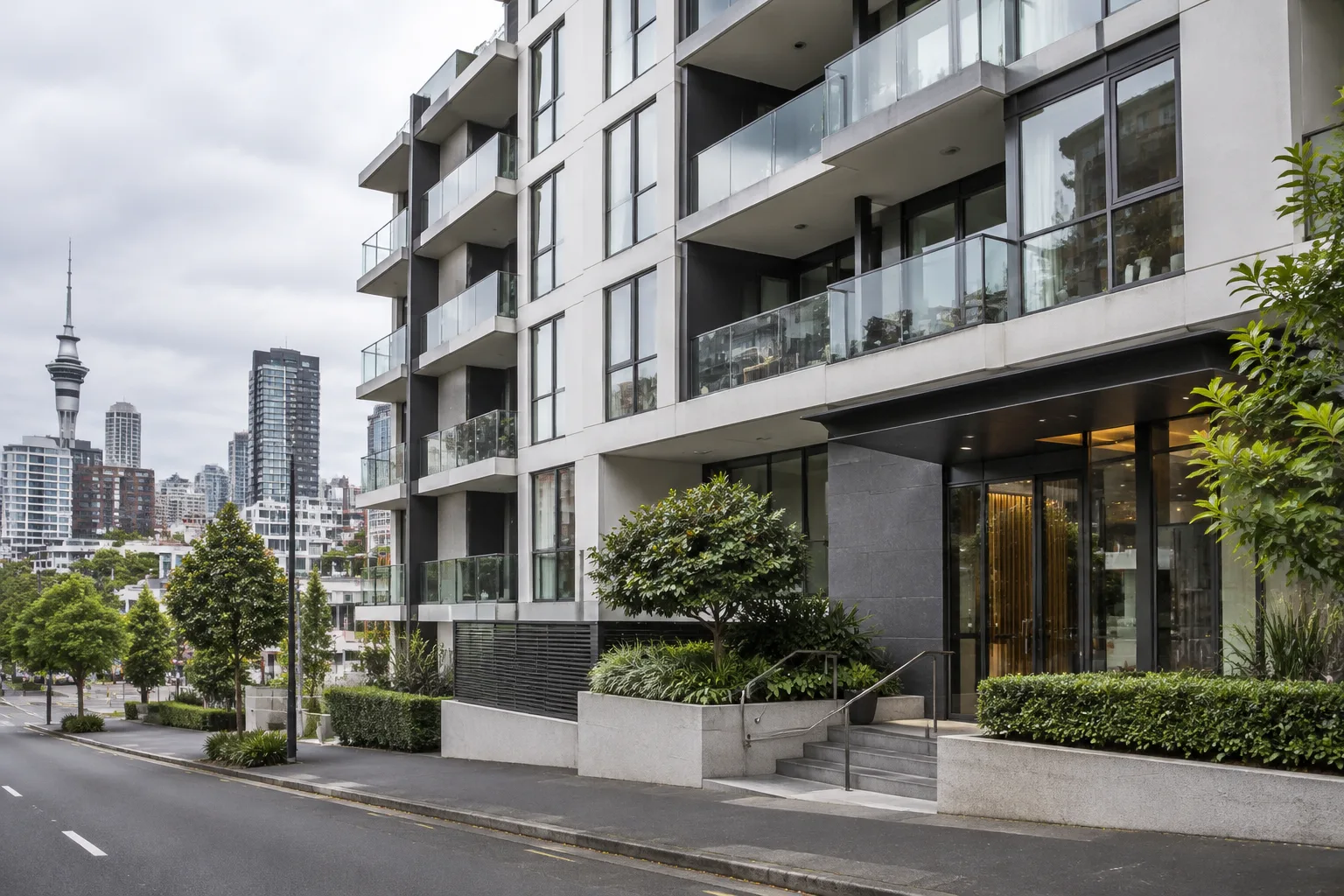
A dispute between Quest Apartment Hotels (NZ) and its Ponsonby franchisee has reached the High Court at Auckland, with renewal rights, alleged pressure to sell and a contractual liability limit among the contested issues. BusinessDesk reported on 11 October 2026 that franchisee Prominent Investments was seeking a further five-year franchise term or damages.
Renewal and termination at the centre
The case was being heard before Justice Amokura Kawharu and was scheduled to run until 23 October, according to BusinessDesk. Its report described six causes of action brought by Prominent under the franchise agreement and the Fair Trading Act 1986.
Prominent is owned by Raj and Anju Chopra and their daughter, Drishti Chopra-Lewis. The company’s expert estimates lost future profits at between $2.1 million and $2.45 million. That figure is the franchisee’s assessment of its claimed loss, not a court award.
Part of the dispute concerns the contractual basis on which the business continued operating. Prominent alleges Quest wrongly refused to renew the franchise in 2017, leading it to sign what it describes as a disadvantageous deed of variation in 2018.
That variation left the franchise on a month-to-month arrangement which Quest says it can end on one month’s notice. Prominent’s request for a second five-year term therefore puts the duration and security of its franchise relationship directly before the court.
Competing accounts of a proposed sale
Prominent’s opening submissions allege that Quest used the pressures of the Covid-19 pandemic to try to force the family to sell its business at a significant undervalue, under threat of termination.
According to those submissions, Quest proposed in late June 2020 that Prominent sell the business to Terry and May Moore for $171,000. Prominent had bought it for $720,000 in 2012. Those amounts relate to different dates and do not, by themselves, establish the business’s value in 2020.
Prominent further alleges that, by 31 July 2020, Quest had a back-up arrangement to terminate the franchise and sell the business to the Moores if Prominent did not agree to sell. Its submissions say Quest issued a termination notice on 4 August 2020 after agreement was not reached.
Quest’s account differs. BusinessDesk reported that Quest gave evidence that its termination decision reflected the franchise’s underlying poor performance and Prominent’s inability to secure bank loans to support the business.
According to the opening submissions described in the report, Quest denies having a strategy to terminate the franchise, relying on its withdrawal of the termination notice in May 2021. The competing accounts are matters for the court to assess, rather than established findings of wrongdoing.
Liability cap and good faith contested
A separate issue concerns a clause which Quest says limits its liability for any breach to one month’s franchise fee, approximately $11,200.
Prominent says there is no equivalent cap on franchisees. It is asking the court to disapply the limit specifically for breaches of good faith, arguing that the cap is incompatible with that obligation.
The issue had already survived an earlier procedural challenge. In 2023, Justice Michael Robinson declined Quest’s application to strike out the claim above $11,200, leaving the matter for trial. That decision did not itself determine whether Prominent would ultimately recover more than the stated limit.
For New Zealand’s franchise community, the dispute highlights the importance of reading liability provisions alongside renewal, termination and good-faith obligations. The parties’ disagreement concerns how those provisions operate together, not simply the amount of a monthly fee.
Lockdown relief and refurbishment also disputed
Prominent’s allegations extend to the relationship after it obtained an interim injunction in 2021. It says Quest withheld franchise fee relief during Auckland’s 2021 lockdown and sought to require refurbishment that Quest estimated would cost more than $600,000. Prominent contends some of those costs belong to its landlords and body corporate.
BusinessDesk stated that the allegations had not yet been tested in evidence at the time of its report. Representatives of both parties did not respond to its requests for comment. The report described an ongoing case, not a final judgment.
Practical takeaway: Before signing or varying a franchise agreement, obtain independent legal advice on renewal rights, termination notices, liability caps and responsibility for refurbishment costs. These provisions should be considered together, rather than reviewed in isolation.