Hesburger enters Italy with its first restaurant in Matera
Opening planned for 23 October: an investment of almost €1 million and 20 new hires mark the Finnish chain’s Italian debut.
Published
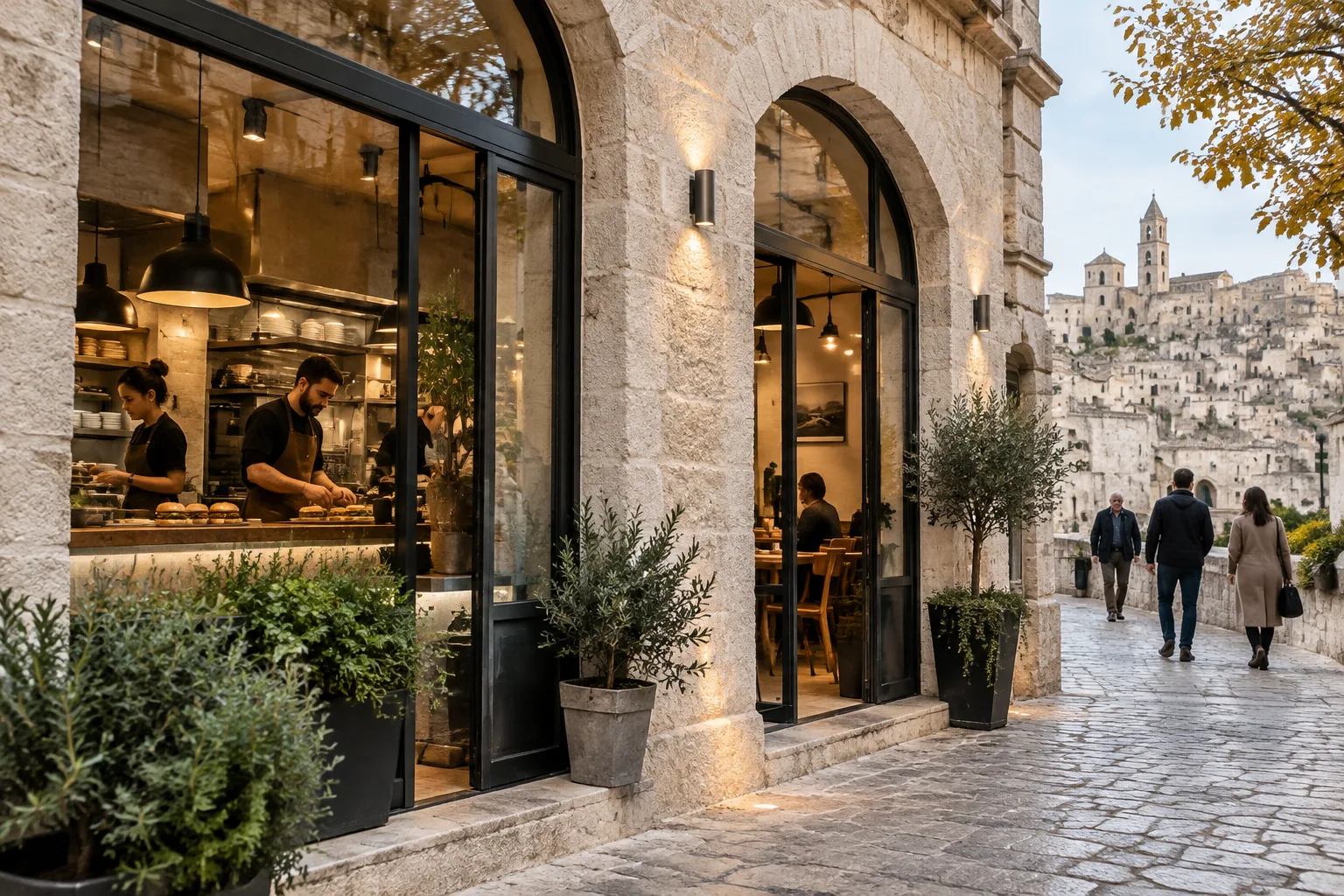
Hesburger has chosen Matera for its entry into Italy. The Finnish chain’s first Italian restaurant is scheduled to open on Friday 23 October 2026 at Piazza Mulino 20. Led by Matera entrepreneur Venanzia Rizzi, the venture brings a brand with almost 500 restaurants across Europe to the Italian franchise market, with an investment of nearly €1 million and 20 staff already hired.
The Italian debut begins in Piazza Mulino
Hesburger’s first Italian restaurant occupies a building at Piazza Mulino 20, refurbished to meet the parent company’s technical standards. The Matera site therefore applies a model already used across the chain’s European network, with guidelines covering both the premises and the way the restaurant is organised.
According to L’Express Franchise’s report on 22 October, the opening is being undertaken by private investors rather than managed directly by the Finnish parent company. Rizzi is leading the venture and told Gambero Rosso in an interview that the investment in this first site was close to €1 million.
Alongside the financial commitment comes job creation: the restaurant has already hired 20 people. These are the two concrete figures accompanying the debut, together with the choice of premises and their refurbishment. The disclosed investment relates specifically to the Matera venture and should not be treated as a standard cost for any potential future Italian franchise.
A European network developed partly through franchisees
Hesburger enters Italy with almost 500 restaurants across Europe. Its home market remains central: the chain has 257 restaurants in Finland. Its network also extends to the Baltic states, Bulgaria, Romania, Ukraine and Germany.
Expansion began in its domestic market and now relies largely on franchisees. The Italian entry follows this approach, combining local investors’ initiative with a format defined by the parent company. For the franchise sector, Matera offers a practical example of a foreign brand entering a market through local entrepreneurship.
The distinctive feature is not simply the use of the brand name. The chain’s model includes detailed guidelines covering everything from the dining area’s fit-out to staff training. The parent company presents this standardisation as the main benefit for franchisees: operators work within an established system rather than designing every part of the business from scratch.
This approach also helps explain the work carried out on the Matera building. Bringing it into line with technical standards is not separate from the business venture, but part of implementing the format in a new market.
Local investment and brand requirements
The opening highlights two distinct responsibilities: the private investment that makes the Italian restaurant possible, and the brand’s requirements for the premises and staff training.
In Matera’s case, the announced details establish the location, the approximate scale of investment and the number of people hired. They do not, however, indicate future financial performance. The capital committed and the size of the team describe the business at launch, not its turnover or profitability.
For those exploring new franchise opportunities, this distinction matters. A brand operating in several countries brings experience of running a network, but its Italian debut is still a new opening that needs to be assessed on its own merits. At this stage, the most useful reference point is therefore the project actually announced, rather than any forecast of the restaurant’s performance.
Further sites and logistics remain possibilities
The Italian partner has taken a cautious position on what comes next: no further openings have been announced. The group will consider additional restaurants in Italy and, at a later stage, a logistics hub to supply them.
These are potential developments, not a confirmed expansion timetable. This distinction keeps the significance of the Matera debut in perspective: the first restaurant marks the brand’s entry into the country, while any Italian network and supporting logistics infrastructure have yet to be developed.
Practical takeaway: for a prospective franchisee, the Hesburger case highlights the need to distinguish the investment in an individual opening from the general terms for joining the network. Before assessing a similar project, check the technical requirements, proposed training and supply arrangements directly, without assuming that subsequent stages of expansion are already confirmed.