How to Align Franchise Agreements and Shop Leases in India
Franchise rights and shop leases are governed by separate contracts. Align their terms, permitted use, landlord consents and exit obligations.
Published
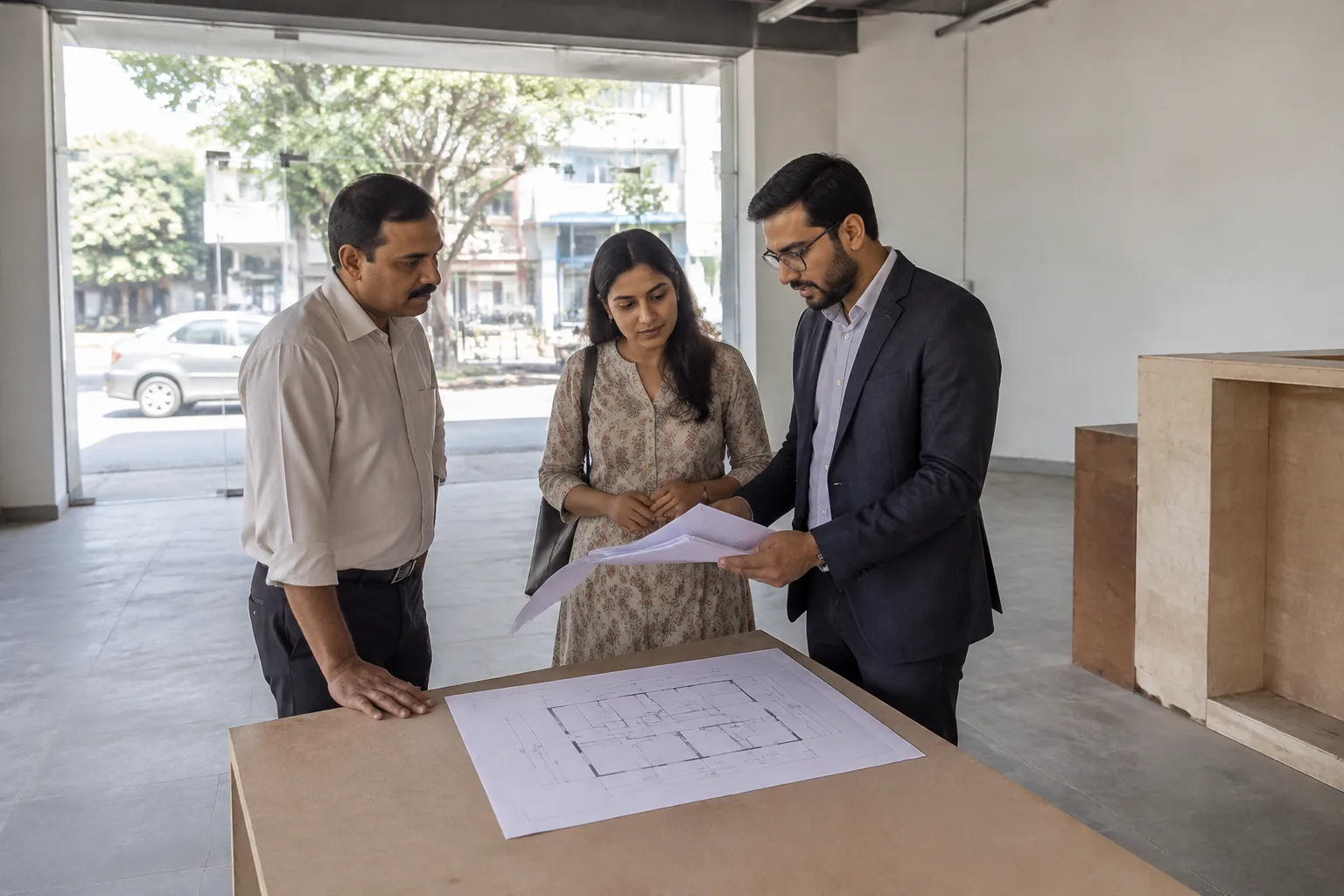
When franchising your existing business, finding a shop you like is not enough. The franchise agreement gives your franchisee the right to operate under your brand, while the lease gives them the right to use the premises. If these documents conflict, even a fully fitted shop may be unable to open, or rent may remain payable after the right to use the brand has ended. To build lasting franchise relationships, make sure the two contracts work together from the outset.
1. Decide who will be the tenant first
When designing your franchise model, establish whether the brand owner or the franchisee will take the shop lease. This affects responsibility for rent, the deposit, repairs, possession and handing back the premises. It is not simply a payment arrangement: it determines who takes on distinct legal obligations.
If the franchisee is the tenant, the brand owner’s approval of the shop does not automatically make the brand owner a tenant or a guarantor of the rent. The franchise agreement should reflect this distinction. Conversely, if the brand owner takes the head lease and allows the franchisee to use the premises, check whether the head lease permits that arrangement.
The actual arrangement matters more than the document’s title. A sublease, permission to use the premises and an operations management arrangement are not the same thing. Do not implement any of these arrangements without obtaining any required landlord consent.
Draw up a list of responsibilities: who pays the rent, who provides the deposit, who pays common-area maintenance charges and who sends notices to the landlord. Also check that the correct legal names of the relevant entities appear consistently in the documents.
2. Align permitted use as well as contract terms
Create a timeline to compare the two contracts. Include the dates for taking possession, starting the fit-out, beginning rent payments, opening the shop, expiry of franchise rights and expiry of the lease. Where a date has not been fixed, set out how it will be determined.
The lease may expire before the franchise rights end, or it may continue afterwards. Both situations need to be addressed. It is not safe simply to assume that the landlord will agree to renew later. Read the renewal procedure, notice requirements and basis for any rent changes.
Next, compare the lease’s permitted use with the actual business:
- Is the sale of the specified products or provision of the service permitted?
- Can the brand’s signage, external finishes and necessary equipment be installed?
- Are the operating hours, delivery unloading facilities and customer access suitable?
- Is separate consent needed for changes to exit arrangements, electrical capacity or water services?
For example, if brand standards require a particular external sign but the building rules prohibit it, the franchisee will face conflicting obligations. Agree a solution in writing beforehand rather than leaving it as a problem to resolve after opening.
3. Check consents and legal formalities separately
India has no dedicated franchise law, mandatory franchise disclosure document or central franchise registration system. This does not remove the formalities required for a shop lease. The Indian Contract Act, 1872 applies to the franchise relationship; the Transfer of Property Act, 1882, the Registration Act, 1908 and applicable state laws are also important for the premises arrangement.
Generally, leases from year to year, leases for more than one year, or leases reserving a yearly rent must be registered. Ask a local lawyer to check the requirements relating to stamp duty, local tenancy laws and the nature of the document. Do not treat notarisation alone as a substitute for mandatory registration.
Permissions required for food businesses, retail or other activities are a separate matter. Permission to conduct the business under the lease is not equivalent to obtaining a government licence. Equally, the landlord’s consent does not grant the right to use the brand’s trade marks; that right comes from the brand owner’s authorisation.
Where the brand owner needs access to inspect the premises, remove equipment or introduce a new operator, obtain any necessary landlord consent. A franchise agreement alone cannot bind a landlord who is not a party to it.
4. Clarify what happens to the premises if trading stops
Ending the franchise agreement does not automatically end the lease. Equally, it is not safe to assume that losing possession of the shop automatically ends all the franchisee’s payment obligations. Read each document separately to understand the consequences of the relevant circumstances.
Agree in advance who will propose relocation if the premises become unavailable and how approval will be granted. If the brand owner or a new franchisee may take over the shop, set out the necessary consents, new lease or transfer procedure. Do not treat this as an unconditional right to take possession.
In the final review, align responsibilities for removing signage, leaving fixed fittings, taking out equipment, reinstating the premises and returning the deposit. If the landlord’s reinstatement requirements conflict with the brand’s fit-out requirements, settle who will bear the cost before investing.
Practical takeaway: Have both contracts reviewed together before the franchisee enters into a binding lease. Summarise the duration, permitted use, consents and exit obligations on one page; do not leave any conflict to be resolved through verbal assurances.
Sources
- [PDF] Legal 500 Country Comparative Guides 2026 - Khaitan & Co
- Franchise Business in India: Models, Laws & How to Start (2026)
- How to start a franchise business in India in 8 steps - Hostinger
- [PDF] India-Franchise.pdf - Legal 500 Country Comparative Guides 2025
- Franchise Business in India: Registration, Documents & Cost
- Q&A: offer and sale of franchises in India
- How to Start a Franchise Business in India. Costs, Profitability
- फ्रेंचाइज़ी बिज़नेस: अर्थ, प्रकार, लाभ और शुरुआत करने के चरण