Neighbourhood franchising: Small supermarkets gain ground in Greece
Small supermarkets recorded turnover growth of 7.1% in January–July, with franchising a key tool for chains expanding into Greek neighbourhoods.
Published
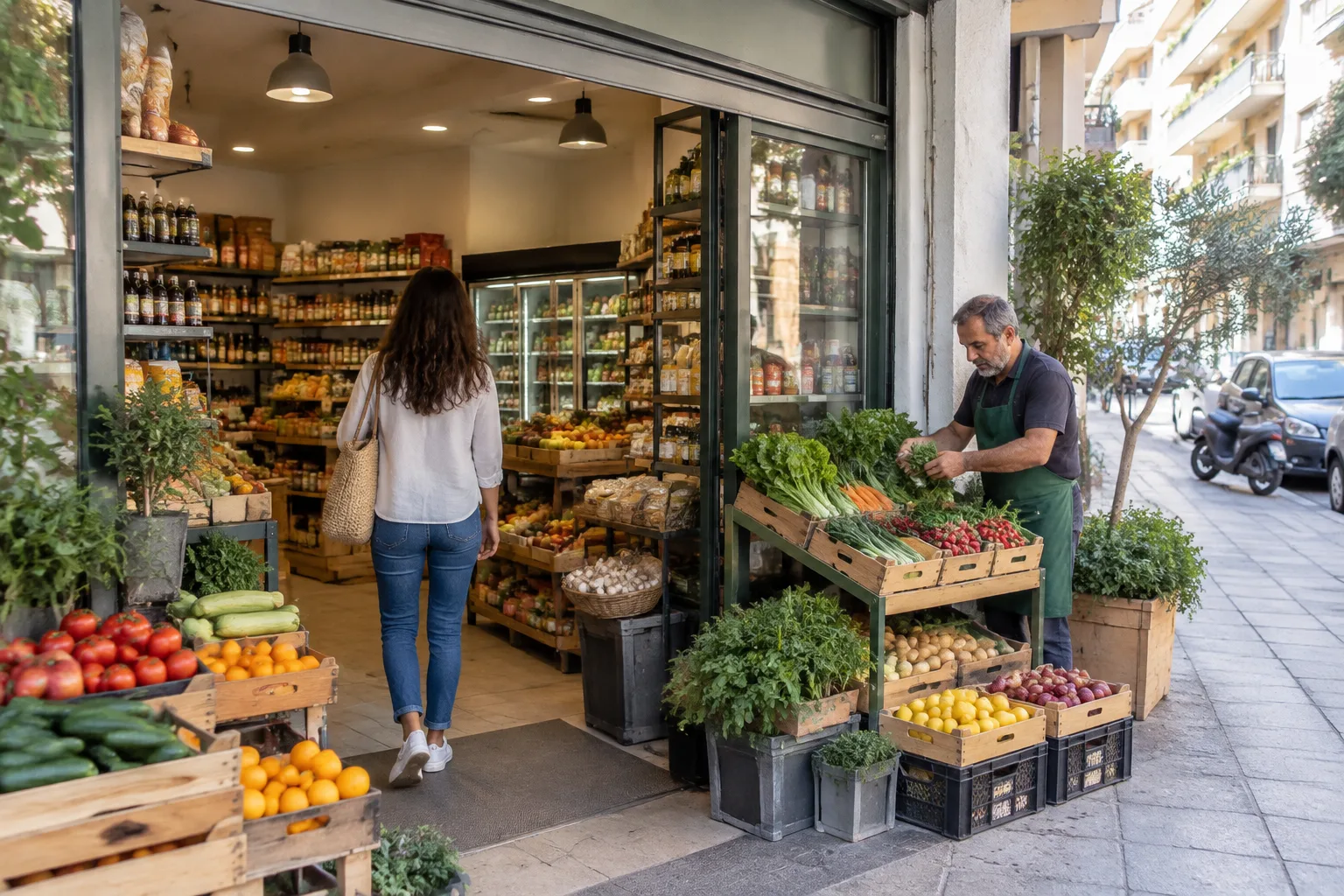
Small supermarkets in Greece are growing faster than the market as a whole, while chains are using franchising to strengthen their neighbourhood presence. Circana data for January–July, cited by Powergame in an article published on 18 October 2026, show turnover growth of 7.1% for stores of up to 400 square metres, compared with 5.6% across the supermarket market.
Small stores lead the way in growth
The gap of 1.5 percentage points reflects the stronger momentum of smaller outlets during this period. For the franchise sector, this is a useful finding: small stores are central to an expansion strategy that combines the presence of an established chain with the hands-on involvement of a local business owner.
However, a clear distinction must be made between store size and operating model. The 7.1% figure applies to small supermarkets as a category defined by floor area, not exclusively to franchised stores. It therefore does not measure growth in franchising or support conclusions about the performance of individual networks.
Likewise, turnover growth does not necessarily mean higher profitability. These figures describe changes in sales, rather than a franchisee’s bottom line. That distinction matters to anyone assessing an investment: a positive trend within a store category is a starting point for further investigation, not a guarantee of returns.
Franchising brings chains closer to local customers
According to the same report, franchising is the main tool chains use to expand into neighbourhood retailing. The underlying principle is to combine two complementary strengths: a chain’s established infrastructure and a small business owner’s direct involvement in day-to-day operations.
For the chain, this partnership allows the network to grow without bearing the full cost of a company-owned store. For the franchisee, it offers access to a brand, product supplies, know-how and an established network. Rather than operating in isolation, the small outlet becomes part of a wider retail presence.
This development is not simply a revival of the traditional grocer’s shop. The report links today’s neighbourhood store to organised networks, digital platforms and modern small-store formats. Proximity to customers remains a defining feature, but it is now supported by different infrastructure and operational tools.
The franchisee remains a hands-on business owner
In Powergame’s description of the model, the franchisee provides capital, staffing and part of the day-to-day management. The chain, in turn, supplies the brand and organisational support. This division of responsibilities explains why the owner’s personal involvement is such an important consideration when choosing this type of business.
Joining a network therefore does not remove the responsibilities involved in running a store. Support goes hand in hand with entrepreneurial accountability. For a prospective franchisee, the key question is not just which brand will appear above the door, but also which duties they will take on each day.
Before signing any agreement, it is worth clarifying the capital requirements, staffing needs, the owner’s role and exactly what support is included. These are points to check in a franchise proposal, not standard terms that apply across all networks. A general description of the model is no substitute for reviewing the specific contract.
What the figures mean for a new investment
The faster growth of small supermarkets offers a clear indication of how this store format is performing. Meanwhile, the use of franchising shows how chains are seeking to broaden their presence by partnering with business owners who are directly involved in running their outlets.
For those considering the Greek franchise market, the significance lies in these two developments occurring together, without confusing them: the small-store category is recording stronger sales growth, while franchising is a key means of expanding chains’ neighbourhood networks.
Practical takeaway: Use market data as an initial screening tool. Before choosing a franchise, request a detailed plan for the specific store, a clear breakdown of costs and obligations, and a precise description of the support the chain will provide.