Territorial Exclusivity in Franchise Agreements in Egypt: A Practical Guide
How should you define a franchise territory and manage delivery, online sales and exclusivity terms? Practical steps for businesses preparing to franchise in Egypt.
Published
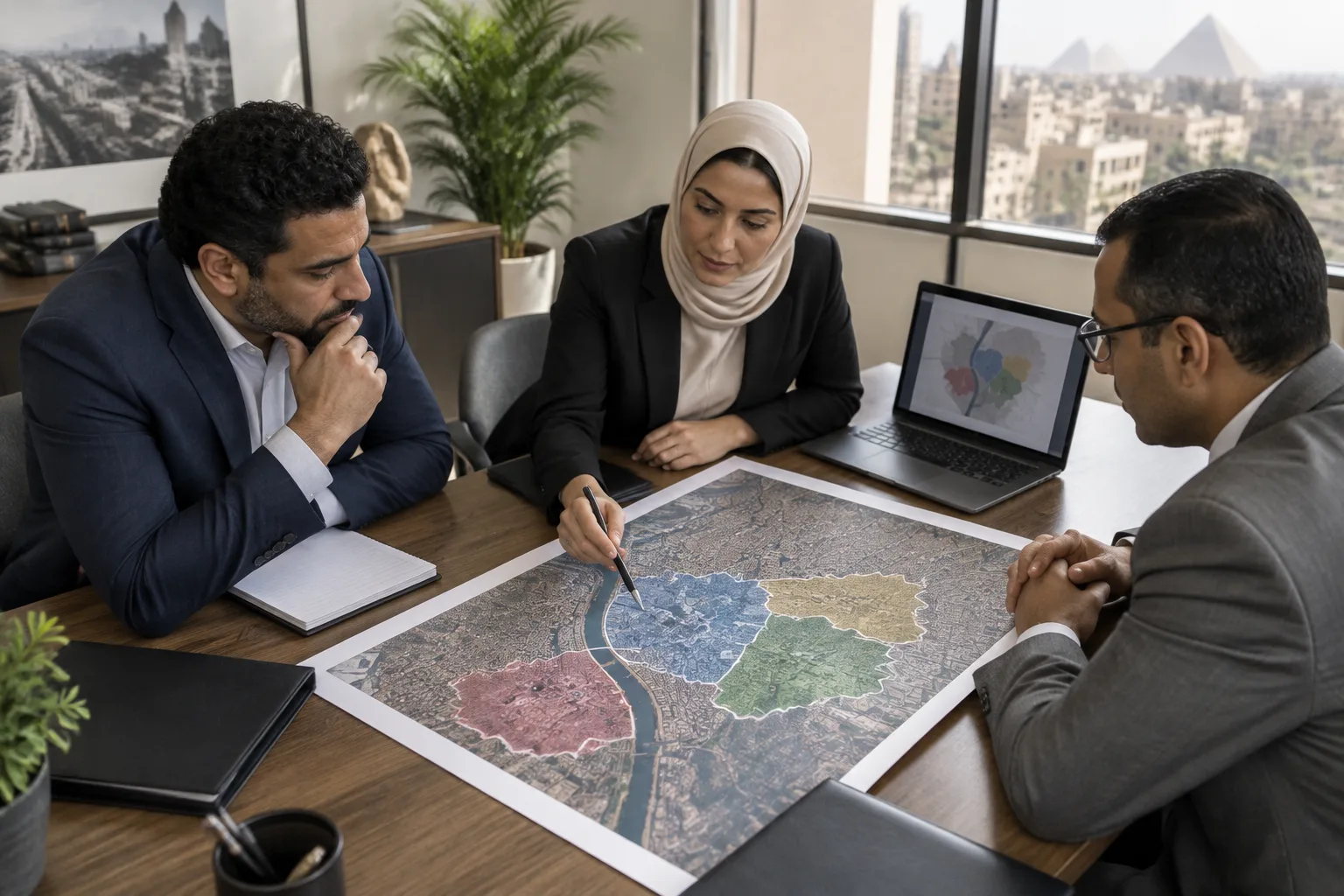
When turning an established business in Egypt into a franchise model, promising that “we won’t open a branch next door” may seem an easy way to reassure an investor. Yet that promise can lead to disputes over a delivery order, an online shop or an outlet inside a shopping centre. In franchising, clearly defined exclusivity protects the franchisee’s investment while leaving the franchisor room to expand. This means defining the rights, exceptions and procedures for changing them before signing the agreement—not after outlets start competing with one another.
1. Define the right you are granting before drawing the territory
Exclusivity is not a single, fixed right. It might mean a commitment by the franchisor not to open a company-owned outlet within a defined area, not to grant another franchise there, or both. It may cover only a particular outlet format, excluding kiosks or supply contracts with organisations. Do not assume that the phrase “exclusive territory” explains these distinctions on its own.
Start with an internal decision document answering the following questions:
- Is the franchise for a single outlet or the development of several outlets?
- Does the protection cover both company-owned outlets and those operated by other franchisees?
- Are there existing outlets or contracts that need to be excluded?
- Does the franchisee have a priority right to negotiate over new sites, or an exclusive right to them?
A priority right to negotiate is not exclusivity. If you choose this approach, specify how the opportunity will be offered, the deadline for responding and what happens if no agreement is reached. Do not grant a large territory simply because a candidate wants to reserve it. Link its size to an operating and funding plan they can deliver, and to your own ability to support them.
2. Record verifiable territorial boundaries in a schedule
Avoid vague descriptions such as “New Cairo” or “the area around the outlet”. The parties may interpret them differently, and new residential developments or commercial sites may emerge that were not envisaged during negotiations. Attach a dated map to the agreement, alongside a boundary description using clearly identified streets or coordinates. Specify which takes precedence if the map and written description conflict.
Visit the area before approving it. Proximity on a map does not necessarily mean easy access: roads, major routes and physical barriers in the built environment affect customer journeys and deliveries. Use available business data, such as where orders originate and where customers are based, rather than relying on impressions alone.
The schedule should also clarify:
- How shopping centres, petrol stations and restricted-access sites within the boundaries are treated.
- How relocating an outlet affects exclusivity.
- The process for approving and documenting boundary changes.
- How changes to street names or administrative boundaries will be handled.
Do not let a map update become an administrative procedure that allows a contractual right to be reduced unilaterally. Distinguish between correcting a boundary description and changing the territory itself, and require any change to be documented through the procedure set out in the agreement.
3. Separate outlet location from delivery coverage and online sales
An outlet may be located within its territory while fulfilling orders for customers outside it. Address three matters separately: the outlet’s location, its delivery area and the routing of orders received through central channels. Do not treat a customer’s address alone as automatic evidence of a breach of exclusivity.
For example, the brand’s website receives an order from a customer within a franchisee’s territory, but that franchisee’s outlet is temporarily closed or does not have the product in stock. Should the order go to another outlet? Who is responsible for delivery and returns? The answers should be documented before the channel launches, with the parties informed of how the transaction will be accounted for and settled.
Set clear rules for:
- Orders placed through the website, app and shared call centre.
- Delivery platforms whose coverage areas overlap between outlets.
- Digital campaigns targeting particular areas.
- Corporate supply arrangements and orders covering multiple addresses.
Also specify the source of order data and the process for reviewing complaints about order routing. If the franchisor reserves the right to sell online, explain the scope and effect of that exception. Do not present exclusivity as comprehensive protection, only to undermine it through an unexplained sales channel.
4. Link continued exclusivity to balanced obligations
Exclusivity can be negotiated subject to opening by an agreed date or meeting an outlet development schedule. However, the conditions for retaining it should be objective and measurable, rather than tied to vague judgements such as “the franchisor’s satisfaction with performance”.
For each obligation, specify how compliance will be evidenced, when it will be reviewed, how any failure will be notified and an appropriate opportunity to remedy it. Distinguish between a franchisee’s failure and the effects of delays in supplies or training that the franchisor is obliged to provide. Nor should a sales target be worded as a guarantee of a return on investment.
Explain the possible consequences if the failure is not remedied: will the territory become non-exclusive, will the development area be reduced, or will a right arise to seek termination of the agreement? These are different outcomes requiring precise legal drafting. You can also establish a process for reviewing the data and then negotiating before invoking the agreed dispute resolution procedure.
5. Review exclusivity under Egyptian law
Egypt has no standalone franchise legislation or franchise-specific statutory disclosure regime imposing a single, generally applicable waiting period before signing. This does not mean franchising is unregulated: the relationship is subject to general legal rules, notably Civil Code No. 131 of 1948 and Commercial Law No. 17 of 1999. Technology transfer provisions may apply depending on the substance of the know-how being transferred and the nature of the agreement—not merely because it is labelled a franchise.
Exclusivity arrangements, territorial allocation and sales restrictions also need to be reviewed under the Law on the Protection of Competition and the Prohibition of Monopolistic Practices, No. 3 of 2005. Do not assume that all exclusivity is prohibited or that every territorial allocation is permissible. The assessment depends on the parties, the market, and the nature and effects of the restrictions. Trademark licensing falls under the Intellectual Property Rights Protection Law No. 82 of 2002, but it does not remove the need to define territorial rights in the agreement.
The practical takeaway: Before offering your first franchise territory, prepare a clear map, a schedule of sales channels and exceptions, and balanced conditions for retaining exclusivity. Then have an Egyptian lawyer review them alongside the agreement. The aim is to make a specific promise you can honour—not to market the largest possible territory.
Sources
- Egypt: Franchise & Licensing
- الأمتياز التجاري
- الامتياز التجاري
- الإطار القانوني لعقود الفرنشايز في مصر وحقوق الأطراف
- Franchise Agreements in Egypt: Complete Legal Guide
- عقد الامتياز التجاري (الفرنشايز) في مصر
- عقد الفرنشايز فى القانون المصري تاريخه وأحكامه و 3نماذج منه
- Franchise Investment Agreements in Egypt - bylawme.com