Approving a Franchise Site in Egypt: Assessing Suitability Before Committing
How can franchisors turn site selection from a personal judgement into a documented decision that tests demand, operational capacity and financial viability before committing funds?
Published
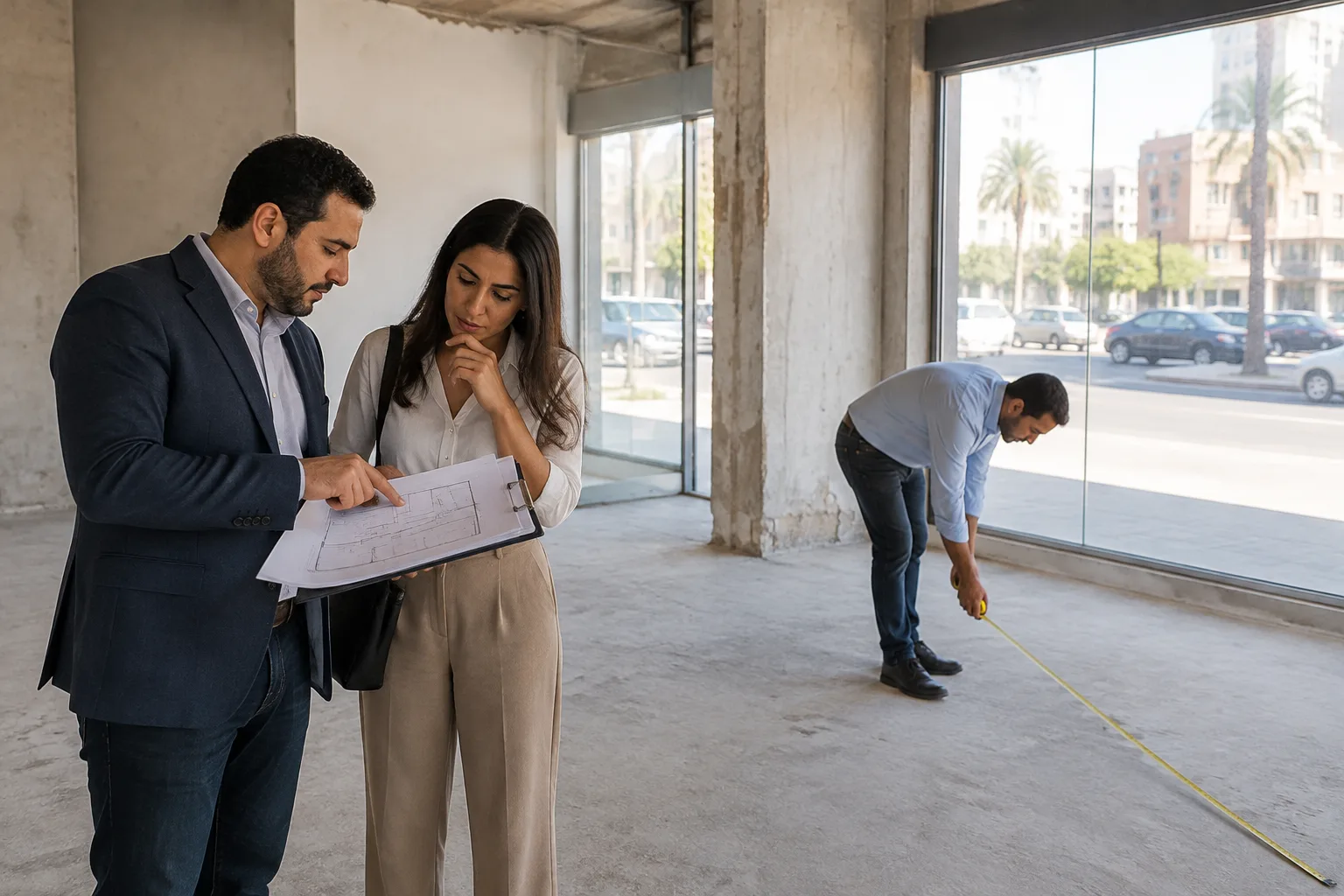
Your business may thrive on a busy street, but that does not mean every busy street is suitable for a branch bearing your brand. When turning an established business into a franchise in Egypt, you need a site approval process that your team can apply without relying on the founder’s intuition. This protects the franchisee’s resources and supports realistic growth across the franchise network, without turning the franchisor’s approval into a promise of profits.
1. Turn your current site’s success into criteria you can test
Start by asking why customers come to your existing branch. It might be close to their workplaces, easy to reach, or next to a business that attracts the same audience. Do not reduce success to floor area or the appearance of the shopfront: these visible features may conceal more influential factors.
Review patterns of visits and purchases in your business, then draw up a ‘site suitability checklist’ covering:
- Target customer: Who uses the product or service, when, and for what purpose?
- Access: Do visits depend on foot traffic, cars, deliveries or pre-booked appointments?
- Commercial surroundings: Which nearby businesses support demand, and what alternatives do customers choose?
- Physical capacity: Does the space allow customers, work and supplies to flow without bottlenecks?
- Occupancy costs: Can the branch’s financial model support the cost of the premises and their use?
Separate essential requirements from preferences. A lack of space needed to deliver the service may justify rejection, whereas a poorly visible entrance might be addressed through suitable design, where permitted. Do not automatically allow positive scores to offset a flaw that makes the operating model unworkable.
2. Request a site dossier built on evidence, not impressions
Require the prospective franchisee to submit a standard dossier for each proposed site, rather than attractive photographs and a message describing the location as ‘excellent’. It should include the exact address, a dimensioned floor plan, photographs of entrances and surroundings, details of previous use, proposed costs, and available information about utilities and restrictions on use.
Add a record of site visits at different times relevant to your business. A branch relying on office workers’ lunches needs an assessment during the working day, not just on a weekend evening. Record the flow of relevant potential customers, rather than simply counting passers-by: foot traffic may be heavy, but those people may lack the time or motivation to buy.
Test the customer journey in practice. Can customers find the premises? Can they enter easily? Where do they wait? How do they leave once they have received the service? If delivery matters, examine collection activity, waiting space for delivery riders and drivers, and the effect on customers inside the branch.
Record the source of each piece of information and the date it was collected. Distinguish between the team’s observations, the candidate’s estimates and statements supplied by the landlord. Where important information is missing, mark it as something to verify, rather than allowing a favourable assumption to slip unnoticed into the viability calculations.
3. Link site suitability to the branch’s financial model
A location may suit the brand but be so expensive that it undermines the branch’s chances of staying in business. Operational approval should therefore go hand in hand with financial review. Request estimates of occupancy costs, site-specific fit-out costs and operating expenses that may differ from those of your current branch.
Build the sales forecast on explicit assumptions: likely transaction numbers, average transaction value, trading periods, and the capacity that the team and premises can handle. Do not transfer a successful branch’s revenue figures to a new address simply because the premises are similar in size or appearance.
Test a scenario in which demand is lower than expected, and another in which it takes longer to reach normal operating levels. Ask whether the franchisee can cover expenses during this period, and which changes in assumptions would make the site unsuitable. The aim is not to prove that the site will succeed, but to understand the limits of the decision before spending money that will be difficult to recover.
For example, a site in a shopping centre may attract the right audience, but its compulsory opening hours may require additional staff. Another site may look less appealing while being more convenient for repeat customers. Compare alternatives using the same operational and financial model, rather than the strength of your first impression.
4. Make approval a written decision with a defined scope
Egypt has no standalone franchise law or general regime requiring franchise agreements to be registered or a franchise-specific disclosure document to be provided. The relationship is governed by general rules, including Civil Code No. 131 of 1948 and Commercial Law No. 17 of 1999, with other laws applying according to the nature of the business and the agreement. Technology transfer provisions may apply where their conditions are met, so the absence of franchise-specific regulation does not mean an absence of legal obligations.
Include a clear site approval procedure in your agreement: who submits the dossier, who reviews it, when the response period begins once all documents have been supplied, and the possible outcomes. Use clearly defined decisions: approval, conditional approval, or rejection with reasons. For conditional approval, state what must be demonstrated before implementation can proceed.
Explain that approval concerns the site’s suitability for the franchise model and does not replace checks on licences or the property’s legal status. Nor does it guarantee revenue or profit, or release either party from responsibility for the information and commitments they provide. Specify how long approval remains valid and what triggers reassessment, such as a material change in floor area or occupancy costs.
Practical takeaway: Before approving your first franchisee’s site, prepare a criteria checklist, an evidence dossier, a financial comparison template and a decision letter setting out clear conditions. The best site is not the most impressive: it is the one best suited to running your model at an affordable cost.
Sources
- Franchising in Egypt 2026: No Franchise Law, Four Contract ...
- Franchise Agreements In Egypt: The Complete Legal Guide For ...
- الامتياز التجاري
- Your guide for Franchising in Egypt!
- عقد الفرنشايز فى القانون المصرى
- الأمتياز التجاري
- Food And Beverage Franchise In Egypt: Legal ...
- عقد الفرنشايز فى القانون المصري تاريخه وأحكامه و 3نماذج منه