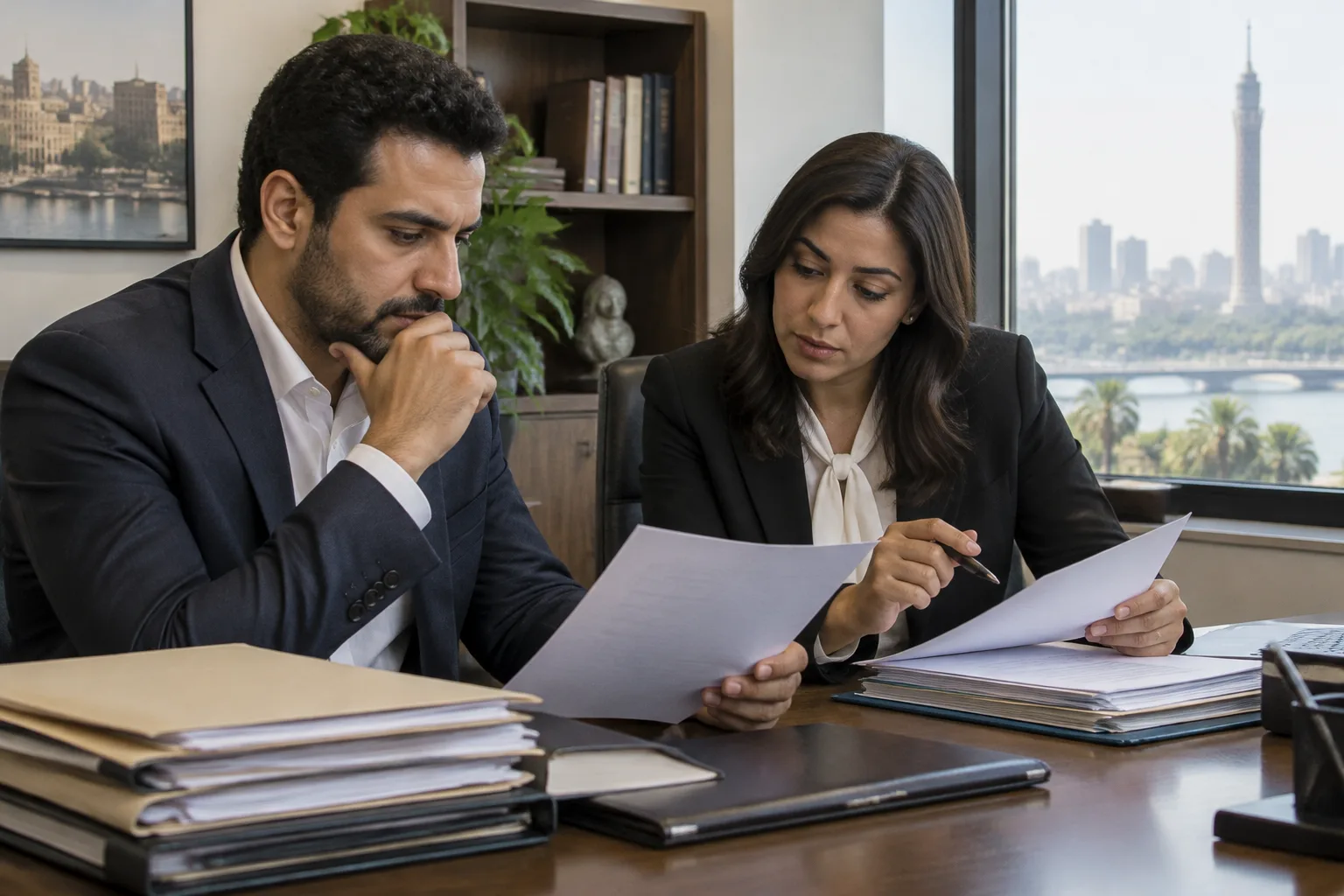
Buying a Franchise in Egypt: How to Interview Existing Franchisees
Franchisee interviews reveal the gap between the sales pitch and reality. Learn whom to speak to, what to ask and how to turn their answers into clear terms.
Published
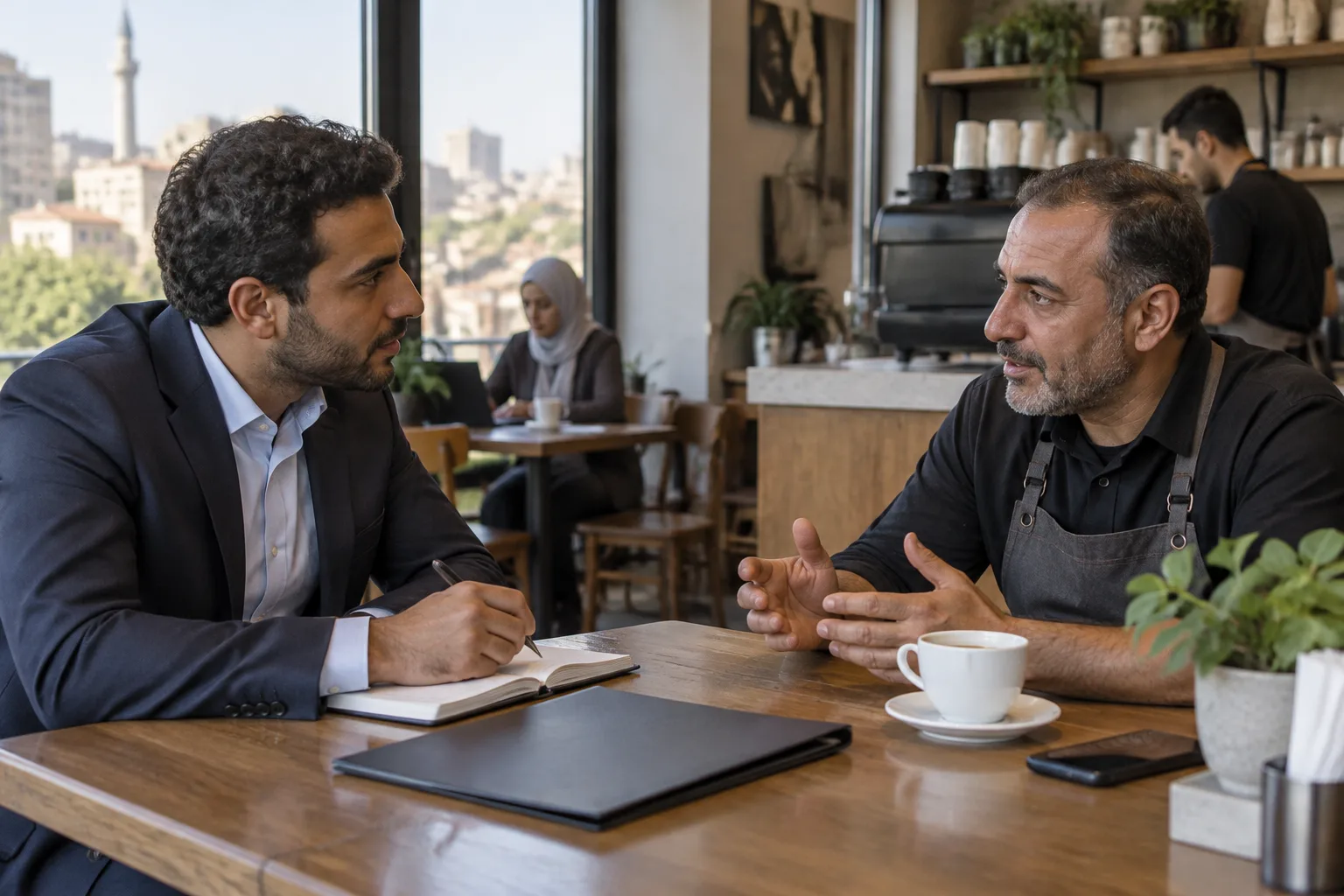
Before buying a franchise in Egypt, do not rely solely on the franchisor’s presentation or a visit to a successful outlet they have chosen for you. Current and former franchisees are an important source of insight into everyday life within the franchise network: how are problems resolved, are promises kept, and what surprises investors after signing? But the value of an interview depends on whom you choose, how you ask questions and how you verify the answers—not on how many positive comments you hear.
Choose a sample that reflects different experiences
Ask the franchisor to facilitate contact, with the franchisees’ consent, with people whose outlets differ in age, location and size. Try to include someone with a recently opened outlet, someone who has moved beyond the start-up phase, and an investor running several outlets. If possible, speak to someone whose relationship with the brand has ended or whose outlet has closed, without assuming that closure means the franchisor was at fault.
Do not make the franchisor’s list your only source of contacts. You can identify other outlets through site visits and the brand’s public channels, then politely request a meeting with the person in charge. Avoid asking employees for internal information or pressuring them to assess their employer, and do not assume that the outlet manager is the franchisee.
Record why you selected each interviewee. An outlet in a shopping centre may have a different experience from one serving a residential area, while a brand’s track record outside Egypt does not prove it can provide the same service locally. Also ask whether the outlet is owned by the franchisor: its manager does not bear the same obligations as an independent investor.
Ask about facts, not impressions
Start by explaining that you are considering an investment and want to understand their experience, not collect trade secrets. Arrange a convenient time and send a brief outline of the topics in advance. Do not record the call or attribute comments to the speaker without their consent, and respect any confidentiality obligations that prevent them from sharing particular documents or details.
Instead of asking, ‘Is the franchisor good?’, use questions that invite specific examples:
- What was the biggest difference between your expectations before signing and your experience afterwards?
- What was the most recent operational problem you asked the franchisor to help with, and how was it handled?
- Did you know who was responsible for each stage of fitting out and opening the outlet, or were some responsibilities left unclear?
- When written instructions conflict with verbal guidance, how do you obtain a definitive answer?
- Which decision would you have postponed until you had written clarification?
- If you were starting again, which document or contractual term would you ask for first?
Follow up every general answer by asking: ‘When did that happen, and has it happened again?’ Distinguish between an old incident that has been resolved and an ongoing problem. If someone complains about slow responses, ask about the nature of the request and how it was escalated: a point-of-sale system failure is not the same as a request to change a design. This allows you to compare similar events rather than contrasting personal reactions.
Understand the limits of disclosure in Egypt
Egypt has no standalone, comprehensive franchise law, nor a general regime requiring a franchise-specific disclosure document containing a standardised list of franchisees. Do not therefore assume that you have an automatic right to everyone’s contact details or records. Ask for a way to make contact that respects privacy, and make the information you need for your decision an explicit part of your pre-contract due diligence requests.
The relationship is governed by general legal rules, including Civil Code Law No. 131 of 1948 and Commercial Law No. 17 of 1999. The technology transfer provisions in Articles 72–87 of the Commercial Law may apply depending on the substance of the agreement, not simply because it is called a franchise. Those provisions include specific disclosure obligations relating to the technology and its risks; they are not a direct equivalent of the disclosure document used in some other countries.
Likewise, a foreign disclosure period does not become binding in Egypt simply because it appears in a guidance document. Ask an Egyptian lawyer to identify the rules applicable to your transaction, and agree on sufficient time for due diligence before signing or paying. Do not treat the franchisor’s membership of a professional association or adherence to a voluntary code as a guarantee of the investment’s outcome.
Turn the answers into actionable decisions
Create a simple table covering the topic, what the franchisor said, what franchisees described and what needs verification. Separate confirmed information from personal opinion, and do not treat repeated statements as independent evidence if everyone is repeating the same source.
If an important issue comes up repeatedly, raise its substance with the franchisor without identifying the speakers unless they have given permission. Ask for an explanation and appropriate documentation: a written procedure for escalating problems, a clear allocation of responsibilities for opening the outlet, or a copy of the instructions the franchisor says resolved the issue. Then check whether the response is consistent with the draft contract.
For example, if several franchisees describe requests being passed between staff without anyone taking responsibility, do not settle for a promise that ‘we will look after your outlet’. Discuss including a designated contact, an escalation route and a written follow-up process. A franchisor’s refusal to allow any contact with franchisees is not proof of wrongdoing, but it is a reason to seek an explanation and carry out further checks before committing.
Practical takeaway: Speak to franchisees with varied experiences, ask for specific examples, then turn recurring observations into documents and terms you can review. Interviews do not replace legal due diligence, but they help you identify what needs checking before you pay.
Sources
- Aconsumer Guide To Buying A Franchise
- Buying a franchise in Egypt
- A Brief Guide To Franchise In Egypt
- Franchise Agreements In Egypt: The Complete ...
- Food And Beverage Franchise In Egypt: Legal Considerations
- Franchising In Egypt - Legal 500
- الأمتياز التجاري
- Franchising in Egypt: Legal Navigation for International Brands