Komiksan in Prague’s Dejvice district: delayed delivery tests a new shop
Three months after opening, Komiksan faced a delayed delivery of sought-after Pokémon cards. The case offers lessons for those considering the Czech franchise market.
Published
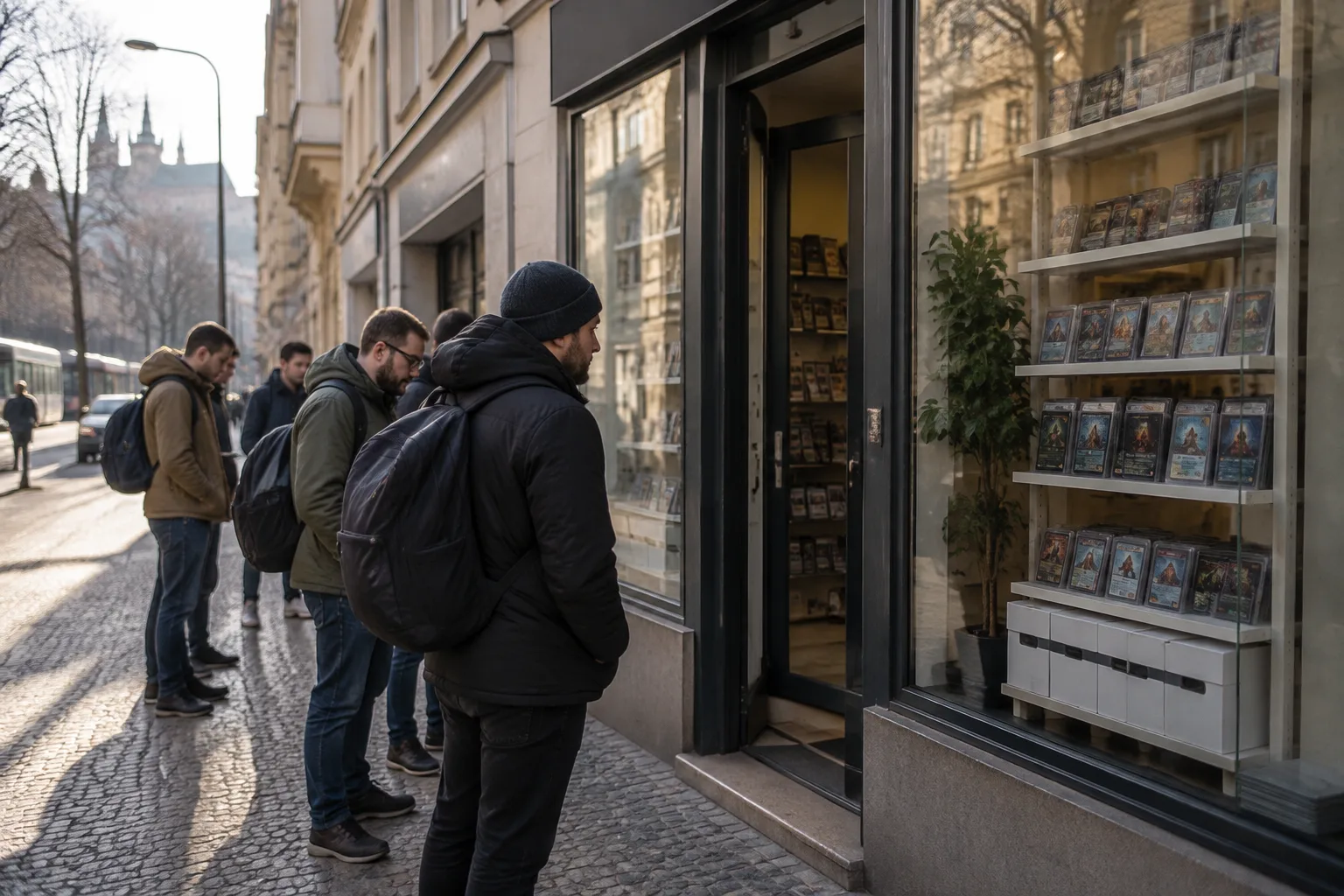
A planned midnight launch of an anniversary edition of Pokémon cards at Komiksan, a shop in Prague’s Dejvice district, failed to go ahead. The delivery arrived only the following afternoon, leaving Josef Chrpa’s new business facing a significant operational test just three months after opening. The story, reported by CzechCrunch on 27 September 2026, highlights the collision between collectors’ enthusiasm, speculative demand and a retailer’s dependence on timely deliveries.
Waiting for a delivery instead of a midnight launch
Komiksan had been preparing a midnight launch to mark Pokémon’s 30th anniversary. However, the highly sought-after edition did not reach the shop in time. According to CzechCrunch, the delivery was delayed by several hours and arrived only the following afternoon. The planned midnight start to sales therefore did not happen.
Customer interest nevertheless remained strong. Small groups of collectors and speculators began gathering outside the shop early in the morning. For the owner, this created a mismatch between expectations tied to a specific launch time and the actual availability of stock. Timing had been a key part of the planned event.
The available report does not state how many people were waiting, how many cards were delivered or what financial impact the delay had. It is therefore impossible to calculate lost sales or establish how many prospective buyers eventually made a purchase. The documented outcome is a change of plan: the expected midnight launch did not take place, and the delivery arrived too late for it to go ahead.
A new business serving collectors and resellers
According to the report, Josef Chrpa left a career in PR to open his own Pokémon-focused shop. At the time of the incident, Komiksan had been trading for just three months. He was therefore dealing with the delayed delivery and demand for the anniversary edition at an early stage of his business, rather than as an established retailer with years of operating experience.
CzechCrunch places the story in a market where nostalgia, influencers and the prospect of financial gain all fuel interest in Pokémon cards. According to the report, collectors and speculators mingled outside the shop. These were not simply customers with a shared motivation: alongside an interest in the cards themselves, there was also an interest in reselling them.
In the report, Chrpa describes resellers as a problem for his business. However, the material provided does not include specific Komiksan rules on purchase restrictions or a detailed account of measures to curb reselling. It would therefore be inaccurate to attribute purchase limits, reservations or any other particular policy to the shop. Nor can this single incident establish what proportion of its customers are speculators.
What the franchise community can learn
The available report does not present Komiksan as a franchise or mention plans to build a franchise network. This is therefore not news of a new franchise opportunity. For those involved in, or considering entry into, the Czech franchise market, its value lies in offering a concrete example of an operational challenge at a newly opened specialist shop.
The first lesson concerns planning a sales event that depends on a single delivery. In this case, the midnight launch relied on the availability of a particular edition. Operators planning similar events may therefore want to consider when to confirm the launch time to customers and what to tell them if the delivery fails to arrive. This is an editorial recommendation based on the situation described, not a documented Komiksan practice.
The second lesson concerns visitors’ differing expectations. If a shop caters to collectors while also attracting people looking to resell its products, it is worth considering what purchasing rules should apply. The case itself does not demonstrate the effectiveness of any particular solution. It does, however, provide a reason to address the issue before the next eagerly anticipated launch, whether for an independent shop or when drawing up shared rules for a franchise network.
Demand for one edition does not measure the whole market
Small groups of prospective buyers outside one shop in Dejvice indicate anticipation surrounding a particular edition, not the size of the Czech trading card market. The report provides no aggregate sales figures, growth rates or comparisons between shops. Its contents therefore cannot establish the profitability of this type of retailer or support a data-based recommendation to enter the sector.
At its heart, the story is about a new entrepreneur’s experience: strong product demand coincided with a delayed delivery and customers with differing reasons for buying. These are specific circumstances that can be distinguished from broader, as yet unsupported conclusions about the market’s commercial potential.
Practical takeaway: Before a time-sensitive launch, prepare a contingency plan for delivery delays, a way to keep customers informed and clear purchasing rules. Komiksan’s story is a prompt to strengthen operational planning, not evidence that a new franchise concept will be profitable.