Franchise Premises in Belarus: Checks Before Signing a Lease
How business owners can set premises requirements for future franchisees and avoid spending money on an unsuitable property.
Published
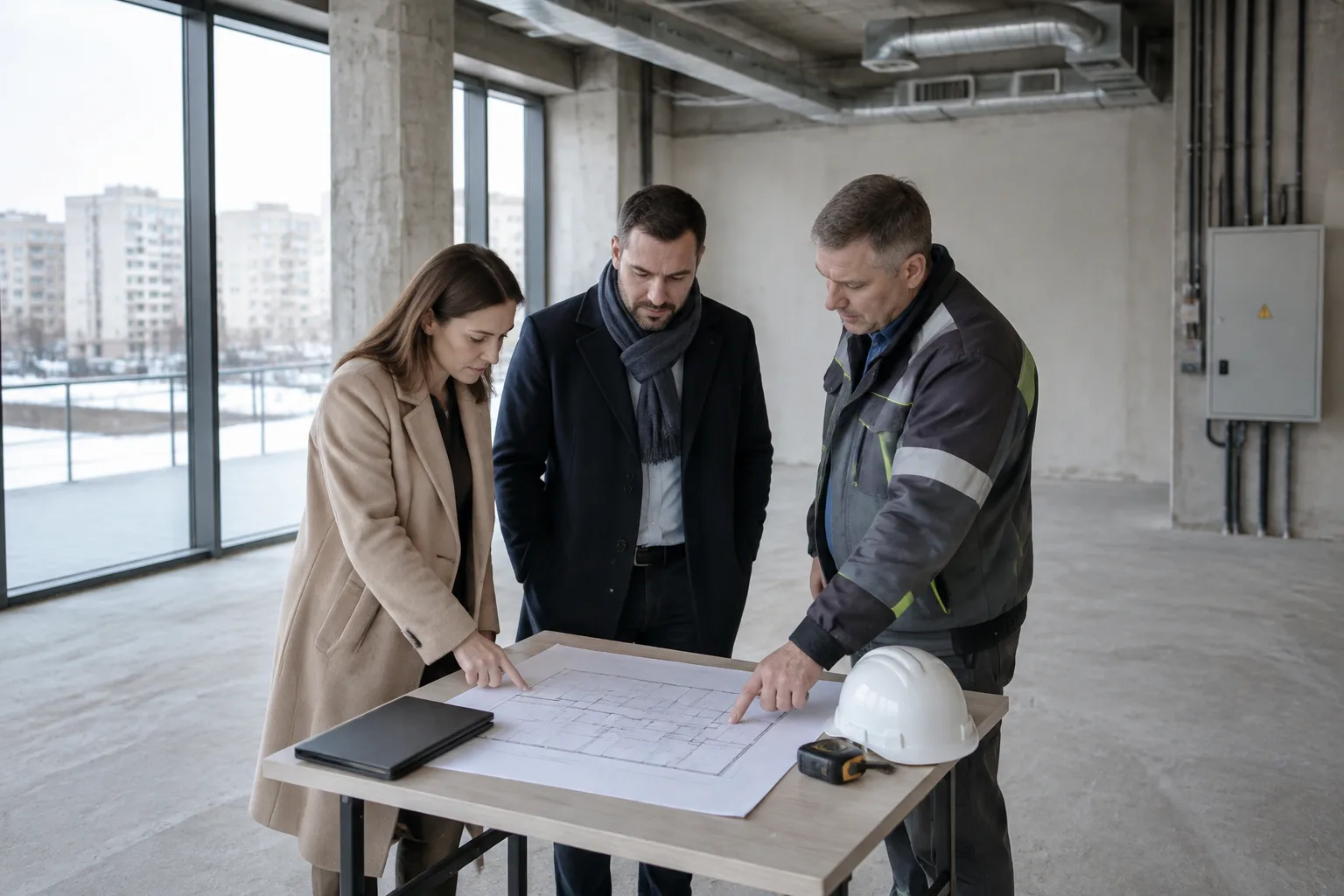
A successful outlet of your own does not yet prove that the business can be replicated in different premises. Sales may depend on a well-positioned entrance, sufficient electrical capacity or lease terms that are difficult to reproduce. Before recruiting franchise partners, business owners should prepare a premises specification and an approval procedure. These will help distinguish essential operating requirements from practices specific to the first outlet.
1. Build a premises specification around your existing business
Start by assessing your own outlet, rather than browsing property listings. Record which features of the premises genuinely enable you to follow operating processes, serve customers and maintain the business’s financial viability. If you have several outlets, compare them: the differences will help identify requirements that need not be standardised across the network.
Divide the criteria into three groups:
- Essential: without these, the chosen activity cannot be carried out legally or technically. Examples include sufficient electrical capacity, the ability to install ventilation and equipment, and compliance with applicable hygiene requirements.
- Performance-related: visibility of the entrance, ease of access, proximity to the target audience and unloading facilities.
- Desirable: layout and fit-out features that make opening easier but allow for alternatives.
For each essential criterion, specify how it must be verified. Electrical capacity should be checked against documentation and technical specifications, not the number of sockets. The ability to install signage should be checked against applicable requirements and the approvals needed, not a photograph of the façade.
Do not simply copy the floor area of your own outlet into the specification without explaining it. Calculate the space needed for equipment, working aisles, storage and customer service. This will allow you to consider different layouts without compromising the model’s ability to operate.
2. Check the property before making financial commitments
Set a clear rule: a partner must not regard premises as approved following a verbal discussion or the submission of photographs. Assessment should require a standard information pack: the address, floor plan, photographs, technical details, draft lease and an estimate of the cost of preparing the premises.
The checks can usefully be shared between several parties. The partner gathers documents and inspects the property, a technical specialist assesses whether the equipment can be installed, a lawyer reviews the legal terms, and the franchisor checks compatibility with the business model.
Establish separately:
- who has the authority to let the premises and sign the lease;
- whether the intended use is consistent with the property’s designated use;
- which works require approval and who is responsible for obtaining it;
- whether the necessary utilities and building services are available;
- whether there are restrictions on opening hours, access, unloading or signage.
Record the outcome in writing: ‘suitable’, ‘suitable subject to conditions’ or ‘unsuitable’. For conditional approval, list the conditions, the supporting documents required and the deadline for reassessment. Wording such as ‘broadly approved’ is risky: the partner may interpret it as permission to start refurbishment.
3. Recalculate the finances for these particular premises
The same rent does not mean the same total costs. One property may be ready to use, while another requires an upgraded electricity supply, new ventilation and extensive refurbishment. The premises specification should therefore be accompanied by a template for calculating the full cost of occupying the property.
Include rent, service charges, utility bills, the security deposit, design work, refurbishment, equipment connections and reinstatement of the premises at the end of the lease. Account for a refundable security deposit separately: it is not necessarily an expense, but the money will be unavailable for day-to-day operations.
Prepare a base-case and a downside scenario. In the latter, allow for a delayed opening, additional works and slower sales growth. Do not set a universal ‘acceptable rent-to-sales ratio’: assess whether the particular outlet can meet all its mandatory payments at a realistic level of revenue.
For example, cheap premises without suitable ventilation may prove more expensive than a ready-to-use property with a higher rent. Base the decision on total investment, monthly outgoings and the time needed to open, rather than a single figure in a listing.
4. Align the lease with the franchise agreement
In Belarus, franchising is specifically regulated by the Civil Code, although there is no separate franchising law. Article 910 governs the comprehensive business licence agreement, the legal form used for franchising, while Article 910-1 requires the agreement to be in writing and registered with the patent authority — the National Centre of Intellectual Property. The lease for the premises is a separate agreement governed by the applicable rules on leasing.
Approval of the property by the franchisor does not replace permits, mandatory procedures or a review of the lease. The documents should clearly distinguish these responsibilities.
Compare the lease term with the intended period of operation under the franchise and the time needed to recoup the investment. Check the provisions for renewal, rent changes and early termination. Discuss refurbishment, what happens to improvements that cannot be removed without damaging the premises, equipment installation and any obligation to restore the property to its original condition with the landlord.
In the contractual documents with the franchisee, set out the procedure for submitting a property for approval, response deadlines and the consequences of rejection. Separately, define what happens if suitable premises cannot be found: whether the opening is postponed, which costs remain the partner’s responsibility and how payments already made will be handled. It is best to agree these terms before costs are incurred.
5. Require a written decision before refurbishment starts
Before work begins, compile the final pack: the approved layout, technical assessment, budget, schedule and a list of approvals already obtained or still required. Assign responsibility for checking that each condition has been met. Changes to the layout or equipment after approval should be reassessed if they affect the outlet’s operation.
Do not promise the partner profitability simply because the premises meet the specification. Approval confirms compliance with the stated criteria, but does not eliminate business risk.
Practical takeaway: before offering a franchise, prepare a premises specification, a document checklist and a written approval form. This straightforward process will help future partners avoid committing to an expensive lease before the property’s suitability has been confirmed.
Sources
- Франшизы в Беларуси
- Франчайзинг и коммерческая концессия в Беларуси: на что ...
- Выход на зарубежные рынки через франшизу: особенности регулирования в разных юрисдикциях
- Франшизы в Беларуси: как выбрать и открыть бизнес под
- ФРАНЧАЙЗИНГ
- Бизнес в Беларуси [2026] - 22 идеи для россиян + с чего ...
- Семь важных аспектов договора франчайзинга
- Собственный бизнес или франчайзинг: какую модель ...