Domino’s Australia returns to same-store sales growth
Domino’s Australia has returned to same-store sales growth in the second quarter, while group sales remain below the previous year.
Published
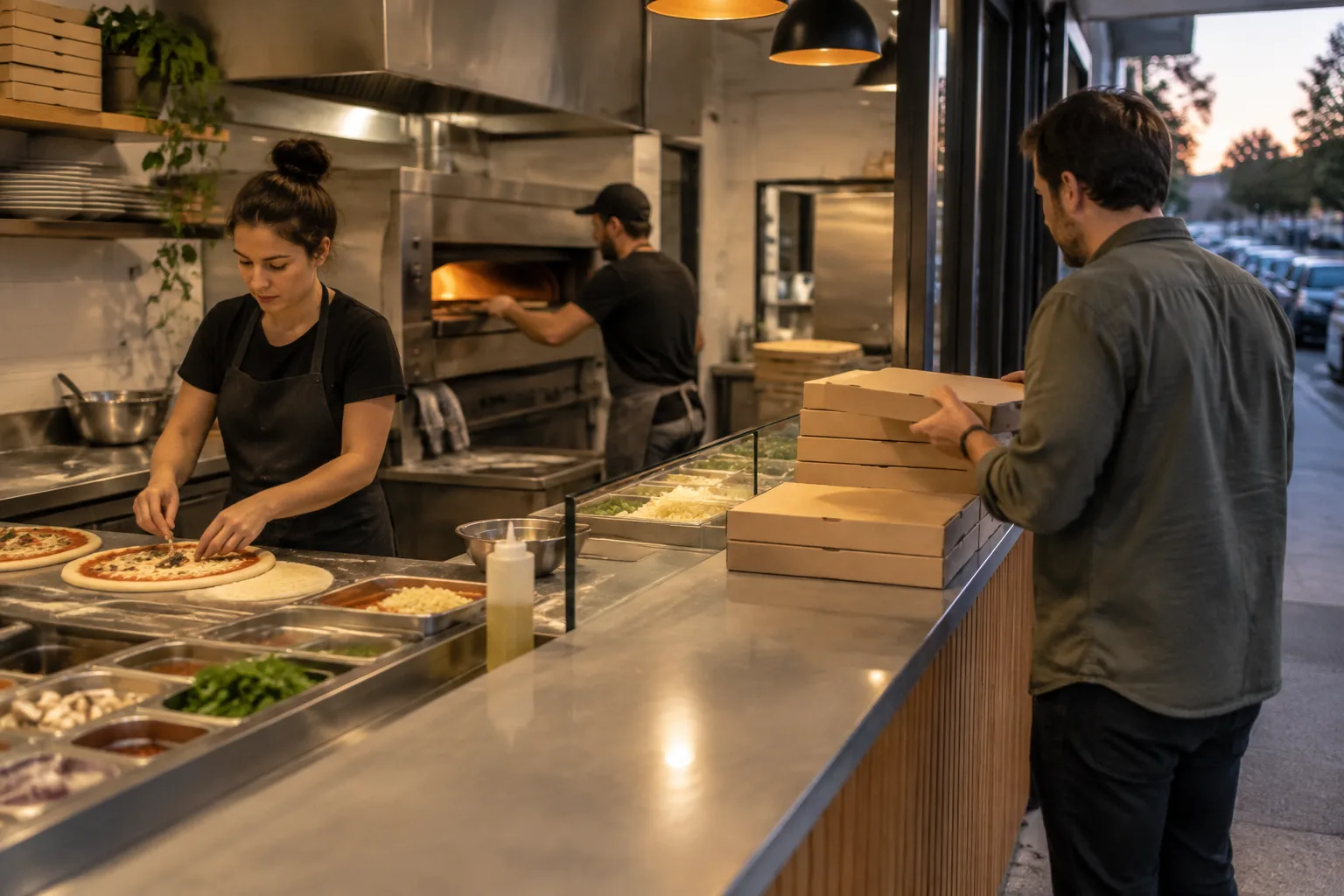
Domino’s Australia has returned to same-store sales growth in the second quarter so far, according to a trading update discussed at the company’s annual meeting in Brisbane. The improvement comes as Domino’s Pizza Enterprises continues to record declining comparable sales across its wider international business.
Australian growth contrasts with group decline
Australia and the Netherlands were identified as two key markets that had returned to same-store sales growth compared with the corresponding period a year earlier. The report of the update did not give a percentage increase for Australia, limiting how precisely the local recovery can be assessed.
Across the group, same-store sales fell 4.6 per cent between July and November against the previous corresponding period. That was an improvement on the 5.8 per cent decline recorded during the first eight weeks of the financial year, although sales remained below their year-earlier level.
The quarterly figures also showed a narrowing decline. Group same-store sales were down 2.1 per cent in the second quarter so far, compared with a 5.5 per cent fall in the first quarter.
These figures describe different reporting periods and should not be treated as interchangeable. The second-quarter result is an update on trading to date, rather than a completed quarter, while the July-to-November figure covers a longer stretch of the financial year.
For Australia’s franchise community, the clearest local development is the return to positive comparable sales. It is a more encouraging signal than the group-wide figures, but does not establish that every Australian restaurant is growing.
Retreat from discounting had a larger impact than expected
Executive chairman Jack Cowin acknowledged at the annual meeting that the sales consequences of moving away from deep discounts had exceeded expectations in some markets.
“Sales volumes fell as we deliberately stepped back from deep discounting and low-margin sales, but the decline was larger than we wanted in some markets,” he said.
Domino’s has been moving towards an everyday value proposition rather than relying as heavily on discounts. Chief executive Andrew Gregory attributed the improving trading performance to that change and to new product launches, including the New Yorker range.
Those comments explain management’s interpretation of the results. They do not isolate how much of the improvement came from pricing, products or other factors, nor do they provide a separate measure of the New Yorker range’s contribution to Australian sales.
The distinction is important when assessing the recovery: the update shows a better sales trajectory, while management’s explanation sets out why it believes that improvement is occurring.
Order numbers remain a key test
Gregory said comparable sales were still declining in some markets and that Domino’s needed to win back customers while maintaining its focus on margins.
He also emphasised that sales growth needed to be accompanied by increasing order numbers.
“Driving sales that aren't underpinned by increasing order counts means that our relationship, or the value relationship with our customers, is broken,” he said. “So balanced order count and sales growth is essential for our success.”
That gives franchisees another measure to watch alongside the headline same-store sales result. Gregory’s comments make clear that management is not treating sales alone as a sufficient indication of success.
The Australian return to growth is therefore one part of the picture. The reported update does not establish whether Australian order numbers rose alongside sales, or how the improvement was distributed across individual stores.
What the update means for franchisees
The trading figures offer evidence of improving momentum, rather than confirmation that the turnaround is complete. Australia’s positive result sits alongside continued group declines and management’s acknowledgement that customers still need to be won back in some markets.
For individual operators, a network-level sales improvement is also distinct from a demonstrated improvement in their own financial position. The Australian growth announcement does not quantify store-level margins or franchisee returns.
Practical takeaway: Australian franchisees should compare the network’s improving sales trend with their own comparable sales, order numbers and margins. The return to growth is encouraging, but its practical value depends on how it translates into each store’s performance.