Buying a Franchise in Ireland: Checking Territory Rights
Check what an exclusive franchise territory really protects, from online sales to national accounts, before signing an agreement in Ireland.
Published
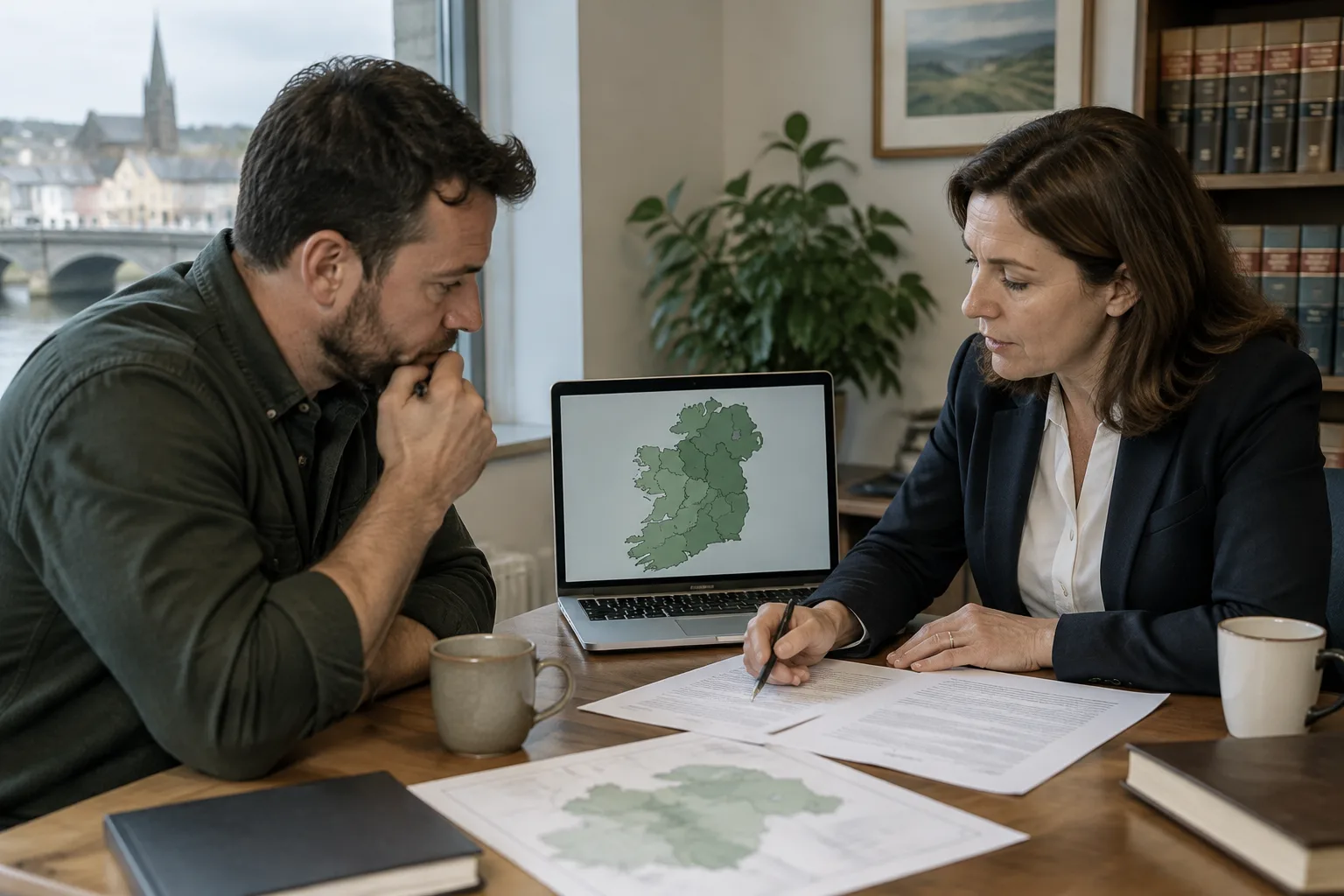
An ‘exclusive territory’ can sound like a promise that every local customer belongs to your business. It rarely means that without qualification. When joining Ireland’s franchise community, you need to establish who can sell into your area, through which channels and on what terms. Checking these rights before paying a deposit helps you understand exactly what you are buying.
1. Establish what Irish law does — and does not — protect
The Republic of Ireland has no dedicated franchise legislation, mandatory franchise-specific pre-sale disclosure regime or general franchise registration requirement. There is no automatic statutory right to an exclusive franchise territory: your protection depends on the agreement, subject to applicable law.
General contract law governs the promises the parties make. Intellectual property law governs the use of the brand, while Irish and EU competition law can affect territorial and customer restrictions. Section 4 of the Competition Act 2002, as amended, prohibits anti-competitive agreements; Article 101 of the Treaty on the Functioning of the European Union may also apply where trade between Member States is affected.
The Irish Franchise Association’s ethical code is a self-regulatory standard, not legislation applying automatically to every franchise. Ask whether the franchisor subscribes to a code and how its commitments are reflected in your documents.
Do not assume consumer purchase protections apply to a business investment. Have an independent solicitor experienced in franchise agreements review the territory provisions before you commit. If your proposed area includes Northern Ireland, obtain advice covering that separate jurisdiction too.
2. Define the territory and the promise precisely
Request the complete draft agreement and its territory schedule, not simply a sales brochure showing an available area. A map should have an unambiguous boundary and match the written description. County names, town names or phrases such as ‘greater Dublin’ may not provide enough precision on their own.
Next, establish what exclusivity actually prevents. These are different promises:
- The franchisor will not appoint another franchisee within your territory.
- The franchisor will not open its own outlet there.
- Other network members will face specified restrictions on targeting customers there.
- Particular enquiries or orders generated centrally will be allocated to you.
An agreement might provide the first promise but none of the others. A protected outlet location is also different from a protected customer area, especially for mobile services or delivery businesses.
Ask whether any existing outlets, customers or contracts are excluded. Request a written list of exceptions and establish whether the franchisor can add more later. If a territory map is promised after payment, ask for it before payment instead.
3. Follow the customer across every sales channel
A customer living inside your boundary might order through the brand’s website, visit an outlet elsewhere or buy through a national purchasing arrangement. Check each route rather than treating the territory as a complete barrier to competition.
Ask the franchisor to explain:
- Website orders: who receives the sale, who fulfils it and whether you receive any payment.
- Central enquiries: whether allocation follows the customer’s address, service location, outlet capacity or another rule.
- National accounts: which customers are reserved and whether you must service them at centrally agreed rates.
- Delivery platforms: whether nearby outlets can deliver into your area and how overlapping delivery zones are handled.
- Local promotion: what rules govern advertising, social media campaigns and direct approaches to customers outside your boundary.
Competition law matters here. Restrictions on active selling into certain exclusive territories may be permitted in defined circumstances, whereas restrictions on passive sales, such as responding to unsolicited customer requests, are generally more tightly constrained. Online selling raises additional questions. Ask your solicitor to assess the proposed rules rather than requesting a blanket ban on all cross-boundary sales.
Speak to existing franchisees with neighbouring territories. Ask how disputed enquiries and overlapping orders are resolved in practice, without requesting confidential customer information.
4. Check how protection can change or disappear
Territory rights may depend on minimum sales, staffing, opening hours or development commitments. Identify each condition and ask how performance is measured. Check whether the franchisor can reduce your territory, remove exclusivity or appoint another operator if a target is missed.
Look for written notice, a reasonable opportunity to remedy relevant breaches and a clear dispute process. Establish whether boundaries can change at renewal or when you sell the business. A territory that transfers only at the franchisor’s discretion may affect a future buyer’s interest.
Finally, compare the agreement with the operations manual and any online-sales policy. Ask whether those documents can be changed unilaterally in ways that weaken your protection. Material assurances should be recorded in the signed documents, not left in a presentation or conversation.
Practical takeaway: Before committing, obtain a defined territory schedule, a written explanation of channel exceptions and legal advice on how the rights can change. Buy the protection the contract actually provides, not the impression created by the word ‘exclusive’.
Sources
- Operating a franchise in Ireland
- What is a franchise? A guide for small business owners ...
- Franchise Laws and Regulations Report 2026 Ireland - ICLG.com
- Is Your Franchise Fit for Ireland?
- Practical Law Global Guide: Doing Business in Ireland
- Franchise Opportunities | Investing in a Franchise
- Franchise Agreements Ireland | Franchisor & Franchisee | Mary Molloy Solicitors
- Franchising - Local Enterprise Office - DublinCity