Reducing Owner Dependence Before Franchising in Australia
Can your business succeed without your daily intervention? Identify founder dependence before offering franchises in Australia.
Published
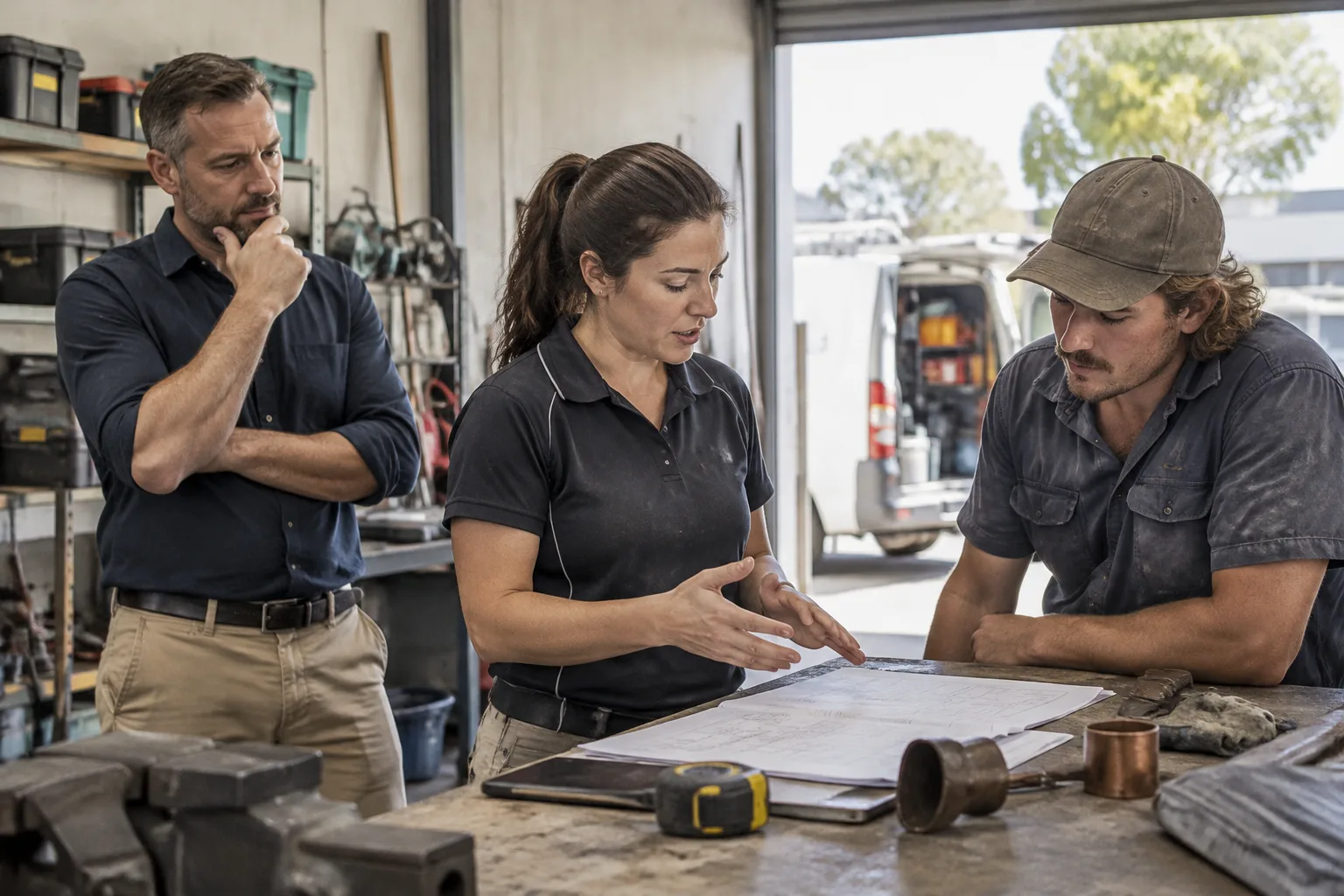
A successful business is not necessarily ready to franchise if its owner still makes every difficult decision. Customers may be buying your personal expertise, suppliers may be accommodating your relationships, and staff may rely on instructions that exist only in your head. Before inviting others into your franchising community, establish which results come from a transferable business system and which still depend on you.
1. Identify where the business depends on you
Start with an owner-dependence review rather than another description of your business processes. For a representative trading period, record every occasion when someone needs your intervention. Include routine enquiries as well as emergencies.
For each intervention, note:
- What triggered the request and who raised it.
- Whether an existing rule could have answered it.
- What knowledge, authority or relationship you contributed.
- What would have happened if you were unavailable.
- Whether the same issue is likely to arise in a franchisee’s business.
Pay particular attention to quoting, customer complaints, stock substitutions, quality judgements and decisions about accepting unusual work. These often expose hidden dependence more clearly than standard opening and closing routines.
Distinguish between missing instructions and missing capability. A written pricing rule may resolve inconsistent quotations. It will not replace a specialist qualification or years of technical judgement. If a critical activity requires expertise, decide whether each franchisee must bring it, employ someone who has it, or obtain it through a clearly defined service.
The output should be a short list of dependencies ranked by their consequences, not simply by how frequently they occur.
2. Separate local decisions from franchisor decisions
An employee asking the owner for permission is not the same as an independent franchisee seeking approval from the franchisor. Franchisees bear the financial risk of their businesses. Your future decision structure must recognise that distinction.
Create a decision table with three categories:
- Local discretion: decisions the franchisee can make within defined boundaries.
- Approval required: decisions that need franchisor consent because they affect the brand or business system.
- Specialist referral: matters requiring qualified legal, accounting, technical or other professional advice.
For each category, identify the decision-maker, information needed, expected response time and an alternative contact if the usual person is unavailable. These are proposed operating arrangements, not automatic legal requirements.
For example, an unusual customer request might require a technical assessment rather than your personal approval. Define the assessment criteria and who is competent to apply them. Avoid making “ask the founder” the permanent solution.
Have a franchise lawyer check that the proposed allocation of authority is reflected appropriately in the franchise agreement. Operational guidance should not promise discretion that the contract removes, or impose controls for which the contract provides no proper basis.
3. Check whether your advantage is transferable
Some owner dependence sits outside the business. A favourable purchasing arrangement might rely on your personal guarantee. Repeat customers might expect you to perform the work. A referral partner might recommend you personally rather than the brand.
List these relationships and ask what a new franchisee could actually access. Do not assume that arrangements for your existing business will automatically extend to independently owned outlets.
Where an advantage is not transferable, choose an explicit response: secure a suitable arrangement, develop an alternative, revise the proposed offer, or delay franchising.
This matters legally as well as commercially. Australia’s mandatory Franchising Code of Conduct, prescribed under the Competition and Consumer Act 2010, regulates franchisor and franchisee conduct. The current Code commenced on 1 April 2025, with some requirements commencing later. The Australian Competition and Consumer Commission oversees compliance.
The Code imposes disclosure obligations, and the Australian Consumer Law prohibits misleading or deceptive conduct. Descriptions of your system must therefore distinguish between capabilities already available to franchisees and capabilities you merely intend to develop. Personal success is not proof that another operator will receive the same advantages.
4. Set an owner-independence readiness threshold
Before committing to franchise recruitment, review whether ordinary decisions can proceed without your involvement. Use evidence from normal operations, including busy periods and exceptions, rather than relying on staff confidence alone.
Set thresholds appropriate to your business: which decisions must be resolved locally, which genuinely need central approval, and which failures would make expansion premature. Record unresolved dependencies alongside a named person responsible for addressing them.
Retain your involvement where it adds strategic value, but remove yourself as the only route to essential decisions. A business need not run without leadership; it needs leadership that can be delivered reliably beyond one person.
Practical takeaway: Before selling access to your business system, identify what currently works only because you are there. Resolve the critical dependencies and make the remaining responsibilities clear before offering a franchise.
Sources
- Buy a franchise | business.gov.au
- Buying and running a franchise - English - ACCC
- Buying a franchise - Legal Services Commission of South Australia
- Franchising | ACCC - Australian Competition and Consumer ...
- Franchise your business
- फ्रैंचाइज़ खरीदना और चलाना (Buying and running a franchise)
- About the franchising code and when it applies
- Buying a franchise - Business Queensland