Nurse Next Door launches $1 million free care initiative
Nurse Next Door’s Australian master franchisees are funding $1 million in free care, with franchise partners coordinating local delivery.
Published
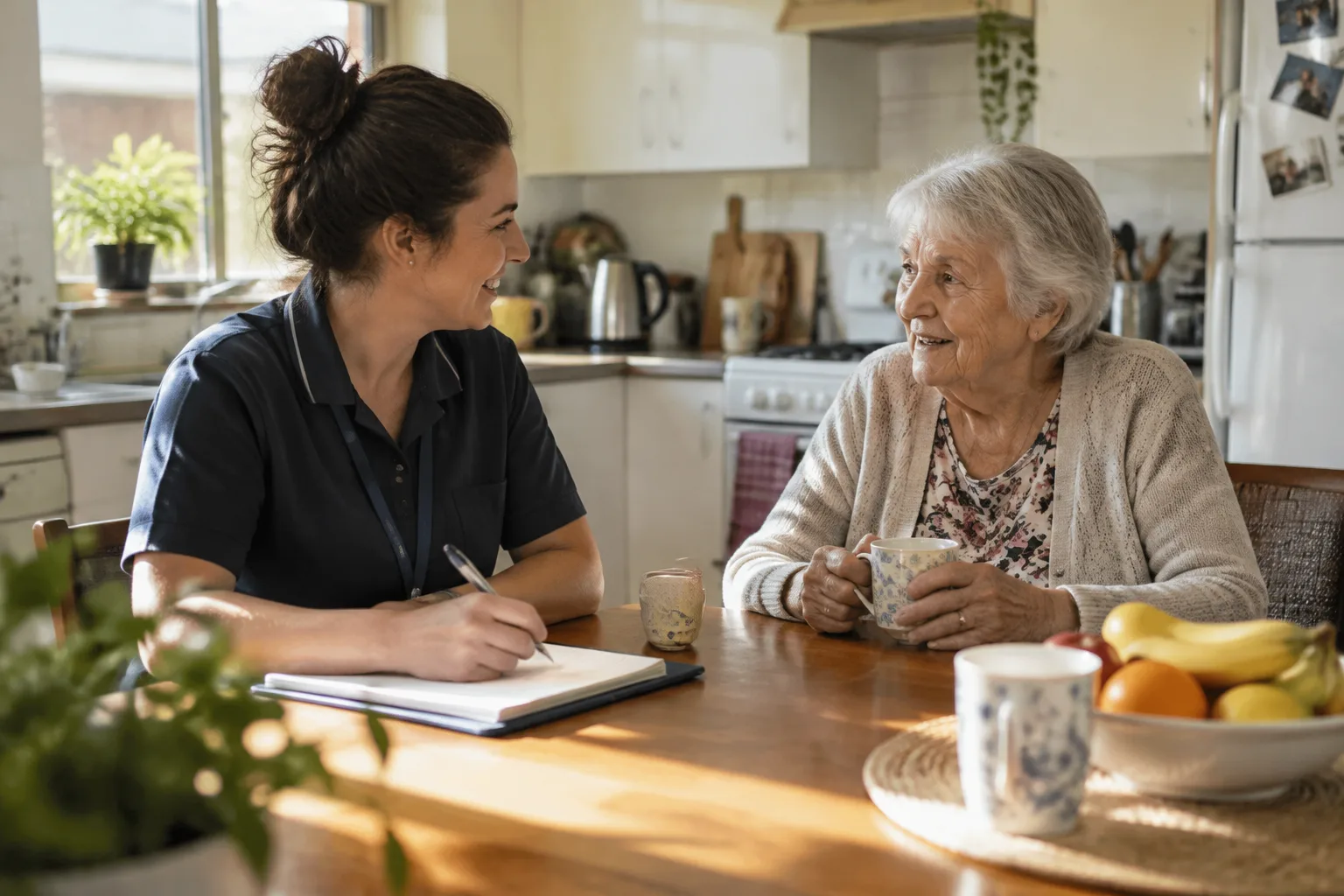
Nurse Next Door’s Australian master franchisees are funding $1 million in free care for older Australians who cannot afford the support they need. The initiative brings together funding from Matt Fitton and Amber Biesse with local coordination and delivery by the brand’s franchise partners.
Master franchisees fund care wages
Writing in Franchise Executives on 8 November 2026, Biesse outlined The Making Lives Better Million, an initiative intended to help older Australians who have fallen through gaps in aged care funding and lack the means to pay for care themselves.
Over the following 12 months, Fitton and Biesse are funding the wages and associated employment costs for $1 million worth of free care. Franchise partners are contributing their time and resources to coordinate and deliver that support in their local communities.
The distinction between those contributions is important: the master franchisees are financing the care wages and on-costs, while participating franchise partners provide the local coordination and delivery resources. The announced million-dollar commitment is a value of free care, not a target for the number of people served or hours delivered.
For Australia’s franchise community, the initiative offers an example of a network-wide commitment built around the services its businesses already provide, with local operators involved in putting that commitment into practice.
A network spanning 77 territories
The programme follows several years of development for Nurse Next Door in Australia. According to Biesse, more than 55 franchised businesses now operate across 77 territories, with more than 150 of the brand’s pink cars on the road in Australian communities.
Those figures describe different aspects of the network’s reach. The number of territories is not the same as the number of franchised businesses, and neither should be treated as a count of individual care workers or clients.
Biesse also reported that around two-thirds of the Australian locations now generate more than $2 million in annual revenue, while one in four generates more than $5 million.
These are figures reported by the Australian master franchisee. They describe revenue rather than profit and should not be read as a forecast of what a new franchise partner could earn. They nevertheless provide context for the scale the Australian operation has reached since its first company-owned location opened in 2019.
Local operation came before franchising
Fitton and Biesse acquired the Australian master franchise rights in 2018, giving them the rights to franchise Nurse Next Door across the country. Rather than moving directly into recruiting local franchise operators, they first opened a corporately owned location in Melbourne on 1 January 2019.
Biesse described that decision as a way to understand the business through daily operation. It allowed the pair to identify pressure points, assess what needed to change for Australia and establish where future franchise partners would need support.
The North American operations manual provided a framework, but the Australian model was shaped by local operating experience. Biesse said the resulting model differs in several respects from its North American counterpart, including how care is funded and regulated and how people are employed and paid.
That history gives the free-care initiative a broader context: it is being delivered through a franchise network whose Australian model was developed through direct experience of providing care locally.
A shared commitment with local delivery
The Making Lives Better Million assigns complementary roles to the master franchisees and local franchise partners. Fitton and Biesse’s financial commitment supports care provision, while franchise partners contribute resources to arrange and deliver it within their communities.
The intended beneficiaries are older Australians facing both a funding gap and an inability to pay. That focus distinguishes the initiative from a general promotional offer: the stated purpose is to make care available to people whose needs are not being met through existing funding or their own finances.
Practical takeaway: Franchise networks considering a similar initiative should define who funds the service, who coordinates delivery and whom it is intended to help. Nurse Next Door’s approach illustrates how central funding and local franchise participation can support a shared community purpose.