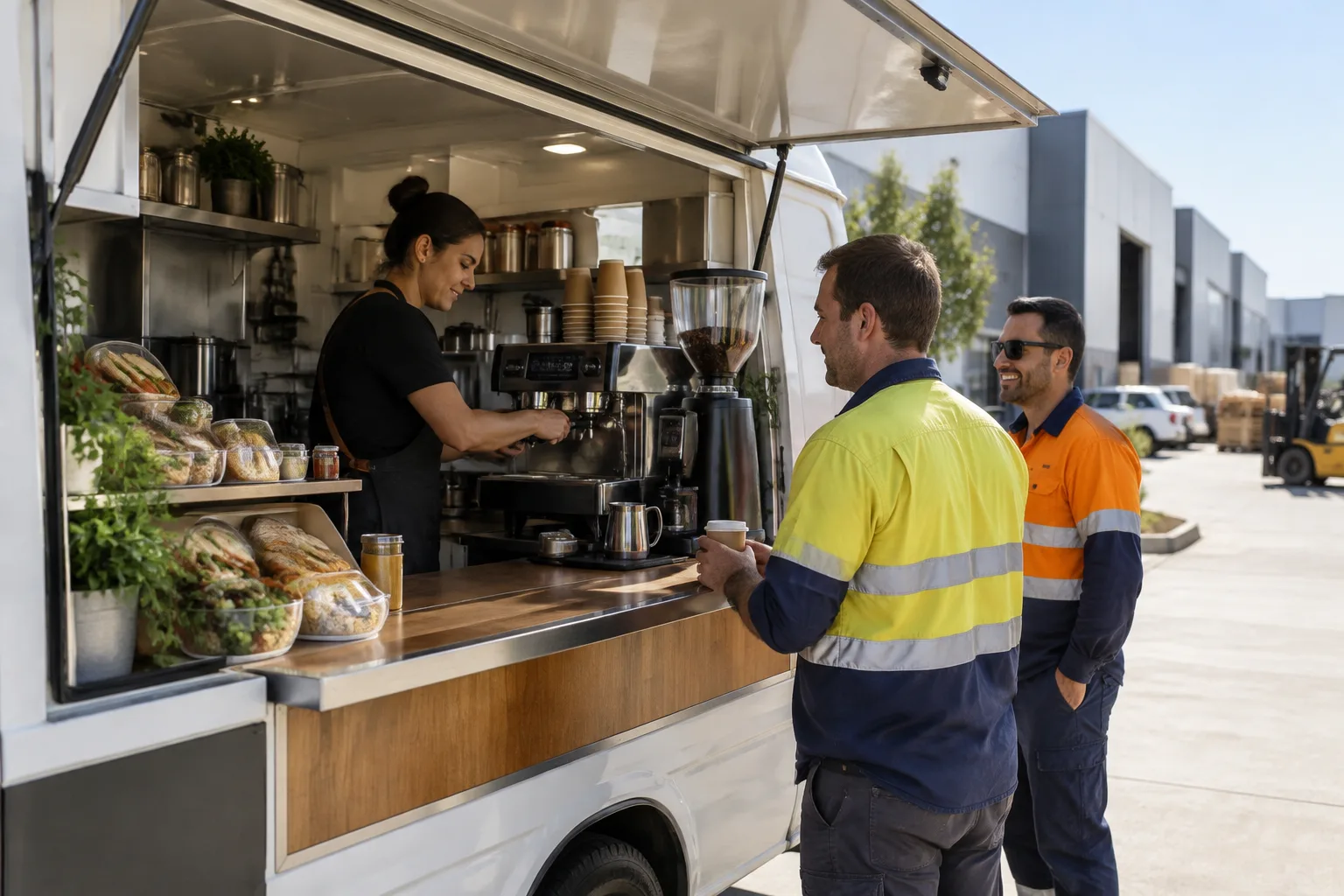
Muzz Buzz Newman reports nearly 45% revenue growth
Newman franchisees report higher revenue and customer numbers after focusing on staff training, store culture and reinvestment.
Published

A Muzz Buzz franchise in the Western Australian mining town of Newman has reported revenue growth of almost 45% over the past year, following a change of ownership in December 2024. Franchisees Codi Davies and Dio Wiringi have focused on staff training, store culture and reinvesting profits, turning an under-performing coffee store into one of the network’s top improvers.
A turnaround under new ownership
The couple bought the Newman store despite having minimal business experience and both already being employed by a local mining company. Their progress was outlined in a Business Franchise Australia & New Zealand report published on 1 November 2026, less than two years after the purchase.
Alongside the reported revenue increase of almost 45%, customer numbers rose by 35% over the past year. Those figures describe growth at the Newman outlet, rather than performance across the Muzz Buzz network.
The owners’ initial ambition combined a commercial opportunity with a local service goal. They wanted residents to have access to the standard of coffee and service associated with larger cities, while also contributing to the town.
“We wanted to be part of a business that offered the same level of service and coffee that you find in the big cities and also contribute to the local community,” Dio said.
Training, culture and reinvestment
Rather than describing a single change behind the improvement, the owners pointed to a combination of operational priorities: refreshing the store’s culture, training staff and putting profits back into the business.
“We focused on refreshing the store culture and staff training and re-invested the profits. It made an impact right away,” Dio said.
The distinction between revenue growth and profitability remains important when considering the results. The reported increases show a substantial rise in revenue and customer numbers, but do not establish a corresponding percentage increase in profit. The owners’ account is therefore best understood as a store turnaround measured through those two reported indicators.
For Australia’s franchising community, the Newman example puts attention on the work involved after an existing outlet changes hands. In this case, the owners have emphasised how the business is run, rather than presenting the purchase itself as the reason for its improvement.
Building a stable team in Newman
Staffing has been a major challenge for the business. Codi said that concentrating on workplace culture and supporting working holidaymakers had helped the owners build a stable team.
That focus makes staffing a central part of the turnaround story, not simply a separate recruitment issue. Training was among the owners’ early priorities, while support for workers formed part of their response to the difficulty of maintaining a team.
Muzz Buzz chief executive Joyce Reynolds credited Codi and Dio’s hard work for the store’s current success. She also identified the franchise model’s role in providing structure, training and support for franchisees.
Her assessment draws a distinction between the assistance available through a franchise network and the contribution of the people operating an individual store. At Newman, the reported improvement reflects the owners’ efforts within that supporting framework.
Local connections within a WA network
The Newman outlet also supports a handful of local sporting clubs. Codi described that involvement as stemming from the owners’ love for the town, connecting their original community ambition with their activities as local business owners.
Muzz Buzz is a Western Australian-owned and operated franchise business marking its 25th anniversary in 2026. It has more than 30 stores across metropolitan and regional Western Australia, specialising in coffee on the go.
Newman’s results provide a local example within that wider network, rather than a forecast for other outlets. The practical takeaway for prospective and existing franchisees is to examine staff stability, training, reinvestment and franchisor support together—and to distinguish reported sales growth from evidence of profitability.